1988 P Jefferson Nickel Value Guide for Collectors and Pocket Change Hunters
The 1988-P Jefferson Nickel is worth anywhere from its 5-cent face value in worn condition to over $1,500 for rare specimens in high-grade Mint State. While most of these coins found in your change today aren’t worth much more than a few cents, certain varieties and exceptional strikes can be quite lucrative for lucky finders.
Identifying the 1988-P Jefferson Nickel in Your Pocket
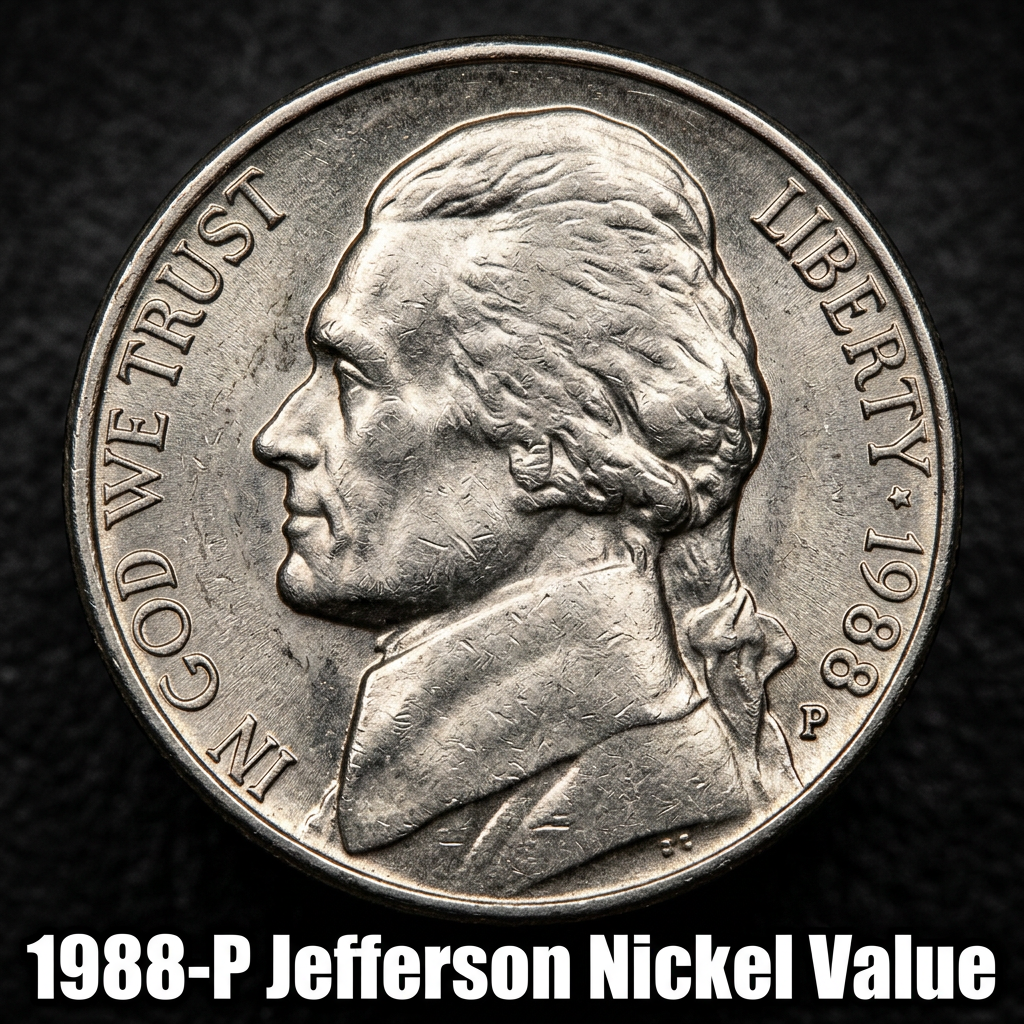
If you have just discovered a handful of old coins in a jar or your pocket change, identifying a 1988 Jefferson Nickel with a “P” mint mark is the first step toward determining its worth. The “P” indicates that the coin was struck at the Philadelphia Mint. You can find this small letter located on the obverse (front) of the coin, just behind Thomas Jefferson’s ponytail and below the date. During 1988, the Philadelphia Mint produced over 770 million examples, which means they are still very common in circulation today.
If you aren’t sure if your coin has a specific mint mark or if it’s a different variety, using a free coin identifier app can save you a lot of time by instantly recognizing the year and minting location. When you use an app like CoinKnow, you get immediate access to historical data and current market trends. Most people will find that their 1988-P nickels show signs of heavy wear, such as scratches or smoothed-out details on Jefferson’s hair or the pillars of Monticello on the reverse. These circulated coins are generally only worth their face value of five cents, but that doesn’t mean you shouldn’t keep an eye out for cleaner versions.
Understanding the Market Value and Price Trends
Even though millions of these coins were made, the market for high-quality nickels remains active. Serious collectors are always looking for “Condition Rarities,” which are coins that survived all these years without being scratched or dinged up in a cash register. For a 1988-P nickel to be worth more than a few cents, it generally needs to be in “Uncirculated” or “Mint State” condition. This means the coin still has its original luster and looks like it just came from the mint staff’s hands.
Recent sales show that the 1988-P Jefferson Nickel price in MS grades can jump significantly once it reaches the MS66 or MS67 level. For the average person, this means if you find a nickel that is exceptionally shiny and devoid of scratches, it might be worth a trip to a local coin shop or a quick scan with CoinKnow to verify its potential. Because these coins are so common, only the “best of the best” command high prices from numismatists.
| Condition / Grade | Estimated Value |
|---|---|
| Circulated (Average Wear) | $0.05 |
| About Uncirculated (AU58) | $0.15 – $0.35 |
| Mint State (MS63) | $1.00 – $3.00 |
| Mint State (MS65 Gem) | $10.00 – $20.00 |
| Mint State (MS67) | $150.00+ |
| MS67 with Full Steps (FS) | Up to $1,500 |
The Full Steps Designation and Why It Matters
One of the biggest factors in determining the value of a 1988-P nickel is a grading designation known as “Full Steps” (FS). If you look at the reverse side of the nickel, you will see Thomas Jefferson’s home, Monticello. At the base of the building is a set of stairs. On most nickels struck in the late 80s, these steps are blurry or merged together because the metal didn’t flow perfectly into the die during production. Collectors pay a massive premium for coins where at least five or six steps are clearly visible and separated.
A 1988-P nickel with Full Steps is incredibly rare because the 1980s were notorious for mediocre strike quality at the Philadelphia Mint. While a standard high-grade nickel might sell for $20, a “Full Steps” version in the same condition could fetch hundreds or even thousands of dollars at auction. To get a better sense of how these details affect the bottom line, you can research the 1988 Jefferson Nickel value chart and rarity factors. Identifying these tiny lines requires a steady hand and a magnifying glass, or a high-resolution photo analyzed by CoinKnow.
Errors and Varieties to Search For
Beyond condition and strike quality, error hunters often search for “mint errors.” These occur when something goes wrong during the manufacturing process. Common errors for 1988 nickels include “Off-Center strikes,” where the design is shifted to one side, or “Double Dies,” where the letters and numbers look like they were typed twice. Another common find is a “Clipped Planchet,” which looks like a bite was taken out of the side of the coin.
While these errors are rare, they are the “holy grail” for many casual collectors. Even a 1988-P nickel that is only 10% off-center can be worth $10 to $50 to the right buyer. If you find a coin that looks strange or doesn’t match the standard design, don’t spend it! These anomalies are what make the hobby exciting and potentially profitable for everyday Americans who happen to look closely at their change before paying for groceries.
FAQ
Q: Is a 1988-P nickel rare?
A: Generally, no. With over 770 million minted, they are common in circulation. However, coins with the “Full Steps” designation or significant mint errors are considered rare and valuable.
Q: How can I tell if my 1988 nickel has Full Steps?
A: Look at the back of the coin at the base of Monticello. If you can see 5 or 6 distinct, unbroken horizontal lines representing the stairs, you likely have a Full Steps nickel.
Q: Where is the mint mark on a 1988-P Jefferson Nickel?
A: The “P” mint mark is located on the front (obverse) of the coin, to the right of Jefferson’s head, just below the year 1988.
