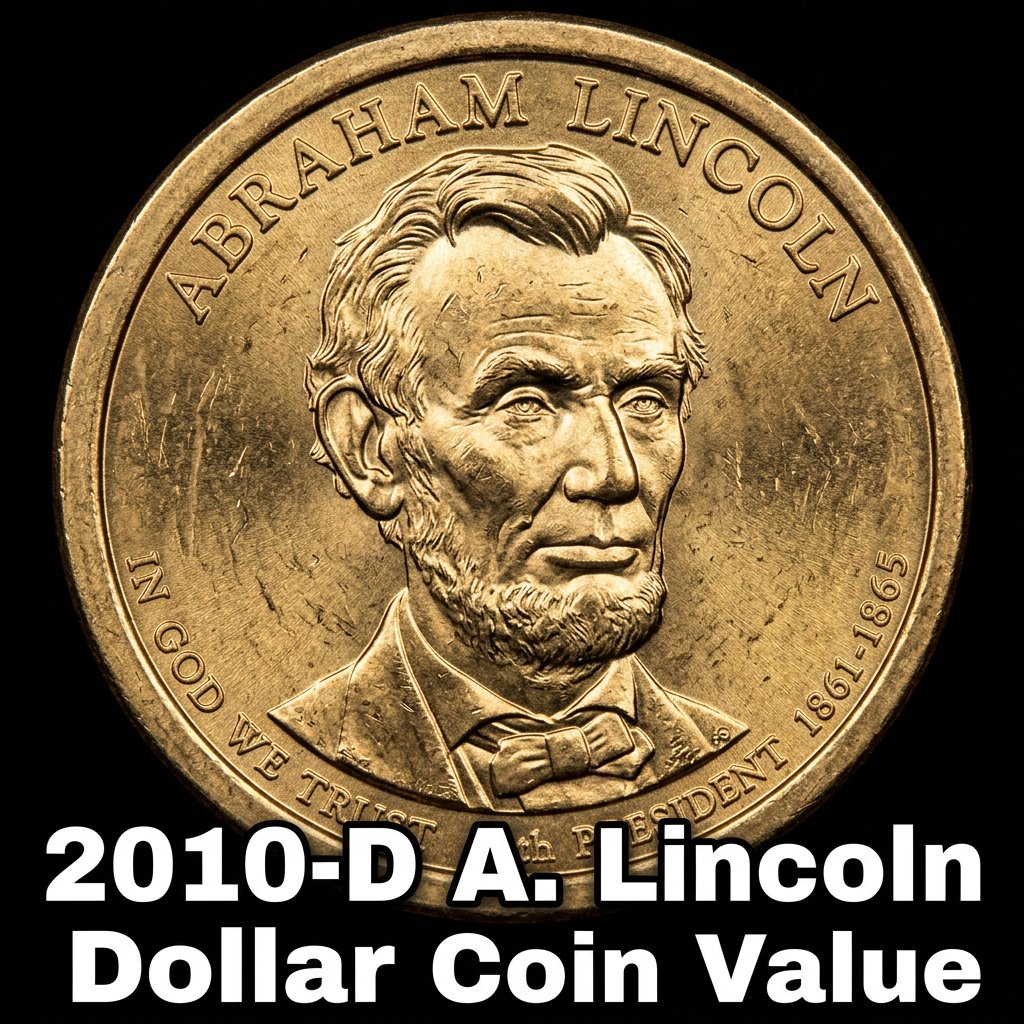
2010 D Abraham Lincoln Presidential Dollar Coin Value and Collector Guide
The 2010 D Abraham Lincoln Dollar is worth anywhere from $1.05 in circulated condition to over $150 in high-grade mint state. Whether you found one in your pocket change or inherited a small collection, these golden-colored coins are a fascinating piece of American history and numismatic interest.
The History and Mintage of the 2010 D Lincoln Dollar
The 2010 D Abraham Lincoln Dollar was issued as part of the Presidential $1 Coin Program, which began in 2007. This specific coin honors the 16th President of the United States, Abraham Lincoln, who is perhaps the most beloved figure in American history. The “D” mint mark indicates that the coin was struck at the Denver Mint. Because these coins were produced in large quantities—over 48 million in Denver alone—they are quite common in everyday circulation.
If you are unsure whether the coin you found is a genuine 2010 D Lincoln Dollar, you can use a free coin identifier app to get an instant identification. While looking for value, it is important to remember that by 2010, the public’s interest in the Presidential Dollar series had started to wane, leading the government to eventually stop producing them for general circulation a few years later. However, for 2010, they were still widely distributed.
When you use an app like CoinKnow to track your collection, you can see how the mintage numbers influence the long-term rarity of the coin. While millions were made, finding one in “Perfect” condition is a much harder task for the average hunter.
Understanding the Value of Your Lincoln Dollar
For most people, a 2010 Abraham Lincoln Dollar found in a jar of change is only worth its face value of $1. However, collectors look for specific attributes that can increase the price. The primary factor is the “Grade.” A coin that has been scratched or dulled by being spent at the grocery store will not command a premium. Conversely, a coin that has never been touched and still possesses its original “mint luster” can be worth significantly more.
According to current market data, the 2010 Lincoln Dollar auction value for high-grade specimens can reach impressive levels. While a standard circulated coin is just a dollar, a coin graded MS67 (Mint State 67) might sell for $20 to $50. If the coin reaches the elusive MS68 grade, collectors might pay over $150 to add it to their registry sets.
It is also interesting to compare this coin to others from the same era. For instance, the 2010 Sacagawea Dollar value often follows a similar trajectory, where condition determines everything. Amateur collectors often use CoinKnow to log their finds and compare their coins against professional grading standards to see if they have a “hidden gem” worth certifying.
Market Value Reference Table
To help you quickly determine what your coin might be worth, refer to the table below. Please note that “Circulated” refers to coins found in change, while “MS” (Mint State) refers to coins that are in uncirculated, brand-new condition.
| Condition / Grade | Estimated Value (USD) |
|---|---|
| Circulated (Average Condition) | $1.00 – $1.05 |
| Uncirculated (MS60 – MS63) | $2.00 – $5.00 |
| Choice Uncirculated (MS65 – MS66) | $10.00 – $25.00 |
| Superb Gem (MS67+) | $60.00 – $150.00+ |
Identifying Rare Errors and Varieties
One of the most exciting ways to find a valuable 2010 D Lincoln Dollar is by looking for mint errors. Because millions of these coins were produced at high speeds, mistakes occasionally happened. The most common error to look for on Presidential Dollars involves the “Edge Lettering.” The date, mint mark, and the motto “E Pluribus Unum” are actually inscribed on the thin edge of the coin rather than the face.
If you find a coin where the edge lettering is missing entirely (known as a “Smooth Edge” error), it could be worth $50 to $100. Another common variation is “Double Edge Lettering,” where the machine struck the edge twice, creating overlapping text. These errors are highly sought after by specialists and can be easily identified with a magnifying glass or the high-resolution zoom features found in CoinKnow.
Always check the physical “weight” and “feel” of the coin as well. While there are no major “composition” errors known for the 2010 D Lincoln Dollar, keeping an eye out for unusual colors or strikes can lead to a big payday. For most casual hunters, the joy is in the history, but the potential for a rare find makes every dollar coin worth a second look.
Frequently Asked Questions
Q: Is the 2010 D Abraham Lincoln Dollar made of real gold?
A: No, despite its golden appearance, the coin is made of a base metal composition consisting of 88.5% copper, 6% zinc, 3.5% manganese, and 2% nickel. There is no actual gold in the coin.
Q: Where can I find the mint mark on my Lincoln Dollar?
A: Unlike most coins where the “D” or “P” is on the front or back, the mint mark on the 2010 Presidential Dollars is located on the edge of the coin, along with the year of production.
Q: Should I clean my 2010 Lincoln Dollar to increase its value?
A: No, you should never clean a collectible coin. Cleaning creates tiny scratches on the surface that professional graders can detect, which significantly lowers the coin’s market value. Professional collectors prefer original “patina” or luster.
