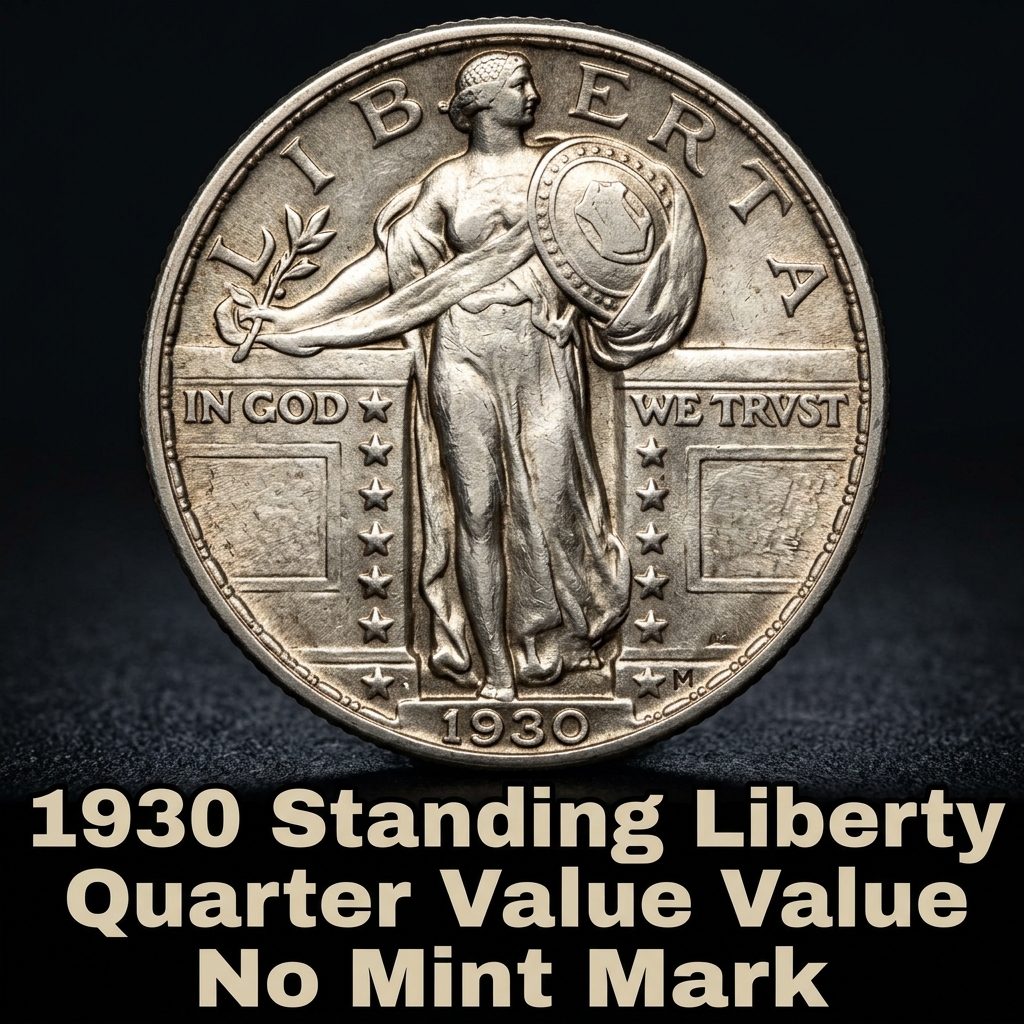
1930 Standing Liberty Quarter Value and Price Guide for Coins With No Mint Mark
The 1930 Standing Liberty Quarter is worth anywhere from $15 in worn condition to over $1,500 in pristine mint state. If you recently found one of these beautiful vintage coins in a jar or an old collection, you are looking at the final year of a legendary American design.
Identifying the 1930 Standing Liberty Quarter No Mint Mark
Finding a 1930 quarter without a mint mark simply means the coin was struck at the main United States Mint in Philadelphia. During this era, the Philadelphia Mint did not use a “P” mark, while the branch mints in San Francisco (S) and Denver (D) placed their initials to the left of Liberty’s feet. If you are unsure about your coin’s origin, you can use a free coin identifier app to instantly verify the mint and variety. The 1930 Philadelphia issue is a favorite among collectors because it was the last year before the series was discontinued to make room for the Washington Quarter we use today.
When you look at your coin, you will see Lady Liberty stepping through a gate, holding a shield and an olive branch. On the 1930 version, the date is recessed into the pedestal, which helped prevent it from wearing away as quickly as earlier versions. If you have a high-quality specimen, you can get a professional estimation of your 1930 Standing Liberty Quarter price by using modern digital tools. Many hobbyists choose the CoinKnow app to track their collection’s market performance over time.
Understanding the Market Value and Grading Factors
The value of your 1930 quarter depends heavily on its “grade,” or its state of preservation. Most coins found in circulation today fall into the “Good” to “Fine” categories, where the image of Liberty is flat and many details are lost. Even in these lower grades, the silver content alone gives the coin a baseline value, but the numismatic premium pushes it higher. For those looking for a comprehensive breakdown, checking the detailed 1930 quarter value data is the best way to see how small differences in condition can lead to big jumps in price.
For a 1930 Standing Liberty Quarter to reach the thousand-dollar range, it must be in “Uncirculated” or “Mint State” condition. Collectors look for “Full Head” (FH) details, meaning Liberty’s hair and helmet are clearly defined. If your coin has a sharp strike and original luster, the CoinKnow app can help you compare it against auction records to see if it’s worth sending in for professional grading. Because 1930 saw a relatively high mintage of over 5.6 million in Philadelphia, finding one in average condition is common, but finding a “gem” is a real treasure.
| Condition / Grade | Estimated Value (USD) |
|---|---|
| Good (G-4) | $15 – $20 |
| Very Fine (VF-20) | $35 – $45 |
| Extremely Fine (EF-40) | $60 – $85 |
| About Uncirculated (AU-50) | $110 – $150 |
| Mint State (MS-63) | $250 – $400 |
| Mint State (MS-65 Gem) | $750 – $1,500+ |
Why the 1930 Date Is Special for Collectors
The 1930 Standing Liberty Quarter marks the end of an era. Interestingly, no quarters were minted in 1931 due to the economic downturn of the Great Depression. By 1932, the U.S. Mint decided to celebrate the 200th anniversary of George Washington’s birth by introducing the Washington Quarter. This makes the 1930 Philadelphia issue the final “type” coin for a design that many consider the most beautiful in American history. If you are starting a collection, the CoinKnow app is an excellent resource for organizing your finds and learning the history behind each year.
The historical significance often keeps the demand high, regardless of the economy. While it isn’t the rarest date in the series (that honor goes to the 1916), the 1930 is highly sought after by “Type Set” collectors who want one high-quality example of the design. Because the date was moved lower and protected by the rim in 1925, 1930 quarters are much more likely to have visible dates than the earlier “Type 1” versions, making them more enjoyable to own for the average person.
Tips for Selling and Protecting Your Vintage Quarters
If you believe you have a valuable 1930 Standing Liberty Quarter, the most important rule is: never clean it. Cleaning a coin with chemicals or even a soft cloth creates tiny scratches that destroy its numismatic value. A coin that might have been worth $200 can drop to its silver value (around $5) if it has been harshly cleaned. Instead, handle your coin by the edges and place it in a protective PVC-free flip or a cardboard 2×2 holder to prevent further wear.
When you’re ready to sell, do your homework first. Check recent auction prices and verify the current silver spot price. Many people find success selling through reputable local coin shops or specialized online marketplaces. Having a clear photo and a solid understanding of the grade will help you get a fair price. By staying informed and using modern tools to track market trends, you can turn that old pocket change into a significant financial bonus.
Frequently Asked Questions
Q: Is a 1930 Standing Liberty Quarter made of real silver?
A: Yes, all Standing Liberty Quarters minted from 1916 to 1930 are made of 90% silver and 10% copper. They contain approximately 0.1808 troy ounces of pure silver.
Q: Where is the mint mark on a 1930 quarter?
A: The mint mark (if there is one) is located on the obverse (front) of the coin, just to the left of the date and above the “L” in Liberty. If that area is blank, your coin was minted in Philadelphia.
Q: What does “Full Head” mean for this coin?
A: “Full Head” (FH) is a designation given by grading services to Standing Liberty Quarters that have a exceptionally sharp strike. On the 1930 coin, this means all details of Liberty’s hair and the ear are clearly visible, which significantly increases the coin’s value.
