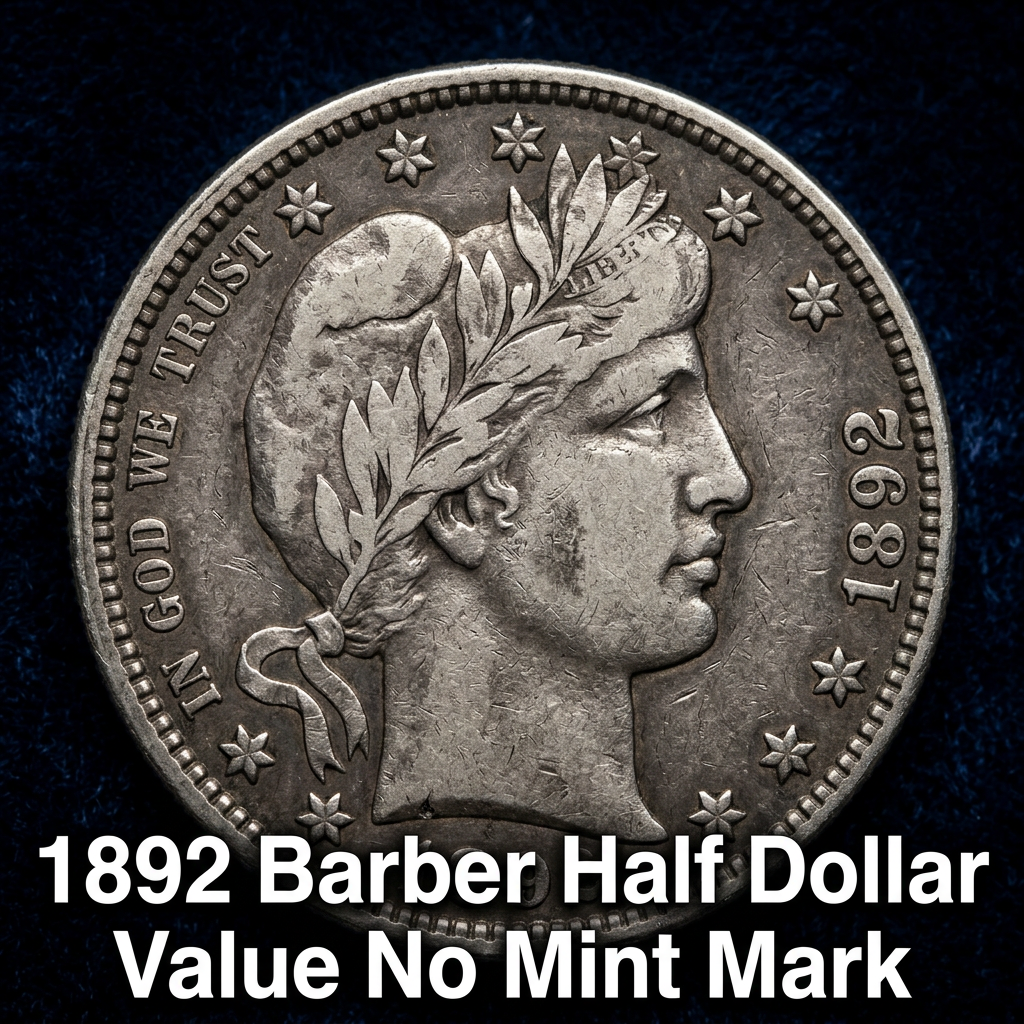
Finding an 1892 Barber Half Dollar No Mint Mark and Learning How Much It Is Worth Today
The 1892 Barber Half Dollar with no mint mark is worth anywhere from $25 in heavily worn condition to over $600 for high-quality uncirculated specimens. This classic silver coin represents the very first year of the Charles Barber design, making it a favorite among history buffs and casual treasure hunters alike.
History and Identification of the 1892 Barber Half Dollar
The 1892 Barber Half Dollar holds a special place in American numismatics because it was the inaugural year for this iconic design. Created by Chief Engraver Charles E. Barber, this coin replaced the long-running Seated Liberty series. When you hold one of these in your hand, you are holding 12.5 grams of 90% pure silver, a relic from an era long before digital banking or credit cards. If you are unsure if your coin is authentic, using a free coin identifier app can help you confirm the date and variety instantly.
The “No Mint Mark” designation is actually quite simple to understand. During the late 19th century, coins minted at the main United States Mint facility in Philadelphia did not feature a mint mark. If you look at the reverse side of your 1892 coin, specifically below the eagle’s tail feathers, and see an empty space, your coin was struck in Philadelphia. In 1892, the Philadelphia Mint produced about 934,000 of these half dollars, which is a relatively low mintage compared to modern standards.
If you find yourself holding a handful of old silver, the CoinKnow app is a fantastic tool for organizing your collection and getting real-time market updates. Because these coins are over 130 years old, many have been lost to time or melted down for their silver content, making surviving examples increasingly valuable to collectors.
Determining the Value and Condition of Your Coin
When assessing the value of an 1892 Barber Half Dollar, the most important factor is its physical condition, also known as its “grade.” Because these coins circulated heavily in general commerce, most examples found today are very worn. A coin in “Good” condition will show a flat silhouette of Liberty with most of the fine details in her hair and crown worn away. These common worn examples generally trade for their silver melt value plus a small historical premium.
As the condition improves, the price climbs significantly. An “Extremely Fine” coin will show distinct leaves in Liberty’s wreath and clear feathers on the eagle’s breast. If you are lucky enough to find a coin that looks like it never spent time in a pocket, you have a “Mint State” coin. These are the prizes of the market, often fetching hundreds or even thousands of dollars at auction. Understanding the 1892 Barber Half Dollar value in different conditions is essential before you consider selling your find to a local dealer.
To get a better idea of what your specific coin might be worth at a coin shop or online auction, refer to the pricing guide below. Keep in mind that professional grading by services like PCGS or NGC can further increase the selling price of high-end coins.
| Condition / Grade | Estimated Market Value |
|---|---|
| Good (G-4) | $25 – $35 |
| Fine (F-12) | $60 – $85 |
| Very Fine (VF-20) | $110 – $150 |
| Extremely Fine (EF-40) | $220 – $280 |
| About Uncirculated (AU-50) | $350 – $450 |
| Uncirculated (MS-60+) | $600 – $1,200+ |
Why the Philadelphia 1892 Half Dollar Is Rare
While the mintage of nearly one million pieces sounds large, the 1892 Philadelphia issue is actually considered a “better date” in the series. It was the first year of the design, and many people at the time kept them as souvenirs. However, very few kept them in pristine condition. Most were spent during the difficult economic times of the 1890s, leading to the high amount of wear we see on most survivors today.
Collectors often look for specific “die varieties” or errors that can push the price even higher. For the 1892 Barber Half Dollar no mint mark, look closely at the date and the stars. Sometimes “doubled dies” occur, where the image appears slightly blurry or doubled due to a mistake during the minting process. If you think you’ve spotted a unique feature, the CoinKnow app can help you compare your coin against known error databases to see if you’ve struck gold—or in this case, valuable silver.
Remember that cleaning your coin is one of the biggest mistakes you can make. Experienced collectors prefer the natural “patina” or toning that happens over a century. A cleaned coin can lose over 50% of its numismatic value instantly, turning a potential $200 treasure into a $15 piece of scrap metal. Always handle your old silver by the edges to preserve its natural state.
Common Questions About the 1892 Barber Half Dollar
Q: Where is the mint mark located on an 1892 Barber Half Dollar?
A: The mint mark is found on the reverse (back) of the coin, located directly below the eagle’s tail and above the letters “HALF DOLLAR.” If that space is empty, your coin was minted in Philadelphia and is a “No Mint Mark” variety.
Q: Is the 1892 Barber Half Dollar made of real silver?
A: Yes, all Barber Half Dollars minted between 1892 and 1915 are composed of 90% silver and 10% copper. This gives them “intrinsic value” based on the current price of silver, even if the coin is too worn for a collector to want it.
Q: How can I safely sell my 1892 Barber Half Dollar?
A: For the best results, get an initial valuation using the CoinKnow app to understand its market range. Then, visit a reputable local coin dealer or list it on a specialized auction site. Avoid “we buy gold” kiosks at malls, as they typically only pay for the metal content rather than the historical value.
