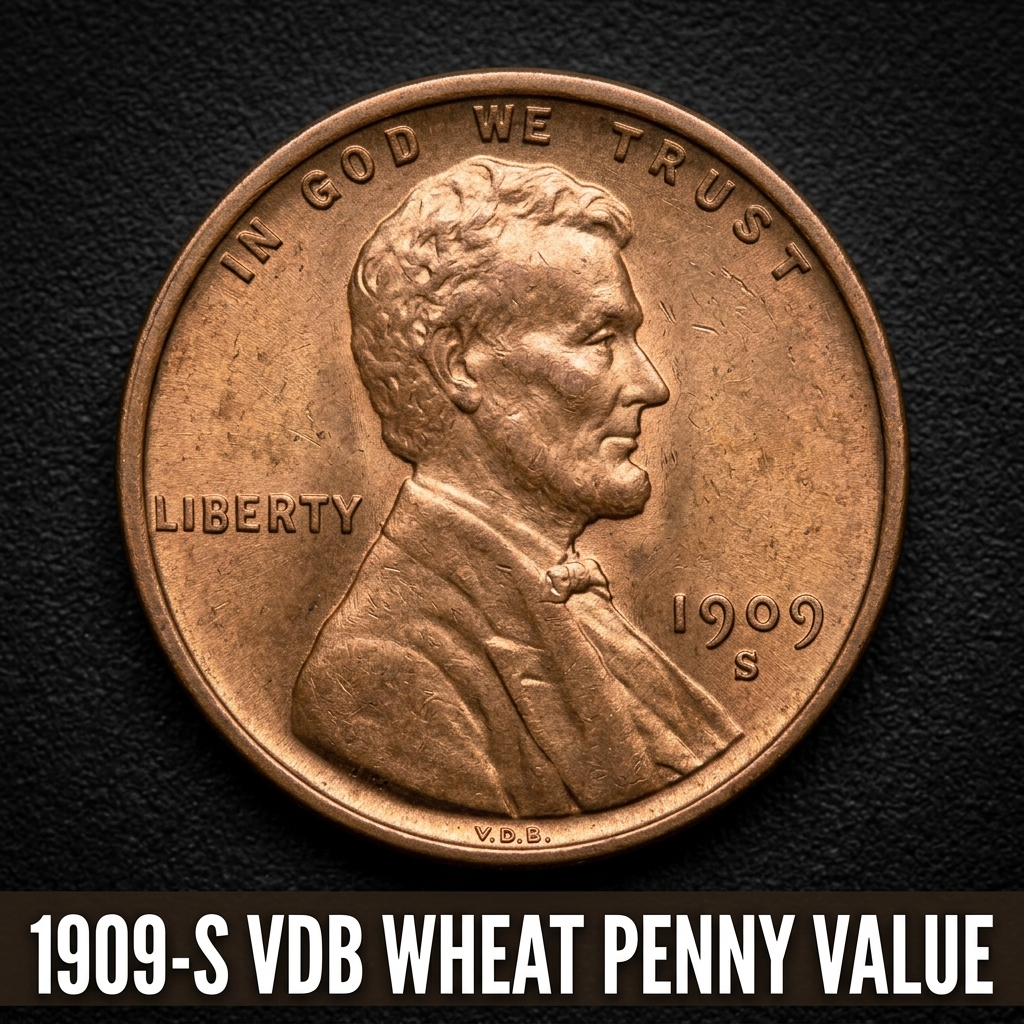
How Much Is a 1909-S VDB Wheat Penny Worth Today
The 1909-S VDB Wheat Penny is worth anywhere from $750 in heavily circulated condition to over $10,000 in pristine uncirculated mint state. Known as the “Holy Grail” of small cents, this iconic coin represents the pinnacle of American coin collecting for everyday people who find treasure in their pocket change.
The History and Rarity of the 1909-S VDB Penny
If you have discovered a 1909-S VDB Wheat Penny, you are holding one of the most significant pieces of American history. This coin was minted during the first year of the Lincoln Penny series, which replaced the Indian Head design to honor the 100th anniversary of Abraham Lincoln’s birth. The “V.D.B.” initials belong to the designer, Victor David Brenner. Shortly after production began, the public complained that his initials were too prominent on the reverse, leading the Mint to remove them quickly.
Because the “S” mint mark indicates it was struck in San Francisco, and the “V.D.B.” indicates it was a very early run, only 484,000 of these coins were ever made. This tiny mintage level is why the coin is so expensive today. To verify if your find is genuine or a common counterfeit, you might use a free coin identifier app to check the placement of the mint mark and the initials.
When you use the CoinKnow app, you can see how the scarcity of this specific date drives competition at auctions. Collectors are often desperate to fill this specific hole in their albums, meaning even damaged or “ugly” versions of this coin retain a high baseline value that most other pennies could never reach.
Determining the Current Market Value
The value of your 1909-S VDB Penny is dictated almost entirely by its “grade,” or the amount of wear it has sustained over the last century. A coin that has been rattling around in a jar for decades will be worth significantly less than one that has remained in a protective case. Because so much money is at stake, most professional collectors only buy these coins if they have been certified by a grading service like PCGS or NGC.
For those looking for real-time data, checking a 1909-S VDB penny price guide can provide insight into what recent sales are fetching on the open market. Mint state examples, which still have their original reddish copper glow, can easily skyrocket into the five-figure range. Even if yours is brown and worn, it is still a massive payday compared to a standard penny.
Below is a breakdown of estimated values based on various conditions. Keep in mind that “Red” (RD) coins are the most valuable, followed by “Red-Brown” (RB) and “Brown” (BN).
| Condition / Grade | Estimated Market Value |
|---|---|
| Good (G-4) | $750 – $850 |
| Fine (F-12) | $950 – $1,100 |
| Extremely Fine (XF-40) | $1,300 – $1,500 |
| About Uncirculated (AU-50) | $1,800 – $2,200 |
| Mint State (MS-63 Brown) | $2,700 – $3,500 |
| Mint State (MS-65 Red) | $10,000 – $15,000+ |
How to Identify a Genuine 1909-S VDB Penny
Because this coin is so valuable, there are many fakes in circulation. A common deceptive practice is to take a 1909 VDB penny (which is common and worth about $15) and “glue” or solder an “S” mint mark onto it. To ensure you have the real deal, look closely at the “S” under a magnifying glass. On a genuine coin, the “S” should be crisp and specifically positioned.
You should also examine the “V.D.B.” initials at the very bottom of the reverse side. On the 1909-S VDB, the dots after the letters are very specific; the dot after the “B” should be centered vertically. If you are unsure, utilizing the CoinKnow tool can help you compare your coin’s features against authenticated high-resolution images of genuine specimens.
Before you sell, it is wise to research the current 1909-S VDB penny appraisal values so you don’t get low-balled by a local dealer. Knowing the technical details of your coin puts the power back in your hands as a seller.
Why the 1909-S VDB Remains a Legend
The appeal of this coin goes beyond its price tag. It represents the “American Dream” of coin hunting—the idea that a single cent could pay for a vacation or even a car. The CoinKnow app frequently sees users uploading photos of old jars of change hoping to find this specific date and mint mark combination.
Even in poor condition, the coin is a survivor. Most of the 484,000 minted were used in daily commerce and eventually lost or melted down. The few that remain are prized possessions. If you are lucky enough to own one, handle it only by the edges and never attempt to “clean” it, as cleaning a rare coin can actually strip away half its value instantly.
By staying updated on auction records and market trends, you can decide whether to hold onto your 1909-S VDB as an investment or sell it to take advantage of today’s high demand. In the world of numismatics, this penny is, and likely always will be, the king of the Wheat cents.
Frequently Asked Questions
Q: Where are the V.D.B. initials located on the 1909-S VDB Penny?
A: The initials “V.D.B.” are located on the reverse (back) of the coin, at the very bottom edge between the ends of the two wheat stalks.
Q: What is the difference between a 1909-S VDB and a regular 1909-S penny?
A: The 1909-S (without the VDB initials) is also rare and valuable, but it has a higher mintage of about 1.8 million. The VDB version is much rarer and usually worth 2 to 3 times more than a standard 1909-S.
Q: Should I get my 1909-S VDB penny graded?
A: Yes. Because this is one of the most counterfeited coins in history, most buyers will not pay full price unless it is authenticated and graded by a reputable service like PCGS or NGC.
