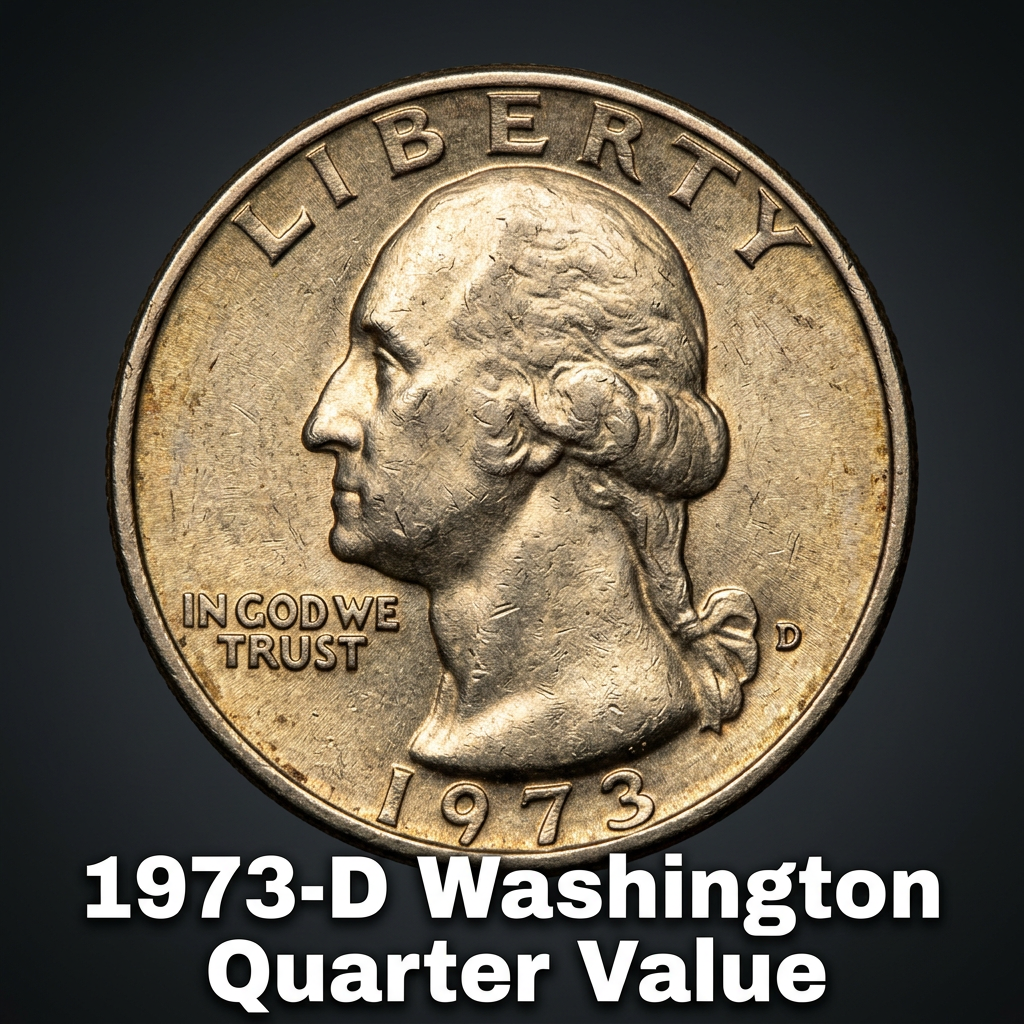
How Much is a 1973 D Washington Quarter Worth Today
The 1973 D Washington Quarter is worth anywhere from its face value of $0.25 in worn condition to over $3,500 in rare, high-grade mint states. If you have found one of these copper-nickel coins in your pocket change, don’t spend it just yet until you understand what makes certain specimens valuable.
Identifying the 1973 D Washington Quarter and Its Features
The 1973 D Washington Quarter is a common sight in American currency, but it holds a specific place in numismatic history. By 1973, the United States Mint had long transitioned away from silver, meaning these coins are composed of a copper core clad with a mixture of copper and nickel. The “D” mint mark located on the obverse (front) of the coin, just to the right of George Washington’s ponytail, signifies that it was produced at the Denver Mint. In that year, Denver struck over 136 million quarters, making them very easy to find even today.
If you are unsure whether your coin is a Denver strike or from another mint, using a free coin identifier app can quickly clear up any confusion. While most 1973 D quarters you find in your daily transactions will only be worth twenty-five cents, collectors look for specific attributes. To get a professional perspective on your collection, you can also check the CoinKnow app, which helps hobbyists track the market trends of circulating coinage.
Understanding the Market Value and Price Grades
Determining the exact value of your coin requires an understanding of the grading scale. Most quarters from 1973 have been heavily circulated, showing wear on Washington’s hair and the eagle’s breast feathers. However, coins that were tucked away in jars or sets remain in “Mint State” (MS). The current market prices for 1973 D Washington Quarters in MS condition show a massive jump once the grade reaches MS67 or higher.
While an MS63 coin might only be worth a few dollars, an MS67 specimen is a rarity that collectors fight over at auctions. Because the Denver Mint often had issues with die clashing and bag marks during this era, finding a “clean” 1973 D quarter is harder than it sounds. For a detailed breakdown of how condition affects the bottom line, browse the 1973 Washington Quarter value guide per grade to see where your specific coin fits in.
| Condition / Grade | Estimated Value (USD) |
|---|---|
| Circulated (Good to About Uncirculated) | $0.25 – $0.85 |
| Uncirculated (MS60 – MS63) | $1.00 – $5.00 |
| Choice Uncirculated (MS65) | $15.00 – $25.00 |
| Superb Gem (MS67+) | $450.00 – $3,500.00+ |
Look for Rare 1973 D Quarter Errors
One way a standard 1973 D quarter becomes significantly more valuable is through mint errors. During the high-speed production process at the Denver Mint, mistakes occasionally happened. Common errors to look for include “Double Die” strikes, where the lettering or the date appears to have a shadow or a second image. While there are no major “headline” doubled dies for 1973 D, minor ones can still fetch a premium from niche collectors.
Another interesting error is the “Off-Center” strike, where the coin blank was not properly aligned, resulting in a partial image. You might also find coins with “Clipped Planchets,” where a piece of the metal disc was missing before it was even stamped. If you suspect you have found an error, the CoinKnow app provides a database of known variations to help you verify your discovery. These errors can turn a common quarter into a piece worth $50, $100, or even more depending on the severity of the mistake.
Is the 1973 D Washington Quarter Made of Silver?
A common question among casual finders is whether the 1973 D quarter contains any silver. The answer is no. The United States stopped using 90% silver for quarters after 1964. From 1965 onwards, quarters were made of a “clad” composition. You can easily verify this by looking at the edge of the coin. If you see a distinct copper-colored stripe running along the side, it is a standard clad coin.
Even without silver content, the 1973 D Washington Quarter remains a favorite for “album fillers” looking to complete a set of every year and mint mark. For everyday Americans, the main value lies in the hunt for that one pristine, high-grade survivor that missed the wear and tear of circulation. Keep your eyes peeled for luster—the shiny, cartwheel-like reflection of light—as that is the first sign your quarter might be worth more than just twenty-five cents.
Frequently Asked Questions
Q: How can I tell if my 1973 D quarter is rare?
A: Check the condition first. If it looks brand new with no scratches, it may be a high-grade specimen. Next, look for errors like doubling in the letters or a missing “D” mint mark due to a filled die. Finally, use an app like CoinKnow to compare it with known high-value sales.
Q: Where is the mint mark on a 1973 D Washington Quarter?
A: The mint mark is located on the obverse side (the head’s side). Look to the right of George Washington’s neck, just above the date. The “D” stands for Denver. Coins with no mint mark were struck in Philadelphia.
Q: Is it worth getting a 1973 D quarter professionally graded?
A: It is generally only worth the cost of professional grading if the coin appears to be in near-perfect condition (MS66 or higher) or if it has a significant, visible mint error. Because grading costs can exceed $30-$50, the coin needs to be worth substantially more than that to justify the expense.
