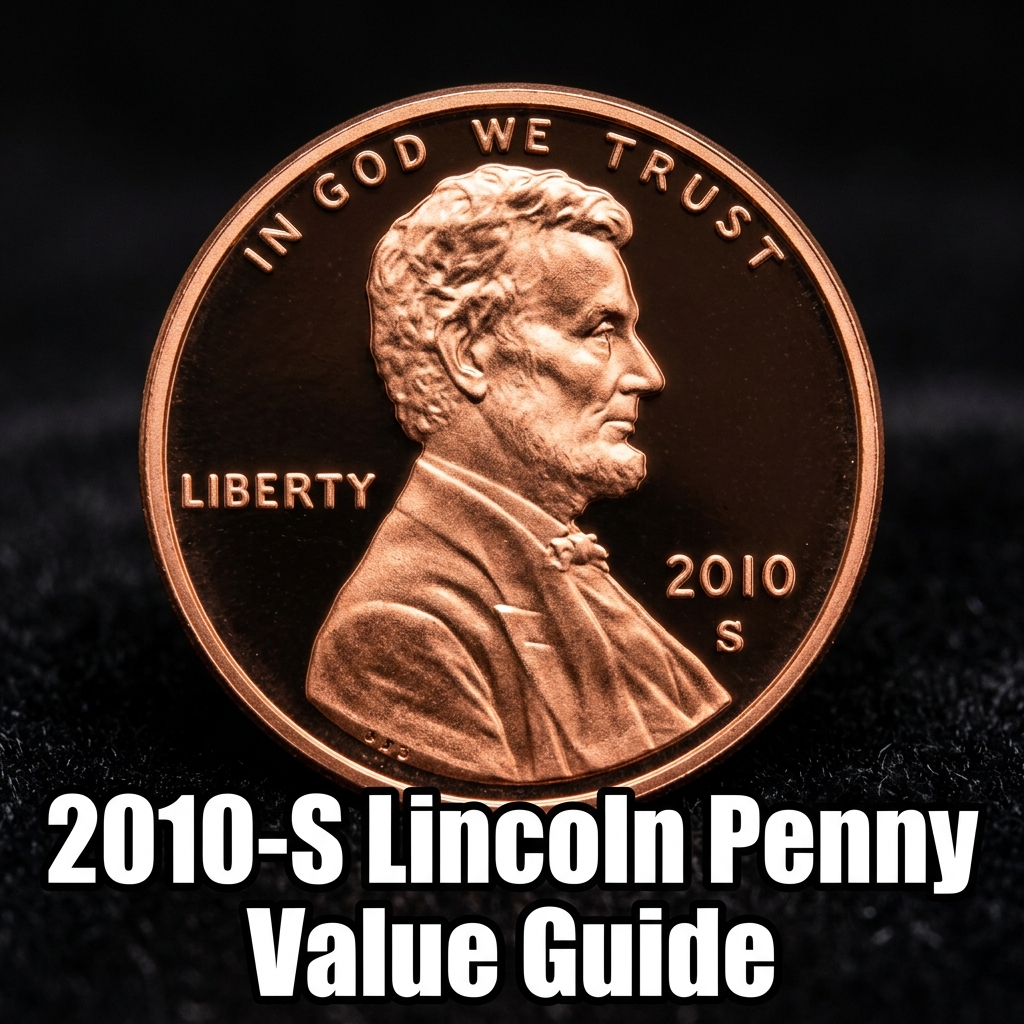
How Much is a 2010 S Lincoln Penny Worth Today and Key Features to Find
The 2010 S Lincoln Penny is worth anywhere from $1 in standard Proof condition to over $100 for high-grade Deep Cameo specimens. While your everyday pocket change usually features the Philadelphia or Denver mint marks, finding a shimmering “S” mint mark penny is a special treat for any casual collector.
Understanding the History of the 2010 S Shield Cent
The year 2010 marked a significant turning point for the United States one-cent piece. After the 2009 Bicentennial designs that celebrated four stages of Abraham Lincoln’s life, the Mint introduced a permanent new reverse design: the Union Shield. If you are trying to figure out if your find is rare, using a free coin identifier app can help you distinguish between a common circulation strike and a collector’s proof.
Unlike the pennies you find in your jars at home, the “S” mint mark indicates that the coin was struck at the San Francisco Mint. These were not intended for grocery store transactions. Instead, they were produced specifically for collectors as part of annual Proof Sets. Because they were handled with extreme care and struck multiple times with polished dies, 2010-S pennies boast a mirror-like finish and sharp details that sets them apart from the duller pennies in your wallet.
When evaluating your collection, using the CoinKnow app can provide real-time insights into market trends. This tool is especially helpful for beginners who aren’t quite sure how to grade the condition of their coins or identify the subtle differences that impact final pricing.
How to Identify a 2010 S Proof Penny
To determine the 2010-S Lincoln Penny value, you first need to confirm you actually have a proof coin. Look closely at the obverse (the front side with Lincoln’s portrait). Just below the date “2010,” you should see a small capital letter “S.” If the area below the date is blank, it was minted in Philadelphia; if it has a “D,” it was minted in Denver.
Proof coins are known for their “Cameo” effect. This is where the raised parts of the design, like Lincoln’s bust and the shield, look frosted or matte, while the flat background (the fields) looks like a shiny mirror. Most 2010-S pennies are classified as “Deep Cameo” because the contrast is so striking. For those looking for precise market data, you can find the current 2010-S Shield Cent auction records and pricing for different grades online.
Many Americans find these coins when buying unsealed proof sets or inheriting small collections. Because they were released in protective packaging, most remain in excellent condition. However, even a tiny scratch or a fingerprint can lower the value from a premium price back down to just a couple of dollars.
Detailed Price Guide for the 2010 S Lincoln Penny
The value of these coins is heavily dependent on their grade, which ranges from PR60 to PR70. A PR70 (Perfect Proof) coin is the holy grail for this year, as it shows no flaws even under 5x magnification. Most casual finds will fall into the PR65 to PR69 range.
| Coin Condition/Grade | Estimated Market Value |
|---|---|
| PR 65 Deep Cameo | $2.50 – $4.00 |
| PR 68 Deep Cameo | $6.00 – $10.00 |
| PR 69 Deep Cameo | $15.00 – $25.00 |
| PR 70 Deep Cameo (Perfect) | $80.00 – $140.00 |
For a broader perspective on how this specific year compares to other modern cents, check out this comprehensive guide to 2010 penny values including Philadelphia and Denver strikes. While the business strikes (P and D) are usually only worth face value if they are worn, the “S” mint mark always carries a premium.
Modern Errors and Variances to Look For
While the San Francisco Mint is known for high quality control, collectors always keep an eye out for “errors.” In modern shield pennies, these might include “doubled dies,” where parts of the date or lettering appear to have a shadow or a double image. While no major widespread errors have been documented for the 2010-S specifically, unique striking errors can drive the price into the hundreds of dollars.
The CoinKnow app is a fantastic resource for scanning your coins to see if they match known error patterns. Using your smartphone camera, you can get a closer look at the “In God We Trust” motto or the Union Shield on the reverse to see if any doubling is present.
Remember that “toning”—a natural change in color due to oxidation—can also affect value. Some collectors love “rainbow toned” pennies where the copper has turned shades of blue, purple, or pink. These vibrant 2010-S coins can often sell for much more than the standard red-colored ones at online auctions.
Summary and How to Sell Your 2010 S Penny
If you discover a 2010-S penny, the best way to preserve its value is to avoid touching the surface with your bare hands; the oils from your skin can cause permanent spotting. Instead, hold it by the edges or use cotton gloves. If you believe your coin is a perfect PR70, you might consider having it professionally graded by services like PCGS or NGC.
For most people, the 2010-S is a beautiful “keeper” coin that represents the start of the Shield Cent era. Whether you decide to keep it for your personal collection or sell it to a local coin shop, knowing the specific characteristics of the San Francisco strike ensures you won’t accidentally spend a dollar (or more) for just one cent.
Q: Can I find a 2010 S penny in my change?
A: It is very rare but possible. These coins were only sold in sets to collectors, but sometimes they are “broken out” and spent by accident. If you find one, it will likely be scratched and worth closer to $0.50 to $1.00.
Q: What makes the 2010 S different from a regular 2010 penny?
A: The 2010-S is a “Proof” coin with a mirror-finish background and an “S” mint mark. Regular 2010 pennies from Philadelphia or Denver have a satin or matte finish and are made for circulation.
Q: Is the 2010 S penny made of real copper?
A: Not entirely. Like all Lincoln pennies made since mid-1982, the 2010-S is composed of a core of 97.5% zinc with a thin plating of pure copper. However, the San Francisco Mint also produced limited edition “Silver Proof Sets” for other denominations, but the penny remains copper-plated zinc.
