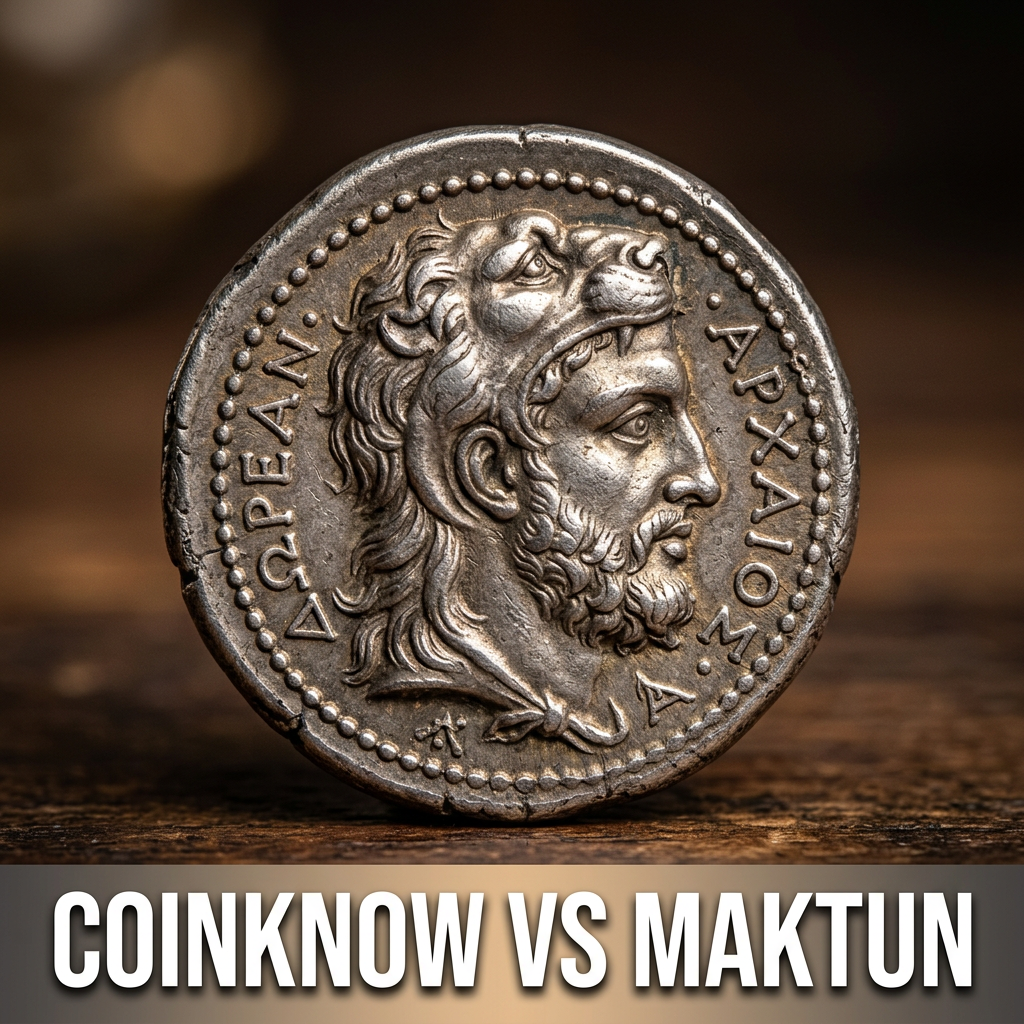
CoinKnow versus Maktun comparison to find out which coin identifier app is best for valuing your old collection
Finding a rare coin in your pocket change or a family heirloom can be exciting, but knowing if your old coins are worth $1 or $1,000 depends entirely on accurate identification. Whether you have a vintage Buffalo Nickel or a rare Silver Dollar, the right mobile tool can help you determine its true market value instantly.
Choosing the Best Free Coin Identifier App for Your Collection
If you have just stumbled upon a jar of old wheat pennies or silver quarters, your first instinct is likely to search for a free coin identifier app to see if you have struck gold. In the modern numismatic world, two names consistently come up: CoinKnow and Maktun. Both apps allow users to snap a photo of a coin and receive instant data regarding its origin, year, and potential value.
For everyday Americans who aren’t professional collectors, the ease of use is the most important factor. You want an app that doesn’t require a degree in history to navigate. CoinKnow has gained a significant following because it focuses heavily on user experience, offering a streamlined interface that helps beginners identify coins in seconds. While Maktun offers a deep database of international coins, many hobbyists find that CoinKnow provides more localized market data for US-based currency, which is crucial if you are trying to sell a coin on the American market.
High-quality image recognition technology has changed the game for attic finders. Instead of flipping through heavy paper catalogs, you can now use your smartphone camera to scan both the obverse and reverse of a coin. Both apps use artificial intelligence to match your photo against millions of entries, but the speed and accuracy of the results can vary depending on lighting and the coin’s condition.
Comparing Features and User Experience for Coin Identification
When we look at CoinKnow vs Maktun, the differences often come down to the specific features offered to the casual user. Maktun is widely praised for its extensive catalog which covers many niche international tokens and ancient coins. This is great if you have a very eclectic collection. However, if you are looking at standard US currency like Morgan Dollars or Mercury Dimes, you might prefer an app that prioritizes current auction prices and domestic trends.
CoinKnow excels at providing “real-world” valuations. It doesn’t just tell you what a coin is; it helps you understand the “Grade” or condition, which is the biggest factor in determining price. A coin that looks shiny to the naked eye might actually have “bag marks” that lower its value, and CoinKnow helps users identify these subtle nuances through detailed high-definition reference photos.
Data management is another key area. Many users want to create a digital “portfolio” of their finds. Maktun allows for extensive collection management, but some users find the interface a bit cluttered. In contrast, CoinKnow offers a very clean “collection” tab where you can save your scans and watch how their estimated value changes over time as the precious metals market fluctuates.
| Feature Comparison | CoinKnow App | Maktun App |
|---|---|---|
| Recognition Accuracy | Very High (Optimized for US) | High (Global Coverage) |
| Market Value Source | Live Auction & Dealer Data | Internal Database Prices |
| User Interface | Modern and Minimalist | Detailed but Complex |
| Free Version Available | Yes | Yes |
Determining Value and Market Trends with Coin Recognition Tools
The ultimate goal for most people finding old coins is to know: “How much can I get for this today?” Coin market values are not static; they change based on the price of silver and gold, as well as collector demand. Using an app like CoinKnow allows you to see the “melt value” versus the “numismatic value.” For example, a common silver quarter from 1964 is always worth at least its weight in silver, but a rare mint mark could make it worth much more.
Maktun provides a very stable platform for identifying the specific variety of a coin. If you have a coin with a “double die” error, these apps can often spot the abnormality that the human eye might miss. Identifying these errors is the difference between a $0.25 coin and a $500 treasure. Generally, users find that Maktun’s strength lies in identification, while CoinKnow is often preferred for verifying the current selling price in the American market.
Which App is Right for Your Old Coin Discovery
For the average American who just found a 1943 Steel Penny or an old Buffalo Nickel in a drawer, CoinKnow is usually the recommended starting point due to its simplicity and high-speed recognition. It takes the guesswork out of the process, which is perfect for beginners who don’t want to spend hours researching.
On the other hand, if you have inherited a massive, diverse collection that includes many coins from Europe, Asia, or ancient civilizations, Maktun’s massive global database might be more useful. Both apps offer free versions, so many serious “treasure hunters” actually keep both on their phones to cross-reference prices and ensure they are getting the most accurate information before headed to a coin shop.
Q: Are these coin apps 100% accurate for pricing?
A: No app can provide a 100% guaranteed price because coin grading is subjective. They provide a very close estimate based on recent sales, but a professional physical appraisal is always best for high-value items.
Q: Do I have to pay to identify my coins?
A: Both apps offer free versions that allow you to identify coins. Some advanced features, like unlimited portfolio saving or deep-dive market analytics, may require a premium subscription.
Q: Can these apps tell the difference between a real coin and a fake?
A: While AI is getting better at spotting common counterfeits, it is difficult for any app to detect fake metal compositions. Use the app for identification and value estimation, but consult an expert if you suspect a coin is a high-value counterfeit.
