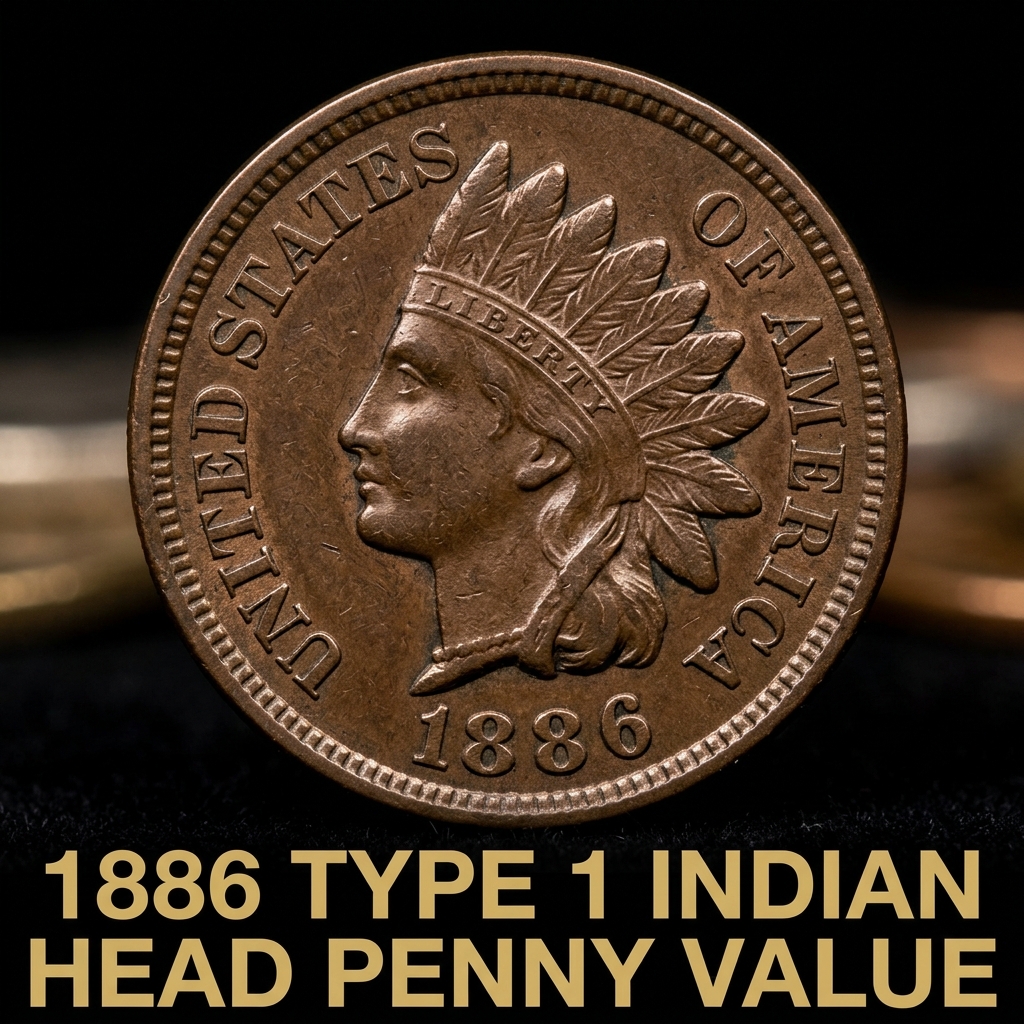
1886 Type 1 Indian Head Penny Value Identification and Price Guide
The 1886 Type 1 Indian Head Penny is worth anywhere from $5 in worn condition to over $1,200 in pristine mint state. If you have found one of these vintage copper coins in an old jar or a collection, you might be holding a piece of American history that carries a significant premium over its face value.
How to Identify the Rare Type 1 Variety of the 1886 Indian Head Penny
When examining your 1886 penny, the most important thing to look at is the position of the letters in the word “AMERICA” on the reverse side. In 1886, the U.S. Mint transitioned between two different hub designs. The Type 1 variety, which was used for the first half of the year, features the lowest feather on the Indian’s headdress pointing directly between the “I” and “C” in “AMERICA.”
Because this was a transition year, identifying the specific variety is the first step in determining the accurate market price. Many beginners use a free coin identifier app to get a quick visual confirmation of which type they own. If you find that the feather points between the “I” and the “C,” you have the Type 1. If it points past the “C,” it is a Type 2, which is generally considered more scarce.
Using tools like CoinKnow can also help you zoom in on these tiny details to ensure you aren’t misidentifying your coin. Collectors are very specific about these varieties, so getting it right is the difference between a common find and a valuable treasure.
Determining the Condition and Grade of Your 1886 Penny
The value of your 1886 Type 1 Indian Head Penny depends heavily on its “grade,” or its state of preservation. Most coins found in circulation today will be in “Good” or “Very Good” condition. This means the details on the headdress and the word “LIBERTY” are mostly worn away, but the date and major outlines remain clear.
For a coin to reach the higher value brackets, it must retain original luster and sharp details. If you can see all the letters in “LIBERTY” on the headband, your coin is at least in “Fine” or “Very Fine” condition. For those lucky enough to find a coin with a bright red copper glow, you are looking at “Uncirculated” grades.
To get a better sense of market trends, many hobbyists check professional databases. For instance, the 1886 Type 1 Indian Head Penny auction records show that coins with “Red” (RD) designations command the highest prices from serious investors and collectors.
1886 Type 1 Indian Head Penny Value Chart
Understanding the current market value requires a look at how professional graders categorize these coins. Below is a guide to the average prices you can expect based on various levels of wear.
| Condition / Grade | Estimated Market Value |
|---|---|
| Good (G-4) | $5 – $8 |
| Fine (F-12) | $15 – $22 |
| Extremely Fine (EF-40) | $45 – $60 |
| About Uncirculated (AU-50) | $85 – $110 |
| Mint State (MS-63 Red-Brown) | $250 – $350 |
| Mint State (MS-65 Red) | $1,200+ |
Why the 1886 Type 1 Variety Matters to Collectors
In the world of numismatics, transition years like 1886 are highly sought after. While nearly 18 million pennies were struck in 1886, most of those were the Type 1 variety. This makes the Type 1 slightly less valuable than the Type 2, but it remains a staple for anyone trying to complete an Indian Head Penny album.
Beyond just the 1886 date, collectors often compare this era to other late 19th-century issues. For example, understanding the 1898 Indian Head Penny investment potential provides context for how values fluctuate based on mintages and survival rates of copper coins.
If you are just starting your collection, downloading the CoinKnow app can help you track these nuances. It allows you to organize your finds and stay updated on whether the market for 1880s copper is rising or falling, ensuring you never sell a valuable coin for less than it is worth.
Tips for Selling and Protecting Your Vintage Penny
If you believe you have a high-grade 1886 Type 1 penny, do not attempt to clean it. Cleaning a coin with chemicals or even a soft cloth can create microscopic scratches that destroy its numismatic value. A “shiny” coin that has been cleaned is worth significantly less than a dark, naturally toned coin.
Instead, place the coin in a PVC-free plastic flip or a cardboard “2×2” holder to protect it from the oils on your skin and humidity in the air. If the coin looks exceptionally well-preserved, consider having it authenticated by a service like PCGS or NGC.
Before you take it to a local coin shop, use CoinKnow to get a ballpark estimate. Having a digital record and a clear understanding of the Type 1 vs. Type 2 characteristics will give you more leverage when negotiating a fair price with a dealer.
Q: How can I tell the difference between 1886 Type 1 and Type 2?
A: On the Type 1, the lowest feather on the Indian’s head points between the letters I and C in AMERICA. On the Type 2, that feather points between the C and the A.
Q: Is the 1886 Type 1 Indian Head Penny rare?
A: It is not considered “rare” in circulated grades, as millions were produced. however, it is considered “scarce” and very valuable in high-grade, uncirculated condition with original red color.
Q: Where is the mint mark on an 1886 penny?
A: Indian Head Pennies did not have mint marks in 1886; they were all minted at the Philadelphia Mint. The only Indian Head Pennies with mint marks are certain 1908 and 1909 coins from the San Francisco Mint.
