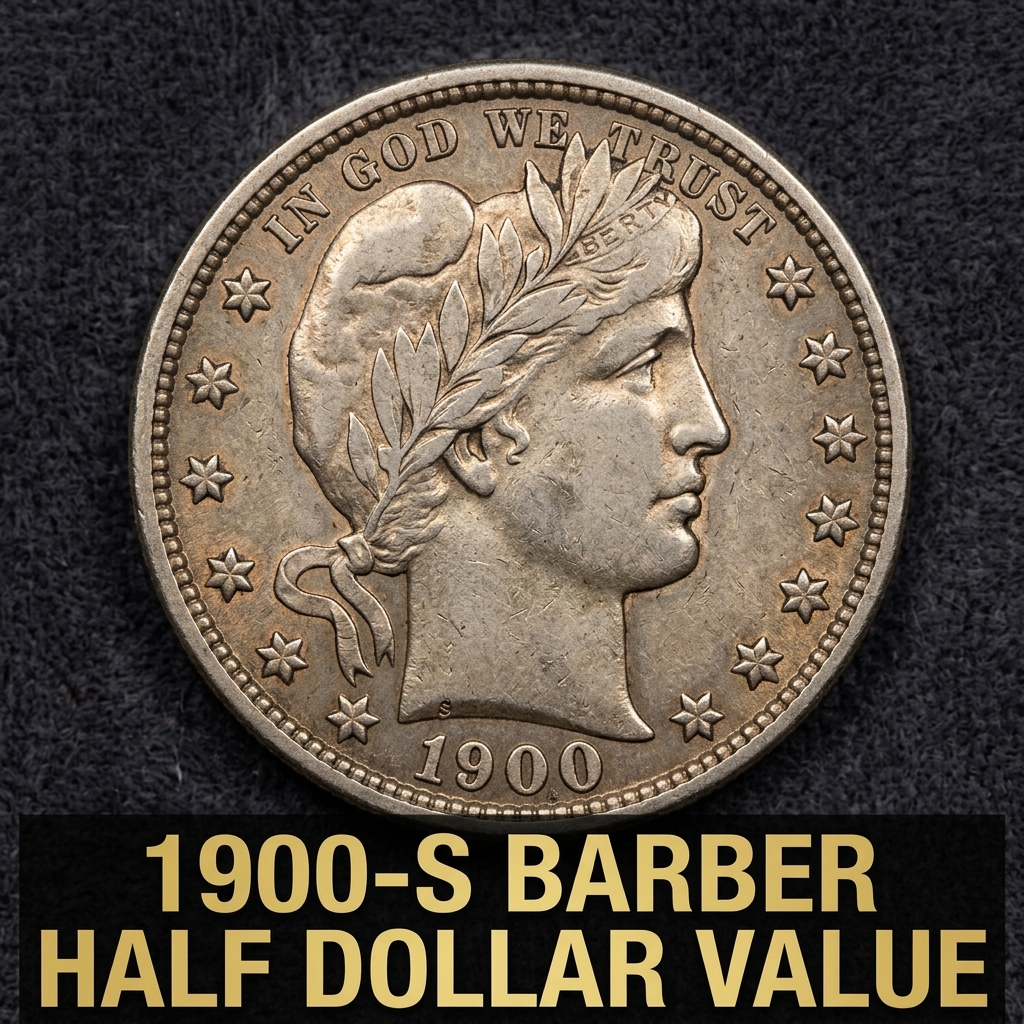
1900 S Barber Half Dollar Value and Collector Price Guide
The 1900-S Barber Half Dollar is worth anywhere from $35 in heavily worn condition to over $2,500 for specimens in uncirculated mint state. Whether you found this silver coin in an old family jar or inherited a small collection, understanding its rarity is the key to knowing if you have a hidden treasure in your hands.
Key Factors Influencing the 1900-S Barber Half Dollar Price
The 1900-S Barber Half Dollar is a fascinating piece of American history, designed by Charles E. Barber. This specific year and mint mark combination is particularly interesting to collectors because of its relatively low mintage compared to the Philadelphia issue of the same year. While millions were often minted in the East, the San Francisco mint produced only 2,551,732 of these halves in 1900. If you are unsure about the condition of your coin, using a free coin identifier app can help you distinguish between common wear and valuable preservation.
Most of these coins circulated heavily in the post-Gold Rush economy of the West Coast. This means that finding one with crisp details on Liberty’s laurel wreath or the feathers of the eagle on the reverse is quite difficult. The overall “eye appeal” of the coin—how it looks to the naked eye—plays a massive role in its final market price. Using tools like CoinKnow can assist you in comparing your coin against high-resolution images of certified samples to see where yours fits on the grading scale.
What Does the S Mint Mark Mean for Your Coin
The “S” mint mark is located on the reverse side of the coin, just below the eagle’s tail and above the words “HALF DOLLAR.” This tiny letter indicates that the coin was struck at the San Francisco Mint. In the world of numismatics, mint marks are often the difference between a common coin and a rare one. For the year 1900, the San Francisco mint mark carries a significant premium over the Philadelphia (no mint mark) version, especially as the grade increases.
Because of the historical significance of San Francisco coinage, many collectors aim to complete a “branch mint” set. This keeps demand high even for coins that show significant wear. If you happen to find a coin that looks exceptionally shiny, be careful not to clean it, as this can destroy its numismatic value. You might want to check the 1900 silver half dollar worth compared to other denominations of that year to get a better sense of the silver market at the time.
How to Grade Your 1900-S Barber Half Dollar
Grading is the process of determining how much wear a coin has suffered. For the 1900-S Barber Half Dollar, the most important areas to check are the word “LIBERTY” on the headband and the leaves in the hair. In “Good” condition, the letters may be completely worn away, leaving only a silhouette. In “Fine” condition, you should be able to read some of the letters. By the time you reach “Extremely Fine,” all letters are sharp and the eagle’s breast feathers on the back show distinct detail.
Many casual enthusiasts use the CoinKnow app to get a preliminary idea of their coin’s grade before sending it to a professional service like PCGS or NGC. Remember that even a tiny difference in grade can mean a difference of hundreds of dollars. A coin that looks “almost perfect” might be a “Mint State” treasure worth several thousand dollars, whereas a slightly duller “About Uncirculated” version might sell for much less.
| Condition / Grade | Estimated Market Value |
|---|---|
| Good (G-4) | $35 – $45 |
| Very Good (VG-8) | $65 – $80 |
| Fine (F-12) | $110 – $140 |
| Very Fine (VF-20) | $220 – $275 |
| Extremely Fine (EF-40) | $450 – $550 |
| About Uncirculated (AU-50) | $750 – $900 |
| Uncirculated (MS-60+) | $1,600 – $5,000+ |
The Silver Content and Melt Value
Beyond its collector value, every 1900-S Barber Half Dollar is made of 90% silver and 10% copper. This was standard for American silver coins until 1964. Each half dollar contains approximately 0.3617 ounces of pure silver. This means that even if the coin is in terrible, “cull” condition with the date barely visible, it will always be worth at least its weight in silver.
However, it is very rare for a 1900-S to be sold just for its silver weight. Because it is a “better date” in the series, it almost always commands a premium. The CoinKnow platform updates frequently to reflect current silver spot prices, but for this specific coin, you should always focus on its numismatic rarity rather than just the metal content. Checking recent auction results can give you a clear picture of what buyers are actually paying today.
Frequently Asked Questions about the 1900-S Barber Half Dollar
Q: Where is the mint mark on a 1900-S Barber Half Dollar?
A: You can find the “S” mint mark on the reverse (back) of the coin. It is positioned directly above the “D” in “DOLLAR” and below the eagle’s tail feathers. If there is no letter there, it was minted in Philadelphia.
Q: Should I clean my 1900-S Barber Half Dollar to make it worth more?
A: No, you should never clean an old coin. Cleaning leaves microscopic scratches and removes the “patina” that collectors look for. A cleaned coin can lose over 50% of its market value instantly.
Q: Is the 1900-O or 1900-S Half Dollar more valuable?
A: Generally, the 1900-S is more valuable than the 1900-O (New Orleans) in higher grades, as the San Francisco mintings often had better strikes and are more sought after by serious collectors of the Barber series.
