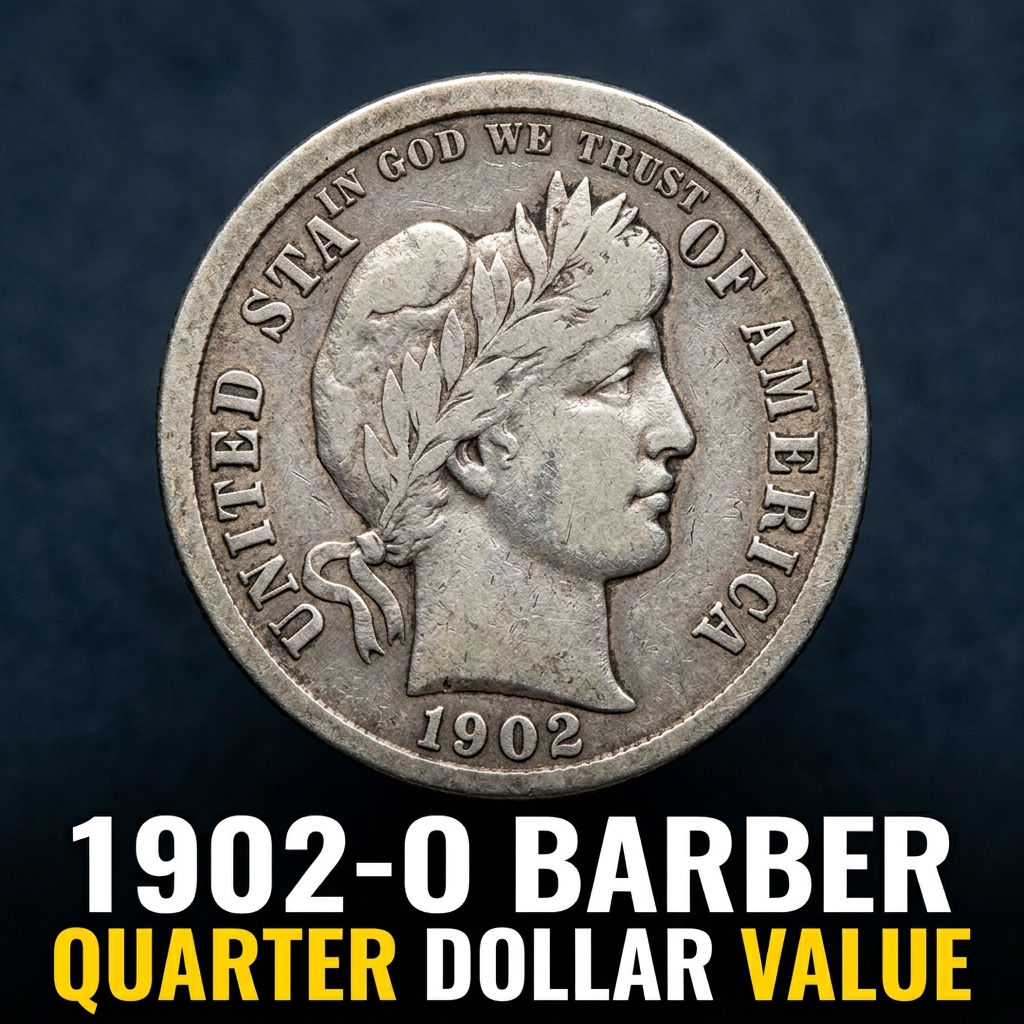
1902 O Barber Quarter Dollar Value Guide and Rarity Factors
The 1902-O Barber Quarter Dollar is worth anywhere from $15 in worn condition to over $2,500 in high-end mint state grades. If you have recently inherited a collection or found a shiny silver coin in an old jar, understanding the specific “O” mint mark is the key to unlocking its true market price.
Historical Significance of the New Orleans Mint Struck Quarters
The 1902-O Barber Quarter was minted at the legendary New Orleans Mint, a facility that holds a special place in American numismatic history. Unlike the common Philadelphia strikes of that year, the New Orleans version had a relatively low mintage of just over 4.7 million pieces. While that sounds like a large number, silver coins from this era were workhorses of the American economy. They circulated heavily in local commerce, meaning most surviving examples are now very worn or “flat” in appearance.
Finding one today is an exciting discovery for any casual collector. If you are unsure whether your coin is a genuine New Orleans strike, using a free coin identifier app can help you zoom in on the reverse side to find that small “O” mint mark. Professional tools like CoinKnow make this identification process simple for beginners who aren’t used to looking at century-old silver. The New Orleans Mint eventually closed its doors a few years later, adding a layer of historical nostalgia that keeps collector demand high for these specific quarters.
Determining the Condition and Grade of Your 1902 O Quarter
When evaluating the 1902-O Barber Quarter price, the “Grade” is everything. Collectors use a scale from 1 to 70 to determine how much detail remains on the coin’s surface. For a Barber Quarter, the first place to look is the word “LIBERTY” on the headband of Lady Liberty’s portrait. On a heavily circulated coin (Good or Very Good), the letters will be completely worn away. On a Fine or Very Fine specimen, you should be able to read some or all of the letters clearly.
If your coin still has its original “mint luster”—that satiny, white glow found on new coins—you may be looking at a four-figure treasure. High-grade silver coins from the early 1900s are incredibly rare because people back then used them to buy groceries and supplies rather than saving them in vaults. If you are struggling to see the fine details on the eagle’s feathers or Liberty’s hair, the CoinKnow app can provide high-resolution comparisons to help you decide if your coin is worth sending to a professional grading service.
1902-O Barber Quarter Price Chart and Value Breakdown
To give you a better idea of what dealers might pay or what you could expect at auction, we have compiled a price guide based on recent market trends. Remember that prices can fluctuate based on the overall “eye appeal” of the coin, such as beautiful rainbow toning or lack of scratches. Collectors are often interested in how this coin compares to other silver issues of the same era, such as the 1902-O silver dollar value, which also features that iconic New Orleans mint mark and holds significant silver bullion value.
| Condition / Grade | Estimated Market Value |
|---|---|
| Good (G-4) | $15 – $22 |
| Very Good (VG-8) | $28 – $35 |
| Fine (F-12) | $65 – $80 |
| Very Fine (VF-20) | $120 – $150 |
| Extremely Fine (XF-40) | $250 – $320 |
| About Uncirculated (AU-50) | $450 – $600 |
| Uncirculated (MS-60+) | $1,100 – $3,000+ |
How to Spot an Authentic New Orleans Mint Mark
One of the most common questions from new hobbyists is where exactly to look for the mint mark. On the Barber Quarter, the mint mark is located on the reverse side (the back) of the coin. Look directly below the eagle’s tail feathers and the “R” in the word “QUARTER.” If you see a small, raised letter “O,” then your coin was minted in New Orleans. If that area is blank, it was minted in Philadelphia and is generally worth less in lower grades.
Be careful when cleaning your old coins—never do it! Cleaning a coin with chemicals or a cloth ruins the surface and can slash the 1902-O Barber Quarter Dollar value by 50% or more. Collectors prefer a dirty, authentic coin over one that has been artificially polished. If you want to document your find without touching it too much, use CoinKnow to take a clear photo and keep a digital record of your collection’s worth. This ensures you have all the data you need if you ever decide to sell it to a local coin shop or online.
Summary of the 1902 O Quarter Market
While it is not as incredibly rare as the 1901-S or the 1896-S, the 1902-O is considered a “better date” in the series. It is an accessible coin for people starting a collection, yet a pristine example can still be the centerpiece of a high-end portfolio. Because it is 90% silver, it will always have a baseline “melt value,” but its numismatic rarity far exceeds its metal weight. By observing the details and comparing it to known grades, you can confidently determine if your find is a common pocket piece or a valuable piece of New Orleans history.
Q: Is the 1902-O Barber Quarter made of real silver?
A: Yes, every Barber Quarter minted between 1892 and 1916 is made of 90% silver and 10% copper. This gives them intrinsic value regardless of their condition.
Q: Where is the mint mark on a 1902-O Quarter?
A: The “O” mint mark is located on the reverse side of the coin, centered just above the “QUARTER DOLLAR” inscription at the bottom.
Q: Why is my 1902-O Barber Quarter worth more than a regular quarter?
A: Beyond its silver content, its value comes from its age, its relatively lower mintage at the New Orleans facility, and the high demand from collectors trying to complete a full set of Barber coinage.
