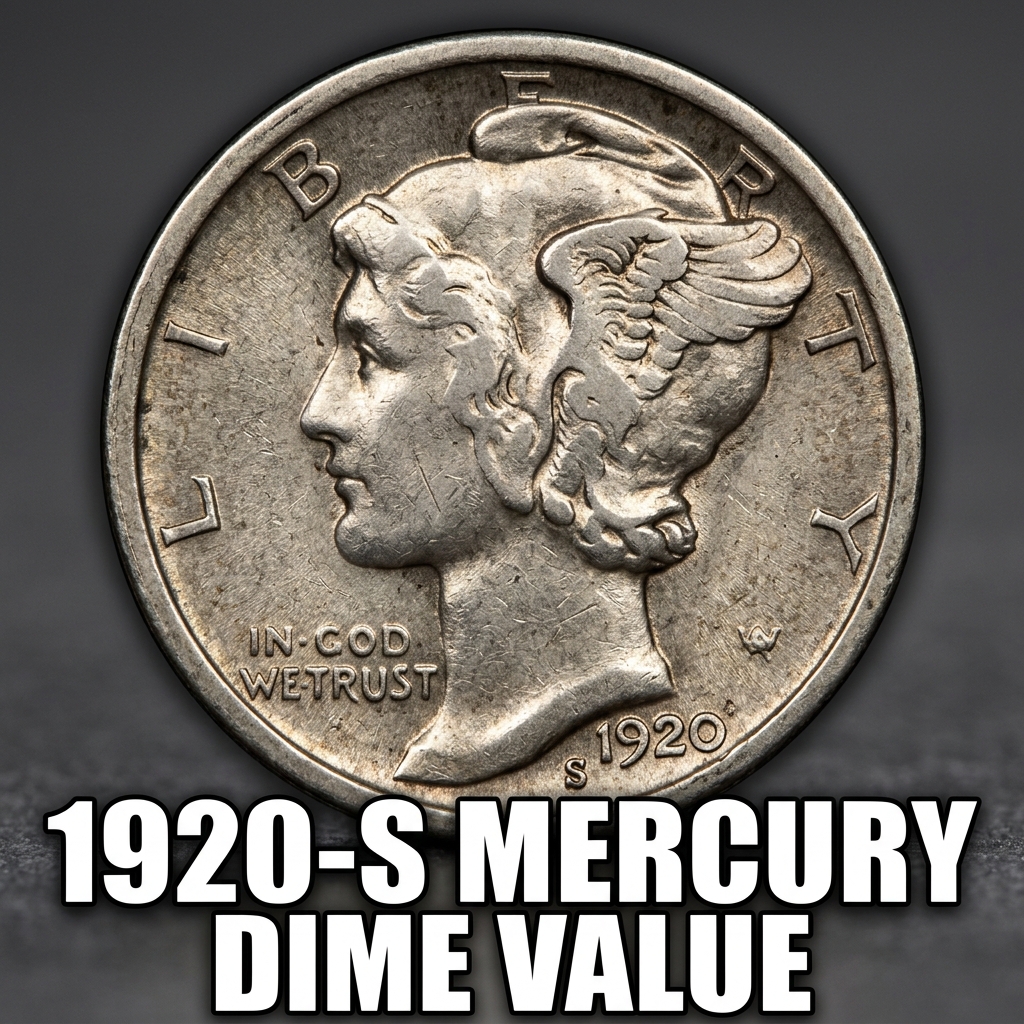
1920 S Mercury Dime Value and Pricing Guide for Collectors
The 1920-S Mercury Dime is worth anywhere from $3 in worn condition to over $1,500 in high-grade mint state. Finding this classic silver coin in your pocket change or an old jar is an exciting discovery that connects you directly to the Roaring Twenties.
Historical Significance and Initial Appraisal of the 1920-S Mercury Dime
The Mercury Dime, designed by Adolph A. Weinman, is widely considered one of the most beautiful coins ever minted by the United States. While many people mistake the figure on the front for the Roman god Mercury, it is actually Lady Liberty wearing a winged cap to symbolize freedom of thought. In 1920, the San Francisco Mint produced a significant number of these dimes, but finding one today in good condition is a different story. If you aren’t sure if your coin is authentic, using a free coin identifier app can help you confirm the date and mint mark before you head to a dealer.
Most casual finders will notice that their 1920-S Mercury Dime has seen a lot of circulation. Because these coins were made of 90% silver, they were heavily used in daily commerce for decades. When you check your collection with CoinKnow, you will find that even heavily worn versions carry value simply for their precious metal content. However, the true numismatic value lies in the “S” mint mark found on the reverse side, which indicates it was struck in California.
Understanding the 1920-S Mercury Dime Grade and Condition
The condition of your coin, known as its “grade,” is the most important factor in determining how much money it is worth. Coins are graded on a scale from 1 to 70. A “Good” grade means the coin is heavily worn but the dates and lines are still visible. An “Uncirculated” or “Mint State” coin looks like it just left the mint yesterday, with all its original luster intact. For the 1920-S, the distinction between a “Fine” grade and an “Extra Fine” grade can mean a jump of twenty or thirty dollars.
Collectors often look for “Full Bands” on the reverse of the Mercury Dime. This refers to the horizontal bands holding the bundle of sticks (fasces). If these bands are fully separated and distinct, the coin’s value skyrockets. You can research the specific 1920-S Mercury Dime auction records to see how much premium buyers pay for these high-quality details. Using CoinKnow can assist you in identifying these subtle features that the naked eye might miss.
Current Market Value and Price Chart
The market for silver coins is constantly shifting, but the 1920-S remains a staple for Winged Liberty Head collectors. Because 1920 was a high-production year, common-grade coins are affordable for beginners, while the scarcity of “S” mint marks in high grades keeps professional investors interested. To get a better idea of the current market, you should review the 1920 Mercury Dime price estimates which detail how the San Francisco strike compares to Philadelphia or Denver.
Below is a breakdown of what you can expect a dealer to pay or a collector to offer based on the standard grading scale:
| Condition / Grade | Estimated Value (USD) |
|---|---|
| Good (G-4) | $3.50 – $5.00 |
| Very Fine (VF-20) | $15.00 – $25.00 |
| Extremely Fine (XF-45) | $65.00 – $90.00 |
| About Uncirculated (AU-50) | $120.00 – $200.00 |
| Mint State (MS-63) | $450.00 – $700.00 |
| Mint State (MS-65+) | $1,500.00+ |
Where to Find the Mint Mark and Vital Details
Identifying where your dime was made is crucial. For the 1920 series, the mint mark is located on the reverse side, near the bottom edge, just to the left of the base of the fasces (the bundle of sticks). If you see a small ‘S’, it was minted in San Francisco. If you see a ‘D’, it’s from Denver. If there is no letter at all, it was minted in Philadelphia. The 1920-S is generally more valuable in higher grades than the Philadelphia version due to lower survival rates of pristine coins in the West.
Before you consider selling your coin, it is vital that you do not clean it. Many beginners think that making a coin look shiny and new will increase its value, but the opposite is true. Cleaning a coin creates microscopic scratches that experts can easily detect, which can drop its value by 50% or more instantly. Instead, keep it in a safe, dry place and use CoinKnow to manage your inventory and track price changes over time.
Frequently Asked Questions about the 1920-S Mercury Dime
Q: Is the 1920-S Mercury Dime made of real silver?
A: Yes, all Mercury Dimes minted between 1916 and 1945 are made of 90% silver and 10% copper. This means even if the coin is too damaged for collectors, it still has “melt value” based on the current price of silver.
Q: Where exactly is the “S” mint mark located?
A: Turn the coin to the back (the side with the torch/fasces). Look at the very bottom, near the rim, to the left of the stem. A small “S” indicates the San Francisco Mint.
Q: How can I tell if my 1920-S dime is a “Full Bands” variety?
A: Look at the horizontal ropes or bands that wrap around the center of the fasces on the reverse. If the line between the two middle bands is completely visible and not interrupted by wear or a weak strike, it is considered “Full Bands” and is worth a significant premium.
