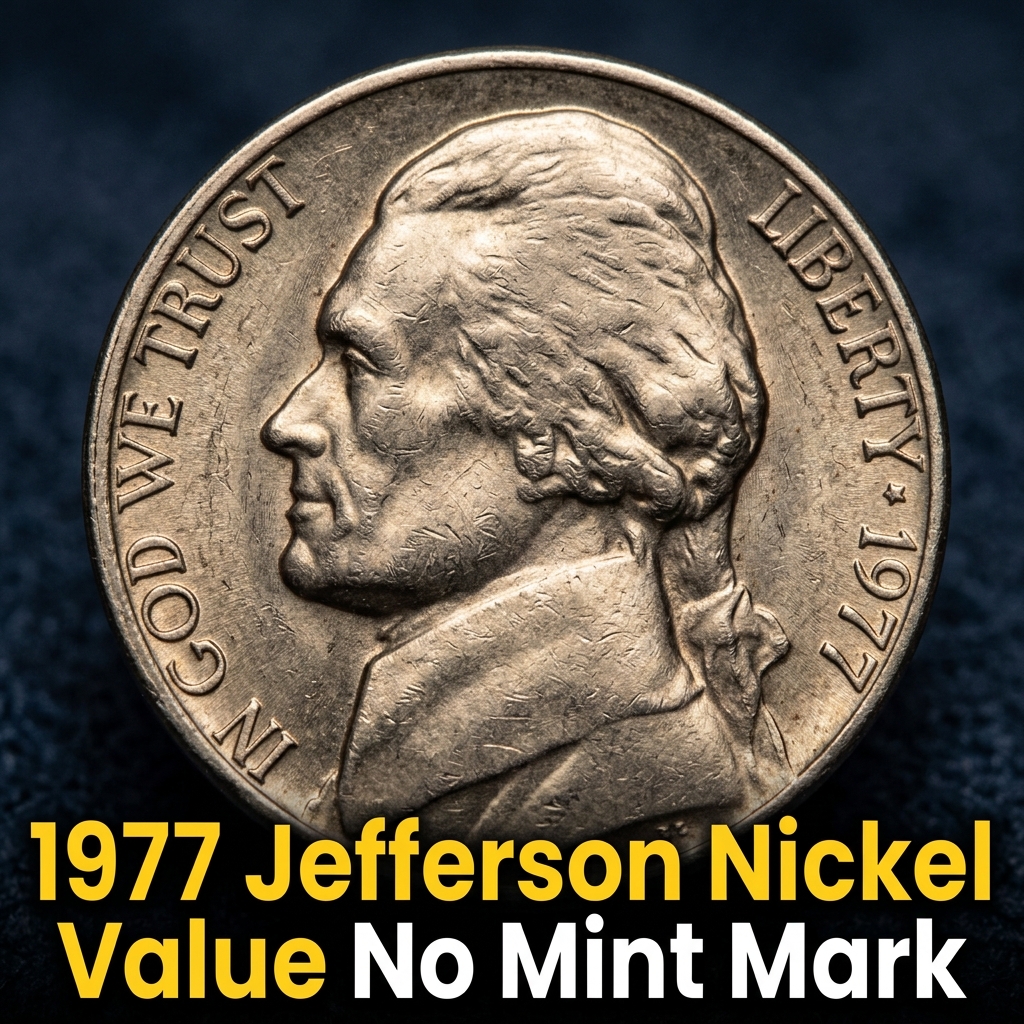
How Much Is a 1977 Jefferson Nickel No Mint Mark Worth Today
The 1977 Jefferson Nickel is worth anywhere from face value in worn condition to over $1,500 for rare specimens in pristine mint state. While most of these coins you find in your pocket change today are only worth five cents, certain unique varieties and high-grade preservation can turn a simple nickel into a valuable prize.
Identifying the 1977 Nickel Without a Mint Mark
If you are looking at your nickel and notice there is no small letter “D” or “S” near the date, you have a coin minted in Philadelphia. In 1977, the Philadelphia Mint produced nearly 500 million of these nickels. Because the production numbers were so high, a typical circulated 1977 nickel is generally only worth its face value. However, the true value lies in the condition of the coin. Use a free coin identifier app to quickly check the strike quality of your find.
Most Americans encounter these coins while sorting through jars or getting change at the grocery store. While the high mintage makes them common, the copper-nickel composition means they hold up well over time. If you find one that looks exceptionally shiny or “new,” it might be worth a closer look with the CoinKnow app to see if it qualifies for a higher grade. Collectors are always looking for examples that managed to escape the wear and tear of daily commerce.
Grading and the Impact of Full Steps
To determine if your coin is worth more than five cents, you need to understand the grading scale used by numismatists. Collectors focus on the “Full Steps” (FS) designation, which refers to the steps leading up to Monticello on the reverse of the coin. Most 1977 nickels have “mushy” steps where the lines blend together. A coin with five or six distinct, uninterrupted steps is rare and commands a massive premium.
Professional grading services like PCGS or NGC rate coins on a scale from 1 to 70. A 1977 nickel in MS65 condition (Mint State) is relatively affordable, but once you reach MS66 or MS67, the price jumps significantly. You can find more detailed breakdowns on this 1977 Jefferson nickel price guide to see how much your specific grade might be worth. Remember that even a tiny scratch visible only under a magnifying glass can drop the value by hundreds of dollars.
Current Market Values for 1977 Jefferson Nickels
Because value is highly dependent on whether the coin has been in circulation or kept in a protected set, we have broken down the average market prices below. These figures represent what collectors are currently paying at auctions and coin shops for various conditions.
| Condition / Grade | Value Range |
|---|---|
| Circulated (Average Wear) | $0.05 – $0.15 |
| Uncirculated (MS60 – MS63) | $1.00 – $5.00 |
| High Grade (MS65) | $15.00 – $35.00 |
| Gem Quality (MS66+) | $100.00 – $450.00 |
| Full Steps (Rare Strike) | $1,000.00+ |
What Makes a 1977 Nickel Especially Valuable
Beyond the “Full Steps” designation, there are other factors that can influence the 1977 Jefferson nickel value. Rare mint errors are highly sought after by specialists. Occasionally, you may find a double die error, where the lettering appears doubled, or an “off-center” strike where part of the design is missing. If you suspect an error, the CoinKnow app is a great tool for side-by-side comparisons with confirmed error coins.
Lustre is another critical factor. A 1977 nickel that still retains its original mint bloom—that frosty, satiny sheen—is much more desirable than a dull, grey coin. Always handle your coins by the edges to avoid getting finger oils on the surface, which can degrade the value over time. If your coin looks “white” and brilliant, it is worth protecting in a plastic holder immediately.
Frequently Asked Questions
Q: Does no mint mark mean my 1977 nickel is an error?
A: No, the lack of a mint mark simply means the coin was minted in Philadelphia. During 1977, the Philadelphia Mint did not use a “P” mint mark on nickels; they simply left that area blank.
Q: Is a 1977-D nickel worth more than a 1977 no mint mark nickel?
A: Generally, no. Both the Denver (D) and Philadelphia (no mint mark) versions were produced in massive quantities. Their value is determined by their condition and whether they have “Full Steps” on the reverse, rather than which mint they came from.
Q: How can I tell if my 1977 nickel has “Full Steps”?
A: Flip the coin over to the back (the Monticello side). Look at the steps leading up to the building. If you can see five or six distinct horizontal lines without any interruptions from scratches or poor striking, it is a Full Steps coin. You can use CoinKnow to get a clearer view and identification of this feature.
