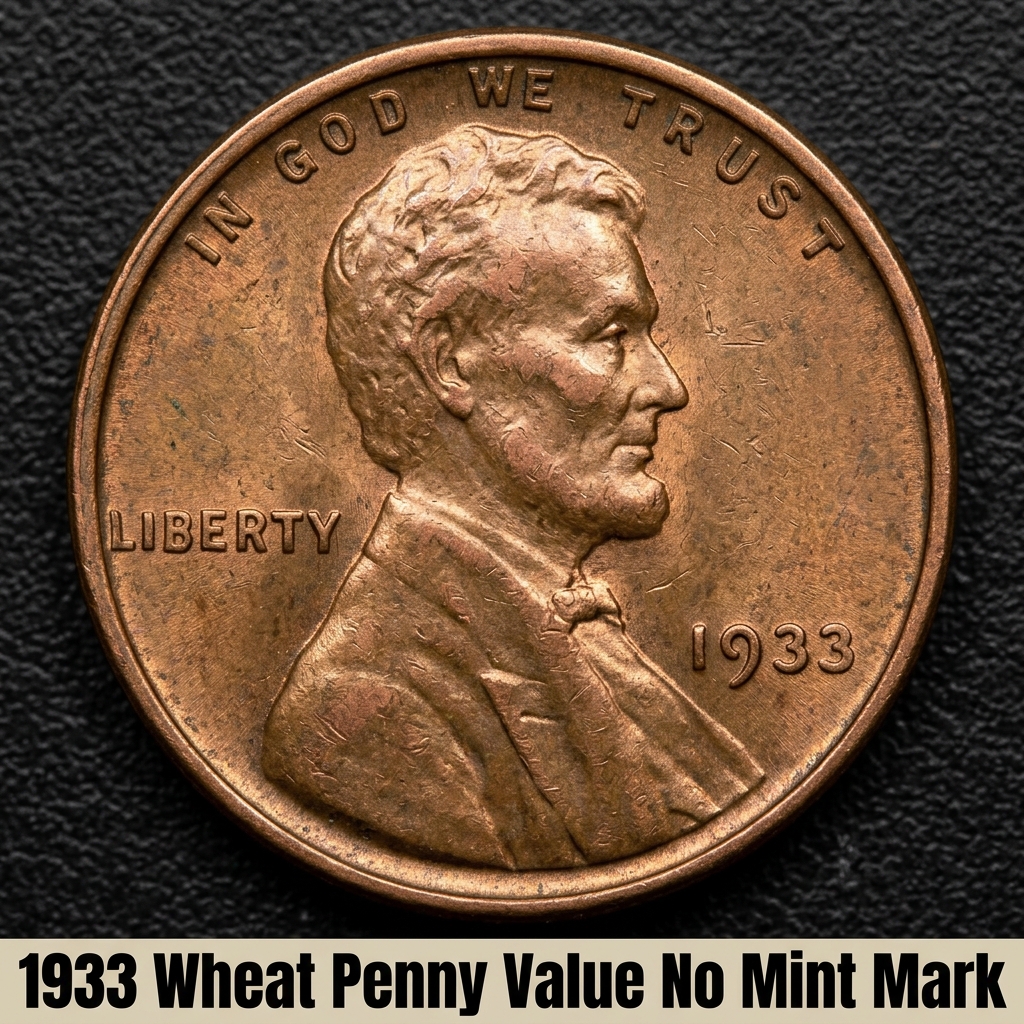
1933 Wheat Penny Value No Mint Mark and Price Guide for Collectors
The 1933 Wheat Penny is worth anywhere from $1 in worn condition to over $150 in mint state. Finding one of these bronze relics in your pocket change or a forgotten jar is an exciting moment for any American, as it connects you directly to the Great Depression era when every cent truly mattered.
Understanding the Scarcity of the 1933 Philadelphia Wheat Cent
If you have a 1933 Wheat Penny with no mint mark, it means it was struck at the Philadelphia Mint. During this specific year, the United States was in the depths of the Great Depression. Because the economy was slow, the demand for new coinage was remarkably low compared to previous decades. To identify your find quickly, you can use a free coin identifier app to confirm the date and minting origin.
In 1933, the Philadelphia Mint produced only about 14.3 million pennies. While that might sound like a large number, it is actually quite low for a Lincoln Wheat cent. For comparison, years like 1944 saw production numbers in the hundreds of millions. This relative scarcity is what makes the 1933 penny a “semi-key” date.
Many people turn to the CoinKnow app to check their pocket change daily. Because fewer of these coins were circulated and many were lost to time, finding one in high grade is a treat for casual hunters and serious numismatists alike. This year represents a pivot point in American history, captured in a small copper disc.
Grading and 1933 Penny Value Details
The value of your 1933 penny depends almost entirely on its physical condition, also known as its “grade.” Most coins found in jars today are in “Good” or “Very Good” condition, meaning the wheat stalks on the back are worn flat and Lincoln’s features are smoothed out. These are worth a modest premium but aren’t life-changing treasures yet.
However, if you happen to find a coin that still has its original red luster, the price jumps significantly. Collectors look for “Mint State” (MS) coins that haven’t been scratched or dulled by skin oils. The 1933 Philadelphia Wheat Penny MS RD price can reach triple digits if the coin is pristine and retains its original copper color.
If you are unsure about the grade, the CoinKnow app can help you compare your coin to high-resolution images. Remember that cleaning a coin actually lowers its value. It is always better to keep the natural patina than to try and make it look shiny with chemicals, which collectors hate.
1933 Wheat Penny Price Chart
To help you understand what your coin might be worth at a local coin shop or online auction, refer to the table below. These prices are estimates based on recent market trends for the Philadelphia (no mint mark) variety.
| Condition / Grade | Estimated Value |
|---|---|
| Good (G-4) | $1.50 – $2.50 |
| Very Fine (VF-20) | $4.00 – $7.00 |
| Extremely Fine (EF-40) | $12.00 – $18.00 |
| Uncirculated (MS-63 Brown) | $45.00 – $60.00 |
| Uncirculated (MS-65 Red) | $150.00+ |
What to Look for Beyond the Date
When examining your 1933 penny, it is important to check the “mint mark” area below the date. If there is no letter there, it is the Philadelphia issue we are discussing. If you see a small “D,” it was minted in Denver. While both are valuable, their prices fluctuate based on the current market. Reviewing the detailed 1933 Penny value and history can give you a better idea of how these two mintages compare.
Error hunters also love this era. Keep an eye out for “doubled die” errors, where the lettering or the date appears to have a shadow or a double image. Even though 1933 isn’t famous for a major error like the 1955 penny, minor doubling can still increase the price to a specialized collector.
Using an app like CoinKnow allows you to zoom in on these fine details using your phone’s camera. This is much easier than using a traditional magnifying glass for those of us who aren’t professional dealers. Always check the rim of the coin as well; a sharp, crisp rim usually indicates a coin that wasn’t circulated for very long.
Summary for the Everyday Collector
For the average American, a 1933 Wheat Penny is a fantastic piece of history. While it may not buy you a new car, it is a “key date” that holds its value much better than common pennies from the 1940s or 50s. Whether you are building a full set of Lincoln cents or just curious about a single find, this coin is a keeper.
Most 1933 pennies without a mint mark are found in “circulated” grades. This means they were used to buy bread or newspapers during the FDR era. That history adds a level of sentimental value that goes beyond the few dollars it might fetch at a shop. Keep your coins in a cool, dry place to prevent further oxidation.
Frequently Asked Questions
Q: Why does my 1933 penny have no letter under the date?
A: In 1933, the Philadelphia Mint did not use a mint mark. If your coin has no letter below the date, it was minted in Philadelphia.
Q: Is the 1933 penny rare?
A: It is considered a “semi-key” date. While not as rare as the 1909-S VDB, its mintage of 14.3 million is significantly lower than average, making it more valuable than most Wheat pennies.
Q: Should I clean my 1933 Wheat Penny to make it look better?
A: No! Never clean old coins. Cleaning strips the original surface and significantly reduces the value to collectors. A dirty, original coin is always worth more than a scrubbed, shiny one.
