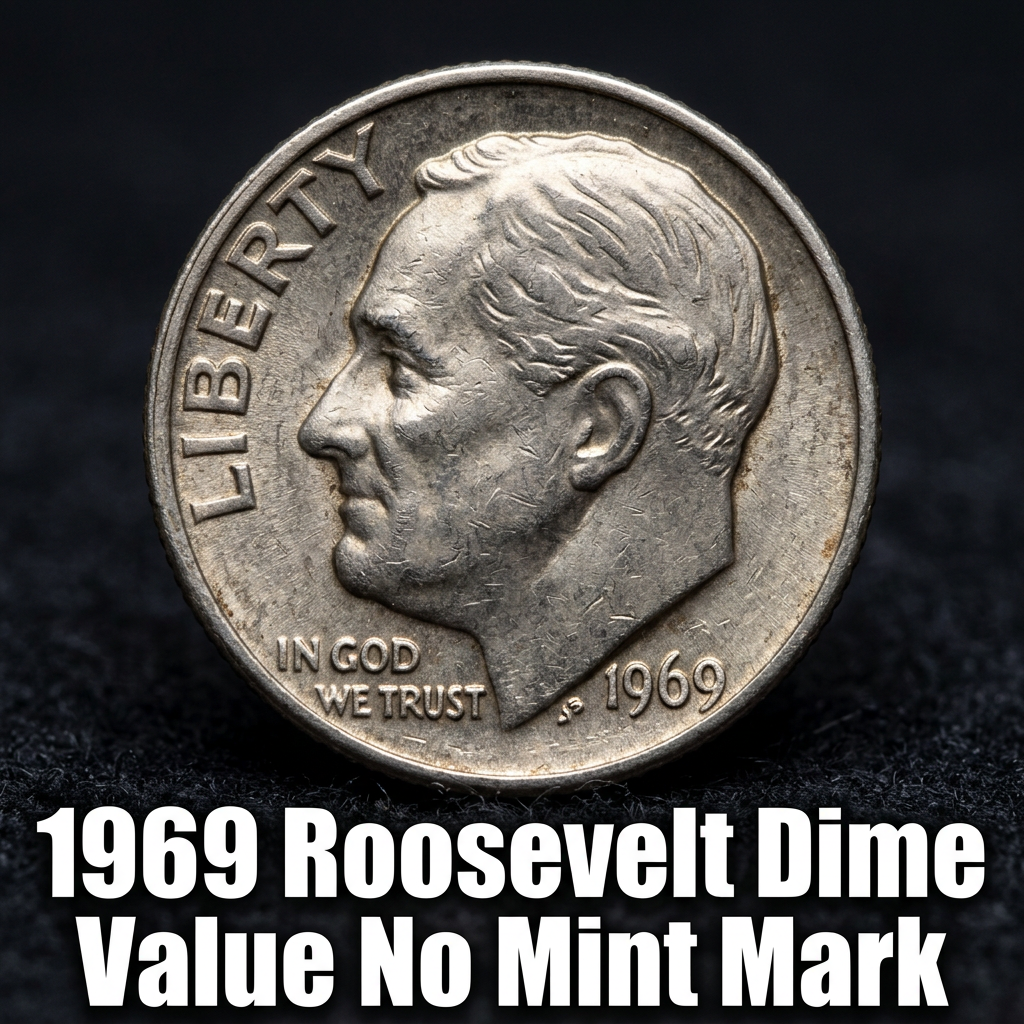
1969 Roosevelt Dime Value and Rarity Guide for No Mint Mark Coins
The 1969 Roosevelt Dime with no mint mark is worth anywhere from its 10-cent face value in worn condition to over $150 in high-grade mint state. Most of these dimes found in pocket change are common, but learning how to spot high-quality strikes or rare errors can help you find a hidden treasure.
What Does No Mint Mark Mean on a 1969 Dime
If you are looking at your 1969 dime and notice there is no small letter “P,” “D,” or “S” near the date, don’t worry—it isn’t a factory mistake. In 1969, the Philadelphia Mint produced hundreds of millions of dimes and traditionally did not use a mint mark on its coinage. This means your coin was simply struck at the main mint facility in Pennsylvania. While some people mistakenly believe a missing mark makes the coin rare, it is actually the standard identifier for Philadelphia strikes of this era.
Before you set it aside, it is helpful to use a free coin identifier app to confirm the strike type and variety. While the Philadelphia version is the most common, its value is heavily dependent on its “Grade”—the physical condition of the coin. Many people use the CoinKnow app to get a preliminary look at their coin’s surfaces to see if it’s worth sending to a professional grader. Because billions of Roosevelt dimes have been minted since 1946, only those in exceptional, uncirculated condition fetch a premium from collectors.
Evaluating the 1969 Roosevelt Dime Price and Grade
When determining the market price, collectors look for “Full Torch” details on the reverse and a lack of scratches on the obverse. Most 1969 dimes you find in circulation are worth exactly ten cents because they are composed of a copper-nickel clad and have significant wear. However, if you find one that looks like it just came out of a bank vault, the 1969 Roosevelt Dime MS price can jump significantly once it reaches MS65 or higher.
To help you understand what your pocket change might be worth, refer to the pricing chart below. Note that “MS” stands for Mint State, referring to coins that have never been used in daily commerce. If you are unsure of the grade, the CoinKnow app can provide visual comparisons to help you categorize your find. Collectors are always looking for “Gem” specimens, which are coins graded MS65 or above with a brilliant luster and minimal contact marks from the minting process.
| Condition / Grade | Estimated Value (USD) |
|---|---|
| Circulated / Worn | $0.10 (Face Value) |
| About Uncirculated (AU58) | $0.15 – $0.35 |
| Mint State (MS63) | $2.00 – $5.00 |
| Mint State (MS65 Gem) | $15.00 – $30.00 |
| Mint State (MS67+) | $150.00+ |
Identifying 1969 Dime Errors and Varieties
While the standard no mint mark 1969 dime is common, error hunters keep an eye out for specific manufacturing defects that can increase value. One common sought-after feature is the “Full Torch” (FT). On the back of the dime, the torch should have distinct vertical lines and two clear horizontal bands at the top and bottom. Dimes with a sharp, full strike are much rarer and command higher prices among serious numismatists.
You should also look for “Clad Errors” or “Clipped Planchets.” Sometimes the copper core is exposed improperly, or the coin is struck off-center. These errors are rare for the 1969 Philadelphia issue but can be worth anywhere from $20 to over $100 depending on the severity of the mistake. Understanding the 1969 dime value for error coins is essential if you think you’ve found something that doesn’t look quite right. Checking your collection with CoinKnow can often reveal these subtle errors that the naked eye might miss.
Is the 1969 Dime Made of Silver
One of the most frequent questions people ask is whether their 1969 dime contains silver. Unfortunately, the United States stopped using 90% silver for dimes in 1964. All dimes minted in 1969 for general circulation are made of a “sandwich” of 75% copper and 25% nickel. You can easily verify this by looking at the edge of the coin; if you see a distinct orange/copper stripe, it is a clad coin and not silver.
If the edge is solid silver-colored, it might be plated, or in very rare cases, struck on a leftover silver planchet (though this is extremely unlikely for the 1969 year). Generally, these coins are valued for their numismatic (collector) potential rather than their metal content. Because they aren’t silver, the condition is the only thing that drives the price up for these 1969 no mint mark examples.
FAQ
Q: Why does my 1969 dime have no mint mark?
A: This means it was minted in Philadelphia. At that time, the Philadelphia Mint did not use a “P” mint mark on dimes.
Q: What is the most expensive 1969 Roosevelt Dime ever sold?
A: High-grade specimens with the “Full Torch” designation in MS68 condition have been known to sell for over $500 at major auctions, though these are extremely rare.
Q: How can I tell if my 1969 dime is worth more than ten cents?
A: Look for original mint luster (shine) and a lack of scratches. If the coin looks brand new and has “Full Torch” details on the reverse, it is likely worth a premium.
