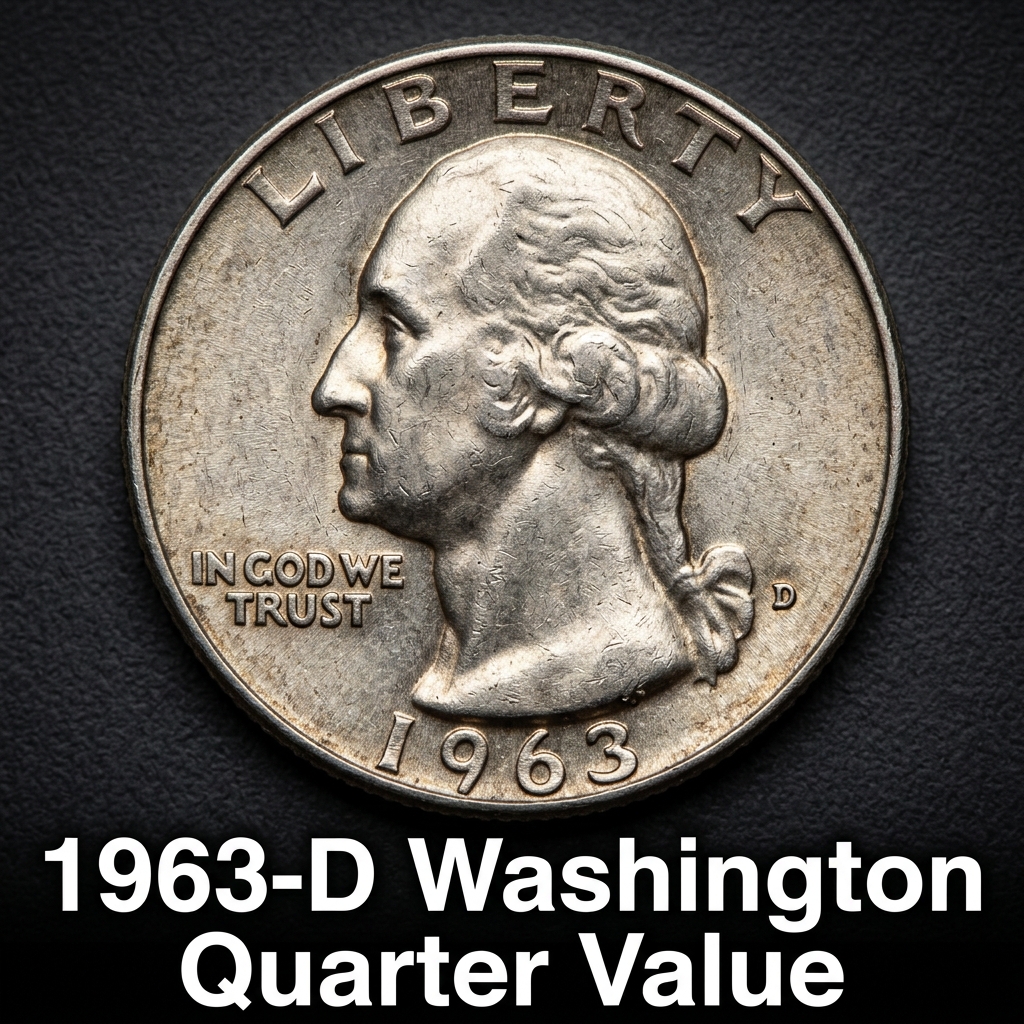
1963 D Washington Quarter Value and Complete Guide to Spotting Rare Errors
The 1963-D Washington Quarter is worth anywhere from $6 in worn silver condition to over $1,200 in high-grade mint state. Finding one of these in your change or an old jar is quite exciting because it represents a time before the U.S. Mint switched to cheaper base metals.
The Historical Significance and Silver Content of the 1963-D Quarter
For many Americans, checking loose change is a fun hobby that can occasionally pay off. If you have found a 1963-D quarter, the first thing you should know is that it is made of 90% silver and 10% copper. This is a far cry from the modern quarters we use today, which are made of copper and nickel. Because of this high silver content, the coin has an intrinsic “melt value” that keeps its price well above its 25-cent face value. Even if the coin is scratched, worn, or dirty, its metal alone makes it a prize for any collector.
To get a better sense of what you have, you can use a free coin identifier app to quickly confirm the date and mint mark. The “D” on the back of the coin, located just below the eagle, signifies that it was struck at the Denver Mint. In 1963, the Denver Mint produced over 135 million of these quarters. While that sounds like a lot, many were melted down over the decades when silver prices spiked, making well-preserved examples much harder to find today. Using a tool like CoinKnow can help you track these population shifts and current market trends.
Visual Grading and Determining the Value of Your Quarter
When determining the price of your 1963-D quarter, the most important factor is its physical condition, also known as its “grade.” High-grade coins that look like they just came off the press are worth a significant premium. Professional collectors look for “luster,” which is that satin-like sheen found on uncirculated coins. If the hair details on George Washington’s head are sharp and the eagle’s breast feathers are distinct, you might be looking at a coin worth much more than its weight in silver.
If you are curious about the specific market prices for coins in pristine condition, you can check the latest 1963-D Washington Quarter mint state auction records. Most quarters found in circulation will be in “Average Circulated” condition, meaning they show signs of wear. However, those tucked away in rolls or collections may reach “About Uncirculated” or “Mint State” levels. Identifying these subtle differences is where the CoinKnow app excels, providing visual guides to help you grade your coins at home.
| Condition Grade | Estimated Value Range |
|---|---|
| Circulated (Silver Melt) | $5.50 – $7.00 |
| About Uncirculated (AU50) | $8.00 – $12.00 |
| Mint State (MS63) | $15.00 – $25.00 |
| Gem Mint State (MS67+) | $400.00 – $1,200.00+ |
Identifying Rare 1963-D Quarter Errors and Varieties
Beyond the standard silver value, some 1963-D quarters are worth a small fortune due to minting errors. One of the most common things collectors look for is the “Doubled Die” variety. This happens when the coin die is struck with the image twice, resulting in a blurred or “ghosted” appearance on the lettering or the date. On the 1963-D, you should look closely at the “D” mint mark and the words “In God We Trust.”
Other errors include “re-punched mint marks” (RPM) or “die cracks,” where a portion of the metal appears raised where it shouldn’t be. These unique quirks make a coin a “one-of-a-kind” item for specialists. You can find more detailed 1963 silver quarter pricing and error identification details online to see if your coin matches known rare varieties. If you think you’ve spotted a doubling effect, the high-resolution zoom features in CoinKnow can be a lifesaver for confirming your suspicions.
How to Store and Protect Your Silver Washington Quarters
Since the value of a 1963-D quarter is so heavily tied to its condition and silver content, proper storage is essential. Silver is a reactive metal and can tarnish or “tone” when exposed to air, moisture, or certain chemicals. While some collectors love “rainbow toning”—which can actually increase the coin’s value—most beginners should aim to keep their coins in a cool, dry place.
Never clean your coins! This is the most important rule in numismatics. Scrubbing a coin with polish or even soap and water can create micro-scratches that permanently ruin its numismatic value. If you find a shiny 1963-D quarter, place it in a PVC-free plastic flip or a cardboard “2×2” holder. This preserves the coin’s current state and ensures that if you ever decide to sell it, you get the highest possible price for your piece of American history.
Frequently Asked Questions about the 1963-D Quarter
Q: How can I tell if my 1963 quarter is from Denver or Philadelphia?
A: Look on the reverse (back) of the coin. Below the center of the eagle’s wreath, you will see a small “D” for Denver. If there is no letter at all, the coin was minted in Philadelphia.
Q: Is a 1963-D quarter worth more than a 1964 quarter?
A: Generally, they are very similar in value because both are 90% silver. However, the 1963-D has a slightly lower mintage than the 1964-D, which can make it slightly more desirable in high-end uncirculated grades.
Q: Can I spend a 1963-D quarter at a store?
A: Yes, it is still legal tender for 25 cents. However, you should never do this! Because of the silver price, the coin is worth at least 20 to 30 times its face value. Always sell it to a coin shop or collector instead.
