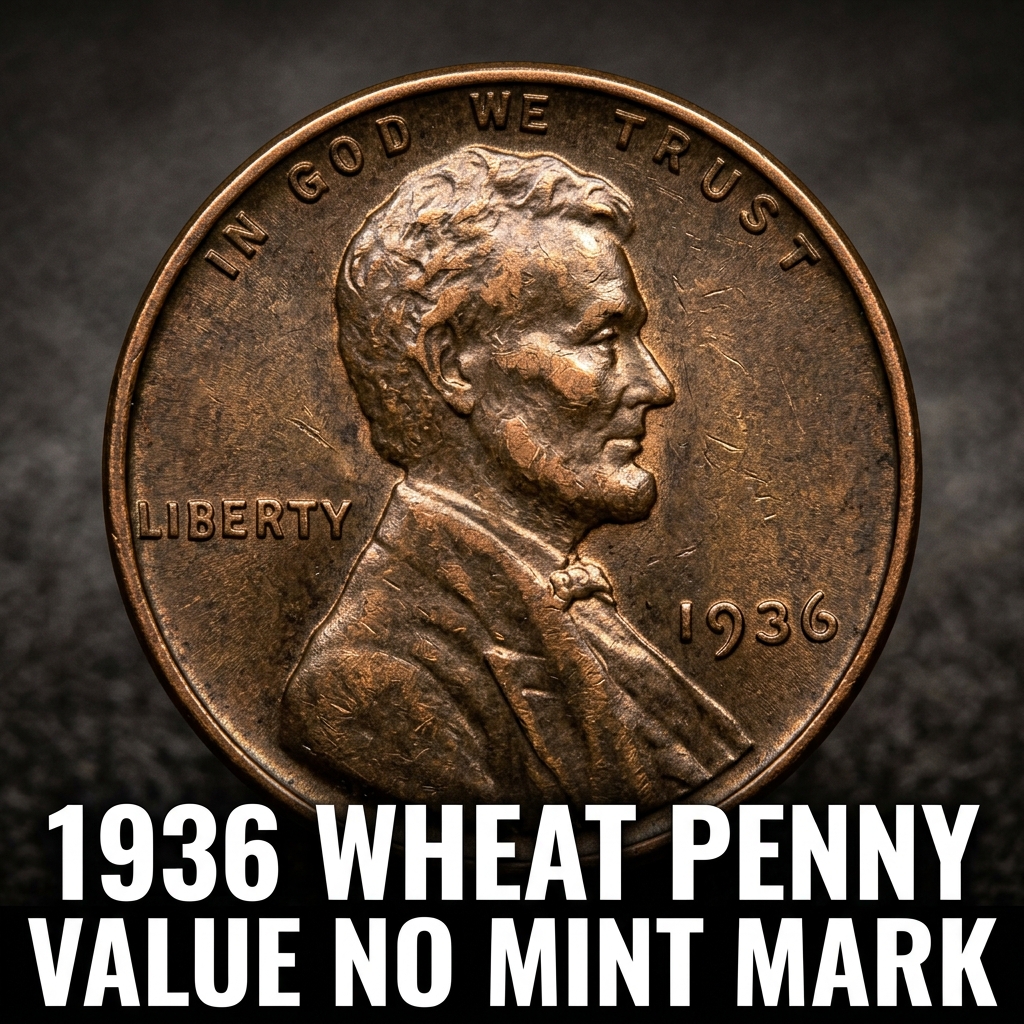
1936 Wheat Penny Value No Mint Mark Worth and Rarity Guide
The 1936 Wheat Penny is worth anywhere from $0.10 in worn condition to over $15,000 for rare high-grade specimens. Finding one of these old Lincoln cents in your pocket change or an old jar is an exciting discovery that connects you directly to American history.
What Is a 1936 Wheat Penny With No Mint Mark
If you are looking at your coin and notice there is no small letter under the date, it means your penny was struck at the Philadelphia Mint. During the 1930s, the Philadelphia facility was the primary producer of United States currency and did not use a “P” mint mark. If you are unsure about the details of your find, using a free coin identifier app can help you confirm the origin and variety of your cent within seconds.
The year 1936 was a massive year for production, with over 300 million of these copper coins entering circulation. Because so many were made, common circulated versions are very easy to find today. However, because this was the era of the Great Depression, most coins were used heavily in daily commerce. This makes finding a “Red” (original copper color) gem-quality coin quite difficult. To get an instant estimate on any coin you find, the CoinKnow app is a fantastic tool for casual collectors to stay organized.
Current Market Value and Rare Variations
When determining the price of your 1936 Lincoln cent, the condition (or “grade”) is the most important factor. Most coins found in old collections will fall into the “Good” to “Extremely Fine” categories, where they are worth more for their metal content and history than as major investments. However, if the coin looks like it just came from the bank, its value skyrockets. Professional collectors look for “Mint State” coins that still have their original luster.
A significant highlight for this year is the 1936 Penny MS RD price value, which focuses on coins that have retained their original bright red copper color. These are much rarer than the “Brown” versions that have oxidized over time. Furthermore, 1936 was the first year since 1916 that the Mint produced “Proof” coins for collectors. A 1936 Proof penny is extremely valuable, often selling for thousands of dollars at auction.
| Condition / Grade | Estimated Market Value |
|---|---|
| Good (G-4) | $0.10 – $0.25 |
| Fine (F-12) | $0.35 – $0.75 |
| Extremely Fine (EF-40) | $1.50 – $3.00 |
| Uncirculated (MS-63 Brown) | $10.00 – $20.00 |
| Uncirculated (MS-65 Red) | $65.00 – $150.00 |
| Proof-65 | $1,200 – $3,500+ |
Key Errors to Watch Out For
Value isn’t just about how shiny the coin is; sometimes, mistakes made at the mint can make a common penny worth a fortune. The 1936 Wheat Penny is famous for several “Doubled Die” varieties. If you look closely at the lettering in “LIBERTY” or the date, you might see a faint ghosting or doubling of the numbers and letters. A 1936 Doubled Die Obverse (DDO) can be worth hundreds of dollars even in average condition.
Another thing to look for is the “Lamination Error,” where the copper plating appears to be peeling off the surface. While these are interesting, they generally don’t add as much value as a doubled die. Many everyday Americans use the CoinKnow app to scan their coins and check for these specific die varieties. Understanding the 1936 Wheat Penny rarity and valuation helps you decide if your coin is a keeper or just worth its face value of one cent.
Preserving Your Coin Treasure
If you find a 1936 penny that looks particularly clean, do not clean it! This is the number one mistake new coin hunters make. Rubbing a coin with cloth or using chemicals to “brighten” it actually scratches the surface and removes the “skin” of the metal, which can destroy up to 90% of its collector value. Genuine patina is much more desirable than a fake shine.
Instead, place your coin in a cardboard “2×2” holder or a plastic flip to protect it from the oils on your fingers. If you think you have a high-grade red penny or a proof, it may be worth sending to a professional grading service like PCGS or NGC. Until then, you can track your collection’s growth and get real-time pricing updates using CoinKnow, which is designed for people who want to manage their hobby without needing a degree in numismatics.
Q: Why does my 1936 penny have no mint mark?
A: This means your penny was minted in Philadelphia. During that era, the Philadelphia Mint did not use a “P” mint mark on pennies; only the Denver (D) and San Francisco (S) mints used marks.
Q: Is a 1936 penny made of pure copper?
A: Almost! It is made of 95% copper and 5% tin and zinc. This gives it a much higher “melt value” than modern pennies made primarily of zinc, though its collector value is usually higher than the metal price.
Q: How can I tell if my 1936 penny is a Proof?
A: Proof coins were struck with specially polished dies and have a mirror-like background with very sharp details. Since only about 5,500 proofs were made in 1936, they are very rare and usually found in protective cases rather than loose change.
