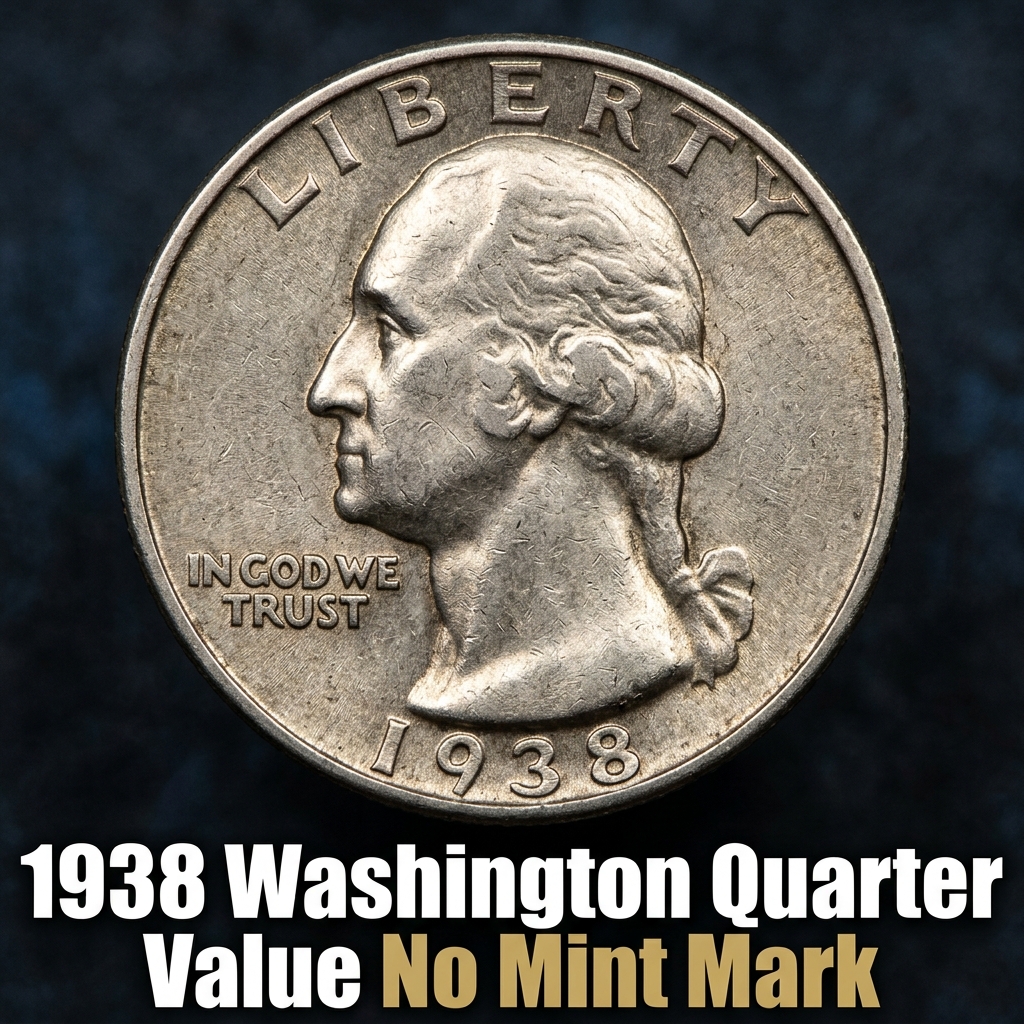
1938 Washington Quarter Value Without a Mint Mark and Collector Price Guide
The 1938 Washington Quarter with no mint mark is worth anywhere from $5 in worn condition to over $500 in high-grade mint state. Finding one of these silver treasures in your pocket change or an old jar is an exciting moment for any American, as it represents a piece of Great Depression-era history that still holds significant market value today.
Understanding the Philadelphia 1938 Washington Quarter
In 1938, the United States was slowly recovering from the economic hardships of the 1930s. Because of the lower demand for new currency during this time, the Philadelphia Mint produced a relatively low mintage of Washington quarters compared to modern standards. If you flip your coin over and see no small letter “D” or “S” above the eagle’s tail feathers on the reverse, you have a Philadelphia strike. This “no mint mark” variety is a cornerstone for collectors building a complete set of silver quarters.
If you are unsure whether your coin is authentic or just want to confirm its details, using a free coin identifier app can help you distinguish between different mintages and varieties in seconds. For those who want more advanced features like professional grading estimates and collection tracking, the CoinKnow app is an excellent tool for everyday hobbyists.
Condition and Grading Impact on Price
The value of a 1938 Washington Quarter is heavily dictated by its “grade,” which refers to how much wear and tear the coin has sustained over the last eight decades. Most coins found in circulation today will fall into the “Good” or “Very Good” categories, where the hair lines of George Washington are smoothed over and the feathers on the eagle are faint. These are generally worth their silver melt value plus a small collector premium.
However, if you find a coin that looks like it just came from the bank—with its original “mint luster” or shine—the price jumps significantly. Collectors are willing to pay a premium for “About Uncirculated” or “Mint State” examples. To get a better sense of the market, you can check the latest 1938 Washington Quarter auction records to see what high-quality specimens are selling for right now.
| Condition / Grade | Estimated Market Value |
|---|---|
| Good (G-4) | $5.50 – $7.00 |
| Fine (F-12) | $8.00 – $12.00 |
| Extremely Fine (XF-45) | $15.00 – $25.00 |
| Uncirculated (MS-60) | $40.00 – $65.00 |
| Choice Uncirculated (MS-65+) | $120.00 – $550.00+ |
The Role of Silver Content in 1938 Quarter Worth
Every Washington Quarter minted before 1965 is composed of 90% silver and 10% copper. This means that even if your 1938 coin is in terrible condition or completely flattened, it still has “intrinsic value” based on the current price of silver. Each quarter contains roughly 0.1808 troy ounces of pure silver. When silver prices rise, the baseline value of these old coins rises with them, providing a “safety net” for people holding onto old family collections.
Professional numismatists often suggest using the CoinKnow app to keep track of the silver spot price and how it affects your total collection value. For a deeper breakdown of historical trends, you can view the 1938 Washington Quarter value chart which shows how these coins have appreciated over time. Knowing the metal content ensures you never accidentally spend these coins at face value at the grocery store.
Rare Varieties and What to Look For
While the standard 1938 Philadelphia quarter is valued mostly for its silver and age, some specimens feature “Double Die” errors which occur during the minting process. Check the lettering on the front (“LIBERTY” or “IN GOD WE TRUST”) under a magnifying glass. If you see blurred or doubled edges on the letters, you might have an error coin worth hundreds of dollars more than a standard strike.
The CoinKnow app can be very helpful here, as it allows you to upload high-resolution photos of your coin to compare against known error patterns. Because only about 9 million quarters were produced in Philadelphia in 1938—a small number compared to the hundreds of millions produced today—every high-quality survivor is highly sought after by those looking for “low mintage” years.
Q: Where is the mint mark on a 1938 Washington Quarter?
A: On the reverse (back) of the coin, the mint mark is located directly below the center of the eagle and above the letters in the word “QUARTER.” If there is no letter there, it was minted in Philadelphia.
Q: Is a 1938 Quarter made of real silver?
A: Yes, all Washington Quarters from 1932 to 1964 are made of 90% silver. A 1938 quarter contains approximately 6.25 grams of total weight, with 5.625 grams of that being pure silver.
Q: How can I tell if my 1938 quarter is worth more than silver melt value?
A: Look at the fine details. If the eagle’s breast feathers are still visible and George Washington’s hair curls are distinct and sharp, the coin is likely in a high enough grade to command a collector premium well above its silver weight.
