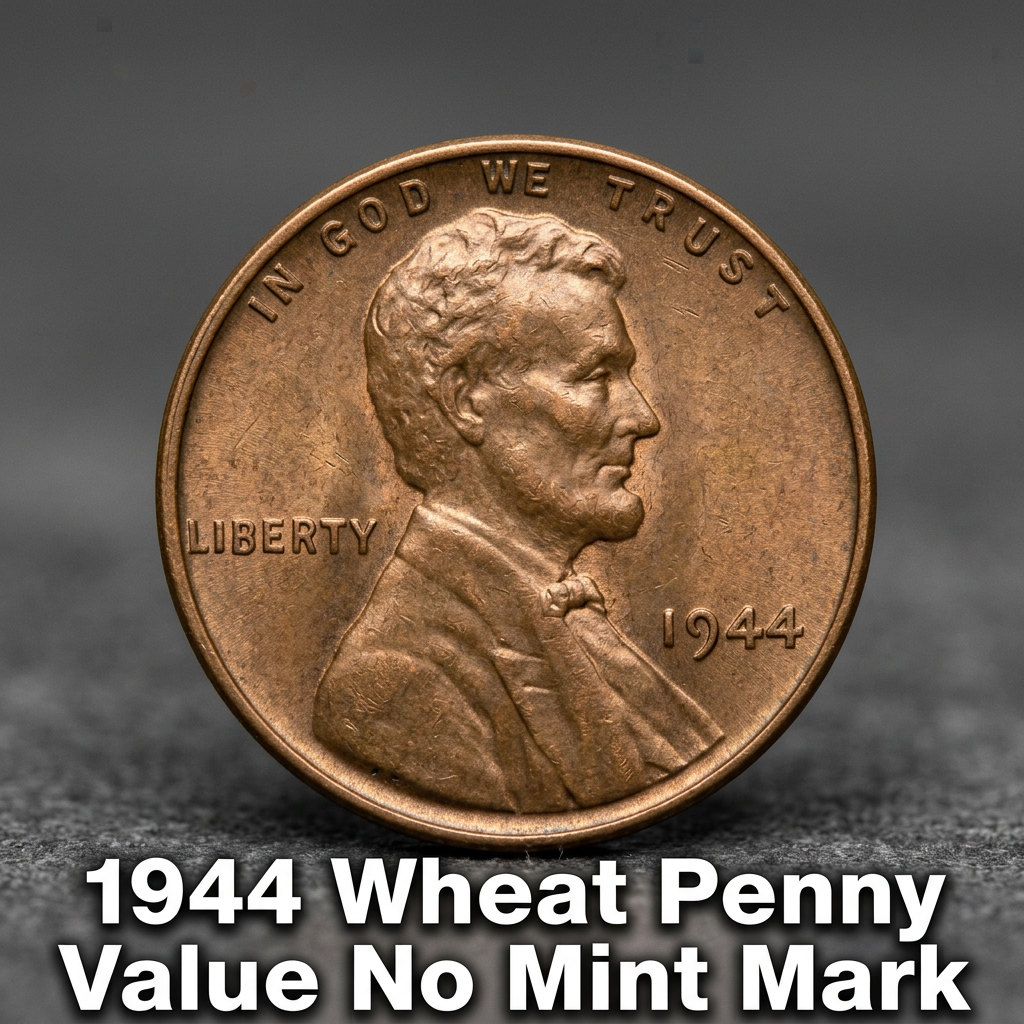
1944 Wheat Penny Value No Mint Mark and How Much It Is Worth Today
The 1944 Wheat Penny No Mint Mark is worth anywhere from $0.05 in worn condition to over $10,000 for rare errors and high-grade specimens. Finding one of these bronze beauties in your pocket change is a thrilling experience for any casual collector or curious homeowner looking to cash in on a lucky find.
The History and Rarity of the 1944 Lincoln Penny
If you have discovered a 1944 penny without a small letter under the date, you are holding a piece of American history struck at the Philadelphia Mint. During 1944, the United States was in the middle of World War II, and the mint was returning to the traditional copper-tin-zinc composition after the failed steel penny experiment of 1943. Because the Philadelphia Mint did not use mint marks at the time, your “no mark” coin is perfectly normal. If you aren’t sure what you’re looking at, you can use a free coin identifier app to quickly confirm the date and minting origin.
The sheer volume of production in 1944 was staggering, with over 1.4 billion pennies struck in Philadelphia alone. While this makes the common version very easy to find, it doesn’t mean your coin isn’t valuable. Professional collectors look for “Red” (RD) luster, which indicates the coin still has its original copper glow. For those on the go, the CoinKnow app can help you distinguish between a common brown penny and a more valuable red specimen by comparing high-resolution photos.
Understanding the 1944 Wheat Penny Value and Grading
When determining the price of your coin, condition is everything. A penny that has been rattling around in a jar for decades will likely be graded as “Circulated.” These are worth about 2 to 15 cents—not enough to retire on, but still many times its face value. However, if the coin looks like it just came from the bank in 1944, the price skyrockets. You can check the current market trends for a 1944 Wheat Penny in Mint State Red condition to see how quickly the value jumps as the grade increases.
Collectors use a scale from 1 to 70 to grade coins. Most 1944 pennies found today fall into the Good (G-4) or Fine (F-12) categories. A “brilliant uncirculated” coin (MS65 or higher) is where the real money lies. The CoinKnow mobile app is a great tool for beginners to learn about grading basics and to see what a high-grade Lincoln Cent looks like compared to a common one. Finding a gem-quality penny is rare, but it is why people continue to search through old rolls of coins.
| Condition / Grade | Estimated Value (USD) |
|---|---|
| Good (G-4) to Fine (F-12) | $0.02 – $0.10 |
| Extremely Fine (EF-40) | $0.25 – $0.75 |
| Uncirculated (MS-63) | $2.00 – $10.00 |
| Mint State Red (MS-67+) | $150 – $1,000+ |
| Steel Planchet Error | $75,000 – $100,000+ |
The Million Dollar Error Which 1944 Penny is Worth More
While the standard bronze penny is common, there is a legendary error from 1944 that every collector dreams of finding. In a strange reversal of the 1943 copper penny error, a few 1944 pennies were accidentally struck on leftover steel planchets from the previous year. These “Steel 1944 Pennies” look silver or grey and are highly magnetic. If you find one that looks greyish, try sticking it to a magnet. If it sticks, you could be looking at a life-changing fortune.
To get a better sense of how rarity impacts price, you can view the detailed 1944 Lincoln Cent value guide which breaks down the differences between bronze and steel strikes. Beyond the steel error, watch for doubled dies or clipped planchets. These manufacturing mistakes turn a standard cent into a collector’s item. Before you spend that old penny at the grocery store, open the CoinKnow app to ensure you aren’t holding a rare minting mistake that could be worth thousands.
Q: How can I tell if my 1944 penny is rare?
A: Check for a “grey” or “silver” color. If it is attracted to a magnet, it is likely a rare steel error worth thousands. If it is high-grade red with no scratches, it is also quite valuable.
Q: What does “No Mint Mark” mean?
A: It simply means the coin was minted in Philadelphia. At that time, Philadelphia did not use a “P” mark, unlike the San Francisco (S) or Denver (D) mints.
Q: Where is the best place to sell my 1944 Wheat Penny?
A: For common coins, local coin shops or eBay are best. For high-grade or error coins, professional auction houses like Heritage Auctions are recommended to get the highest price.
