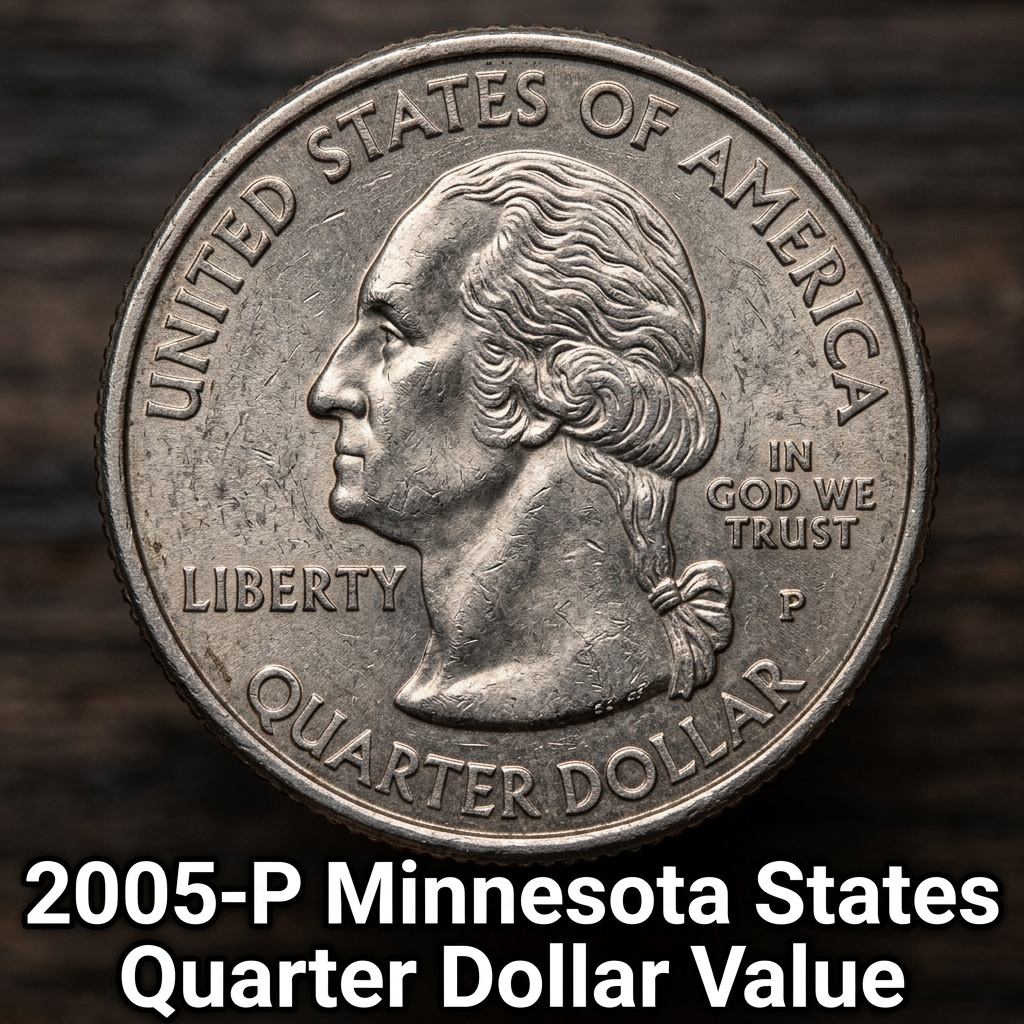
2005 P Minnesota State Quarter Value and Rare Extra Tree Variety Guide
The 2005-P Minnesota State Quarter is worth anywhere from its 25-cent face value in worn condition to over $500 for high-grade specimens or rare doubling errors. If you just found one of these coins in your pocket change, it is important to know exactly what details to look for before spending it.
What is a 2005-P Minnesota Quarter Worth Today
For most people, a 2005-P Minnesota quarter found in a coin jar will be worth exactly twenty-five cents. However, the value climbs significantly once you enter the realm of uncirculated “Mint State” coins. Because millions of these were minted in Philadelphia, common examples are Easy to find, but collectors pay a premium for coins that haven’t been scratched or dulled by circulation. If you are unsure about the grade of your find, using a free coin identifier app can help you distinguish between a common spender and a potential treasure.
In typical Mint State grades like MS63 or MS65, these quarters might sell for $1 to $5. However, as the grade reaches MS67 or MS68, the price jumps into the hundreds. When researching specialized 2005-P Minnesota quarter auction records, you will see that “Top Pop” coins—those in nearly perfect condition—are highly coveted by registry set collectors. Many hobbyists use the CoinKnow app to keep track of these fluctuating market prices and ensure they aren’t missing out on a deal.
How to Identify the Famous Extra Tree Error
The Minnesota state quarter is legendary among error hunters because of the “Extra Tree” variety. This is a Doubled Die Reverse (DDR) error where a small bump or distinct tree shape appears to the right of the main evergreen trees on the coin’s design. There are actually over 50 different recognized versions of this doubling, ranging from tiny “ghost” trees to very prominent, clear extra trunks.
To spot this, you will need a magnifying glass or a high-quality smartphone camera. Look closely at the area near the third and fourth trees to the right of the state map. If you see a vertical protrusion that shouldn’t be there, you might have a valuable error. The more distinct and large the “extra tree” appears, the higher the value. Specialized collectors often use CoinKnow to identify which specific die variety they have found.
Official Mintage and Specifications
The Philadelphia Mint produced 239,600,000 Minnesota quarters in 2005. This high mintage is why most coins remain worth only face value. The coin features a beautiful depiction of a loon on a lake with two people fishing, framed by the outline of the state. It is composed of a copper-nickel clad “sandwich,” with an inner core of pure copper and outer layers of 75% copper and 25% nickel.
It weighs 5.67 grams and has a diameter of 24.3 mm. While the 2005-P is the most common version found in the Eastern US, collectors also look for the “D” mint mark from Denver and the “S” mint mark proof versions from San Francisco. You can find more detailed 2005 state quarter price data by checking historical sales of both Philadelphia and Denver strikes to see which mint mark is currently performing better in the secondary market.
| Condition / Grade | Estimated Market Value |
|---|---|
| Circulated (Average Wear) | $0.25 |
| Uncirculated (MS63) | $1.00 – $3.00 |
| Choice Uncirculated (MS65) | $5.00 – $12.00 |
| Gem Uncirculated (MS67+) | $150.00 – $600.00 |
| Extra Tree Error (Circulated) | $5.00 – $20.00 |
| Extra Tree Error (Mint State) | $50.00 – $200.00+ |
Tips for Preserving Your 2005 Quarters
If you believe you have found a high-grade 2005-P Minnesota quarter or a significant “Extra Tree” error, the most important thing is to stop touching it with your bare fingers. The oils from your skin can cause “toning” or spotting over time, which reduces the coin’s grade and value. Instead, handle the coin only by its edges or wear lint-free cotton gloves.
Store your coins in PVC-free flips or cardboard holders rather than loose in a jar where they can clink against other coins and create “bag marks.” Many beginner collectors use the CoinKnow app to digitize their collection, allowing them to show off their finds to friends or experts without having to physically transport the delicate coins and risk damaging them.
Q: Where is the mint mark on the 2005 Minnesota quarter?
A: The mint mark is located on the “heads” (obverse) side of the coin, just to the right of George Washington’s ponytail. A “P” indicates it was made in Philadelphia.
Q: Is every 2005-P Minnesota quarter worth more than 25 cents?
A: No, the vast majority of these coins are common pocket change and are only worth face value. Only those in exceptional uncirculated condition or those featuring a recognized die error are worth a premium.
Q: How can I tell if my “Extra Tree” is real?
A: A genuine Extra Tree error is a Doubled Die Reverse. It will look like a distinct, raised lump or a partial tree silhouette. It should not look like a scratch or a dent, which is simply “post-mint damage.”
