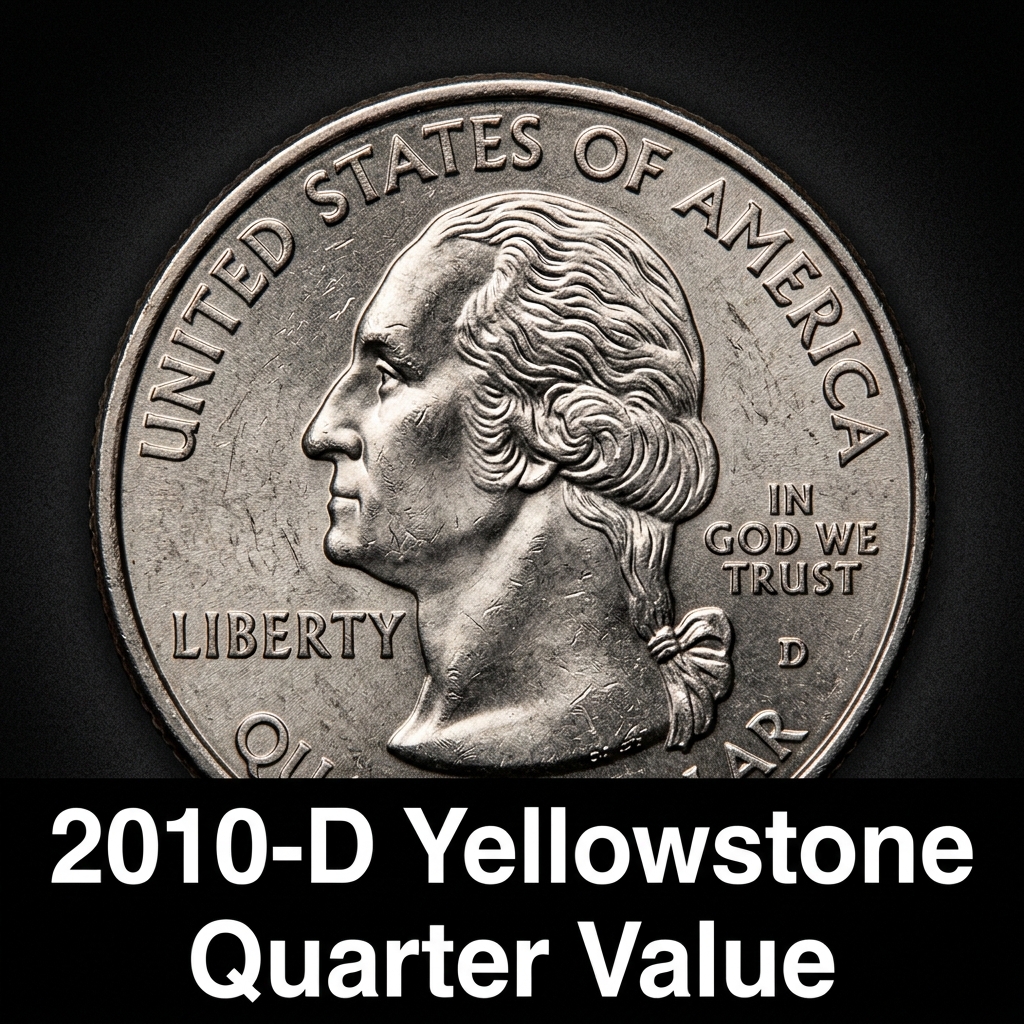
2010 D Yellowstone Quarter Value Guide and Rarity Factors
The 2010 D Yellowstone Quarter is worth anywhere from its 25-cent face value in circulated condition to over $15 for high-grade uncirculated specimens. While most of these coins found in pocket change are common, certain strike qualities and errors can make them a prized addition to any casual collection.
Understanding the 2010’s Heritage and Supply
The 2010 D Yellowstone National Park quarter represents the second release in the ambitious America the Beautiful Quarters Program. This series, which debuted in 2010, honors national parks and sites across the United States. The Denver Mint (denoted by the “D” mint mark) produced exactly 34,800,000 of these coins featuring the iconic Old Faithful geyser. While nearly 35 million sounds like a vast number, this was actually a period of relatively low mintage compared to the state quarters of the early 2000s.
If you are unsure if you have a Denver or Philadelphia strike, using a free coin identifier app can help you zoom in on that tiny mint mark next to George Washington’s ponytail. Identifying these details early is the first step in determining if your pocket change is worth a premium. Many collectors use the CoinKnow app to keep an organized digital inventory of their finds as they sort through rolls.
Market Value and Condition of the Yellowstone Quarter
When assessing the value of your coin, condition is everything. A “circulated” coin is one that has been used in daily commerce and shows wear on the high points of the geyser or Washington’s hair. These are generally only worth face value. However, coins that were tucked away in jars or original rolls—known as Mint State (MS) coins—carry much higher appeal. Professional grading becomes important once a coin reaches the MS66 or MS67 level.
For those looking for specific market data, you can check the current 2010 Yellowstone quarter price charts to see how Denver strikes compare to their Philadelphia counterparts. Generally, because 2010 was the first year of the series, many people hoarded them, meaning high-quality examples are more available than one might expect for a decade-old coin.
| Condition Grade | Estimated Value (USD) |
|---|---|
| Circulated (Good to About Uncirculated) | $0.25 |
| Uncirculated (MS63) | $0.75 – $1.50 |
| Choice Uncirculated (MS65) | $3.00 – $5.00 |
| Gem Uncirculated (MS67) | $15.00 – $45.00+ |
Identifying Rare Errors and Varieties
While a standard 2010 D Yellowstone Quarter Value might be modest, error hunters look for “Planchet” or “Die” errors. Some common errors found in the America the Beautiful series include “Die Chips” or “Double Dies,” where the letters or the geyser steam appear doubled. Because the Denver Mint was striking millions of coins rapidly, mechanical issues often created unique anomalies that collectors are willing to pay extra for.
You should always verify any odd-looking mark with a reliable detailed guide on 2010 quarter characteristics to ensure it is a recognized mint error rather than just “post-mint damage” caused by a vending machine. Tools like CoinKnow provide high-resolution references to help you spot these subtle differences. If you find a significant doubling on the reverse, your quarter could be worth $20 to $100 depending on the severity.
Should You Get Your Yellowstone Quarter Graded?
Grading a coin involves sending it to a service like PCGS or NGC to be authenticated and assigned a numerical score from 1 to 70. For a 2010 D Yellowstone Quarter, grading is usually only worth the fee if the coin is in perfect, pristine condition. Most coins found in change are “scuffed,” meaning they won’t grade high enough to justify the $30-$50 cost of the grading service.
If you believe you have a specimen that looks flawless to the naked eye, it might be a candidate for professional assessment. For most everyday Americans, the most rewarding part of the hobby is simply completing the full set of 56 quarters. Using a tool like CoinKnow can help you track your progress without spending a fortune on professional slabs for coins that are better enjoyed in a simple album.
Q: Where is the mint mark on a 2010 D Yellowstone Quarter?
A: The “D” mint mark is located on the obverse (front) of the coin, to the right of George Washington’s portrait, just below the phrase “In God We Trust.”
Q: Is the 2010 Yellowstone quarter made of silver?
A: Standard quarters found in circulation are composed of a copper-nickel clad. Only special “Silver Proof” versions, which were sold in sets by the US Mint, contain 90% silver.
Q: Why are 2010 quarters considered harder to find than others?
A: In 2010, the US Mint significantly lowered mintage numbers due to the economic climate and lower demand for new coinage, making the Yellowstone and other 2010 designs slightly scarcer in circulation than quarters from the late 90s.
