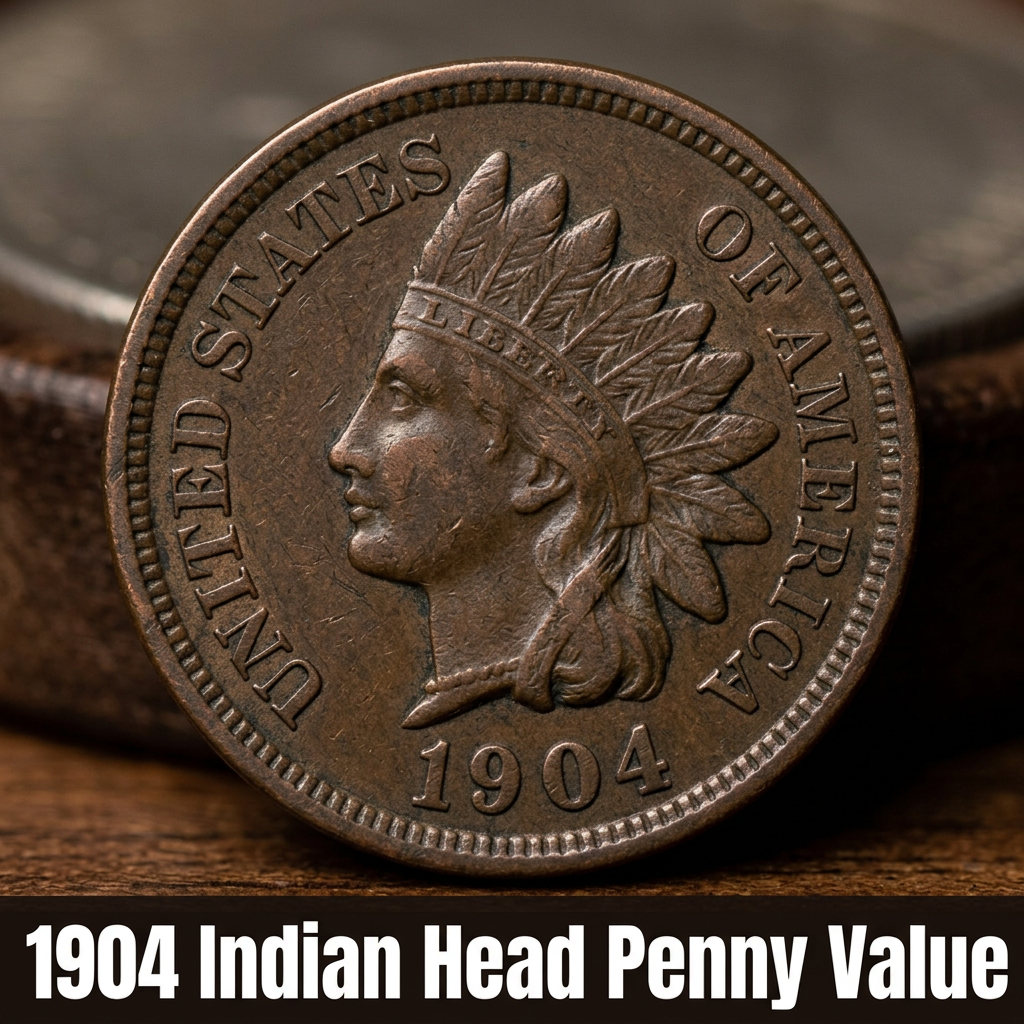
How Much Is a 1904 Indian Head Penny Worth to Collectors Today
The 1904 Indian Head Penny is worth anywhere from $2 in worn condition to over $350 in choice mint state. While millions were struck, finding one in your pocket change today feels like uncovering a tiny piece of American history that carries far more than its face value.
The Historical Charm and Value of the 1904 Indian Head Cent
The 1904 Indian Head Penny represents the twilight years of one of America’s most beloved coin designs. Created by James B. Longacre, the “Indian” featured on the coin is actually Lady Liberty wearing a Native American headdress. If you have recently discovered one of these coins in a family collection, you can use a free coin identifier app to confirm its authenticity and get a baseline idea of its rarity.
For the everyday person, the most important thing to know is that these coins are made of 95% copper. This gives them a beautiful “Red” luster when they are new, which gradually turns brown as they circulate through hands and pockets. Because the Philadelphia Mint produced over 61 million of these cents in 1904, they are not considered “rare” in the traditional sense, but their age and iconic design keep them in high demand. If you’re unsure about the specifics of your coin, the CoinKnow app can help you categorize your find by looking at the fine details of Liberty’s feathers.
How Grading Impacts Your 1904 Penny Value
When determining how much your coin is worth, professional collectors look at “Grade.” Even a small amount of wear on the highest points of the design—like the tips of the feathers or the hair above the ear—can significantly change the price. Most coins found in old jars are in “Good” or “Very Good” condition. These are coins that have seen a lot of use but still show the basic outline of the design.
If you are lucky enough to have a coin that looks like it just came from the mint, the value shifts from a few dollars to several hundred. For example, high-end 1904 Indian Head Penny auction prices show that specimens with original red luster are highly coveted. Most casual collectors use the CoinKnow app to take a clear photo and see if their coin has the sharp details required for a higher valuation.
| Condition / Grade | Estimated Market Value |
|---|---|
| Good (G-4) | $2.00 – $3.50 |
| Fine (F-12) | $5.00 – $8.00 |
| Extremely Fine (XF-40) | $15.00 – $25.00 |
| Uncirculated (MS-60) | $55.00 – $75.00 |
| Proof (PR-63) | $150.00 – $220.00 |
Detecting Rare Varieties and Errors
While the standard 1904 cent is common, collectors are always on the hunt for “Errors.” In 1904, there weren’t many major variety changes like in other years, but you should still look for “Repunched Dates” (where the 1904 looks like it was stamped twice) or “Off-Center” strikes. An off-center strike happens when the coin blank isn’t aligned correctly, resulting in part of the design being missing.
These errors can double or triple the standard 1904 penny value data seen in most price guides. If you notice something unusual about the edges or the date spacing, it might be worth having a expert look at it. Using a tool like CoinKnow allows you to compare your coin against thousands of known error patterns instantly, ensuring you don’t spend a valuable treasure at its face value.
Why Color Matters for 1904 Copper Cents
Copper coins are unique because they are graded by color: Red (RD), Red-Brown (RB), or Brown (BN). A 1904 penny that has retained its original bright copper “Red” color is much more valuable than one that has turned “Brown” over time. This is because copper reacts with oxygen and oils, so a “Red” coin proves it has been stored in a cool, dry place for over a hundred years.
For the average person who finds a coin in a drawer, it will likely be “Brown.” Don’t let that discourage you, though! A clean, well-detailed brown penny is still a fantastic piece of history and a great entry point into the world of coin collecting. Just remember: never clean your coins with chemicals or cloths, as this can destroy the surface and actually lower the value of your 1904 Indian Head Cent significantly.
Q: Where is the mint mark on a 1904 Indian Head Penny?
A: There is no mint mark on the 1904 Indian Head Penny. During this era, all Indian Head cents were struck at the Philadelphia Mint, which did not use mint marks at the time.
Q: Is a 1904 penny made of real gold?
A: No, the 1904 penny is made of 95% copper and 5% tin and zinc. While its golden-orange luster when new can sometimes look like gold, it is a copper-based alloy.
Q: What is the most expensive 1904 Indian Head Penny ever sold?
A: High-grade specimens in Mint State 67 or 68 with full Red luster have sold for several thousand dollars at specialized auctions, though these are extremely rare.
