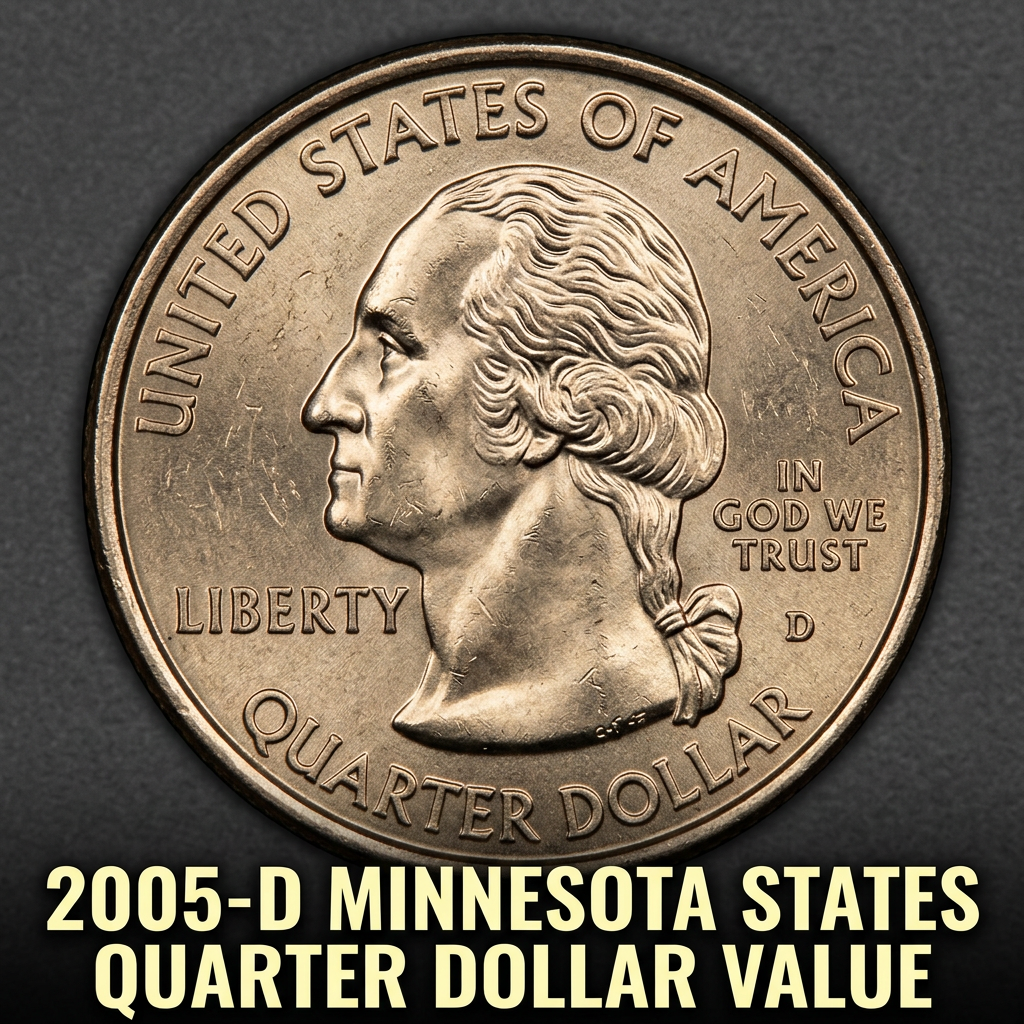
How Much is a 2005 D Minnesota State Quarter Worth Today
The 2005 D Minnesota State Quarter is worth anywhere from its $0.25 face value in worn condition to over $500 for high-grade specimens or rare doubled die errors. If you have just pulled one of these coins from your pocket change, it is important to know that most are common, but a few specific varieties are highly prized by collectors.
Understanding the 2005 D Mint Mark and Mintage
The “D” on your 2005 Minnesota quarter indicates it was struck at the Denver Mint. In 2005, the United States Mint produced over 239 million of these coins in Denver alone. Because the mintage was so high, most coins you find in circulation today will only be worth their face value of twenty-five cents. However, the condition is the ultimate factor in determining if your coin is a keeper. If you aren’t sure about the quality of your find, using a free coin identifier app can help you distinguish between a regular pocket change coin and a potential treasure.
Collectors look for “Mint State” (MS) coins, which have never been spent and still retain their original luster. While a typical circulated quarter is common, those that have been preserved in rolls or mint sets can fetch a premium. Many people use the CoinKnow app to track the market value of their collections as prices for high-grade quarters frequently fluctuate. When checking your coins, look for sharp details on the spruce trees and the loon depicted on the reverse side.
The “Extra Tree” Doubled Die Errors
The real excitement surrounding the 2005 D Minnesota quarter lies in its famous “Extra Tree” doubled die errors. During the manufacturing process, some dies were misaligned, resulting in what looks like an additional spruce tree or a small “blob” next to the main trees on the reverse. There are actually over 60 different recognized varieties of this doubling error. If you find one of these, the value of your 2005 Minnesota quarter could jump from twenty-five cents to as much as $50 or $100 depending on the prominence of the extra tree.
The most famous of these is the “WDDR-001” variety, where a clear, distinct extra tree appears to the right of the state outline. Finding one of these in your change is like winning a small lottery. Serious numismatists often scan their change with a magnifying glass just to spot these tiny discrepancies. If you are lucky enough to find a very clear error, the CoinKnow app can help you document and value your discovery for potential sale to a dealer or collector.
2005 D Minnesota State Quarter Value Chart
To help you understand what your coin might be worth based on its grade and type, refer to the pricing table below. Note that these values are estimates based on recent auction sales and market trends.
| Condition / Grade | Estimated Market Value |
|---|---|
| Circulated (Good to About Uncirculated) | $0.25 |
| Uncirculated (MS63 – MS65) | $1.00 – $5.00 |
| High Grade (MS67 and above) | $25.00 – $150.00+ |
| Extra Tree Doubled Die Error (Circulated) | $5.00 – $20.00 |
| Extra Tree Doubled Die Error (Uncirculated) | $40.00 – $200.00 |
Grading and Condition Impacts on Price
Professional grading by services like PCGS or NGC can significantly increase the resale price of a 2005 D Minnesota quarter. For instance, a regular strike 2005 D quarter in MS68 condition is incredibly rare because most quarters were banged up during transport. While you can view the current price data for 2005 quarters to see how high-grade coins perform, remember that the cost of professional grading itself can be $30 or more.
For the average American, it is usually only worth grading a coin if it looks absolutely flawless or shows a major error. If your quarter has scratches, fingerprints, or looks dull, it is likely just a “spender.” Using the CoinKnow mobile app can help you compare your coin against high-resolution photos of graded specimens so you can make an informed decision before spending money on professional authentication.
What to Look for on the Reverse Side
The reverse of the Minnesota quarter features the state’s picturesque landscape, including a lake, a loon, and numerous spruce trees. When searching for value, pay close attention to the area to the right of the state map and between the trees. This is where the doubling errors occur. Even if you don’t find an “extra tree,” look for “Satin Finish” versions. These were not released into circulation but were included in official Uncirculated Mint Sets.
Satin Finish 2005 D quarters have a smoother, more matte appearance than the shiny coins found in your pocket. These are generally worth a few dollars more than standard strikes. Always handle your coins by the edges to avoid getting oils from your skin on the surface, as this can degrade the grade and value over time.
Q: Is the 2005 D Minnesota quarter made of silver?
A: No, the standard 2005 D Minnesota quarter found in circulation is made of a copper-nickel clad composition. Silver versions were only minted at the San Francisco Mint (S mint mark) and were sold in special Proof Sets.
Q: How can I tell if I have an “Extra Tree” error?
A: Use a magnifying glass or a loupe to look at the trees on the right side of the coin. If you see an extra branch or an entire extra tree trunk that doesn’t match the standard design, you may have a valuable doubled die error.
Q: Where is the best place to sell my 2005 D Minnesota quarter?
A: For common circulated coins, they are best spent at the store. For error coins or high-grade specimens, consider selling on platforms like eBay, at a local coin shop, or through specialized numismatic auctions.
