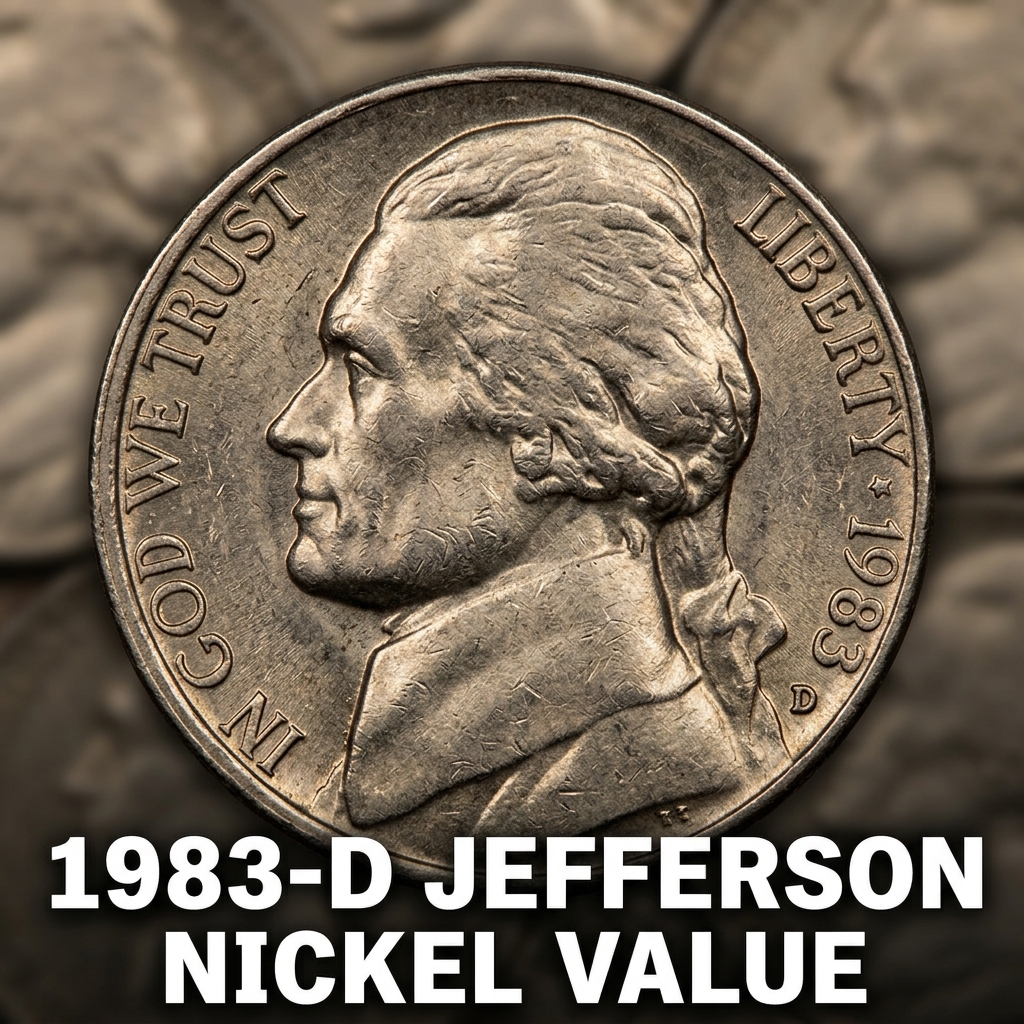
1983 D Jefferson Nickel Value and History for Collectors
The 1983-D Jefferson Nickel is worth anywhere from face value in average circulated condition to over $1,000 for rare specimens in pristine Mint State. While most of these nickels found in pocket change are only worth five cents, certain high-quality examples and errors can fetch a significant premium from collectors.
Understanding the Scarcity of the 1983-D Jefferson Nickel
If you just pulled a 1983-D nickel out of your piggy bank, you might be wondering why this particular year matters more than others. In the early 1980s, the United States was transitioning through economic shifts, and the quality of mintage at the Denver Mint varied. While 1983-D nickels were produced in large quantities—over 545 million to be exact—finding them in perfect condition is surprisingly difficult.
Most of these coins entered circulation immediately, meaning they suffered from scratches, “bag marks,” and dulling over the decades. This makes uncirculated versions highly desirable. To get an instant read on your coin’s condition, using a free coin identifier app can help you determine if your nickel has the sharpness required to be worth more than its face value. Many collectors use the CoinKnow app to quickly scan their change for these hidden gems before spending them at the store.
Average Market Values for 1983-D Nickels
For the everyday American, the value of a 1983-D Jefferson Nickel depends almost entirely on its “Grade.” A grade is a score from 1 to 70 that describes how much wear the coin has. Circulated coins—those that look “used”—are generally worth only 5 cents. However, if you find one that looks like it just came from the bank and still has its original “mint luster,” you might be looking at a few dollars.
The real money resides in the “Mint State” (MS) categories. Collectors especially look for the “Full Steps” (FS) designation. This refers to the steps leading up to Monticello on the back of the coin. If those steps are crisp and fully defined, the value skyrockets. You can find detailed 1983 Jefferson Nickel price data suggesting that MS66 and MS67 grades are the “holy grail” for this specific year.
| Condition / Grade | Estimated Market Value |
|---|---|
| Circulated (Good to About Uncirculated) | $0.05 – $0.15 |
| Mint State 63 (Uncirculated) | $1.00 – $3.00 |
| Mint State 65 (Gem Uncirculated) | $10.00 – $25.00 |
| Mint State 66 Full Steps | $150.00 – $300.00 |
| Mint State 67 Full Steps | $1,000.00+ |
What to Look For: Mint Marks and Errors
The “D” on your nickel stands for the Denver Mint. You can find this small letter on the front (obverse) of the coin, located just below the year 1983. While the Denver mintages were high, collectors sometimes find “mint errors” that make a specific coin unique. Common errors for this era include “off-center strikes,” where the image isn’t perfectly centered, or “die cracks,” which look like raised jagged lines on the surface.
If you suspect you have an error coin, check its current 1983 nickel value information to see what similar errors have sold for at auction. Using tools like the CoinKnow app can also assist in identifying whether a mark on your coin is a valuable mint error or just a common scratch from years of circulating in vending machines.
How the Full Steps Designation Increases Value
In the world of Jefferson Nickel collecting, the “Full Steps” designation is everything. On the reverse side of the coin, you will see Thomas Jefferson’s home, Monticello. At the base of the building is a set of stairs. Because the metal doesn’t always flow perfectly into the deepest parts of the coin die during the striking process, these steps are often blurry or smooth.
A coin is considered “Full Steps” if there are at least five or six clear, uninterrupted lines visible. For the 1983-D nickel, a Full Steps version is significantly rarer because the dies used that year were often worn down. When you are sorting through a roll of nickels, keep an eye out for that crisp detail. The CoinKnow app can be a great companion here, offering high-resolution examples of what to look for when inspecting the back of your nickel for these valuable characteristics.
Q: Is a 1983-D nickel rare?
A: No, the 1983-D nickel is not rare in typical circulated condition, as over 545 million were minted. However, it is very rare in high Mint State grades with the “Full Steps” designation.
Q: Where is the mint mark on a 1983 nickel?
A: The mint mark is located on the obverse (heads) side of the coin, found just below the date “1983.” A “D” represents Denver, while a “P” represents Philadelphia.
Q: How much is a 1983-D nickel with no steps worth?
A: A 1983-D nickel with no visible steps (the most common type) is generally worth its face value of $0.05 if it shows signs of wear, or about $1 to $5 if it is in uncirculated condition.
