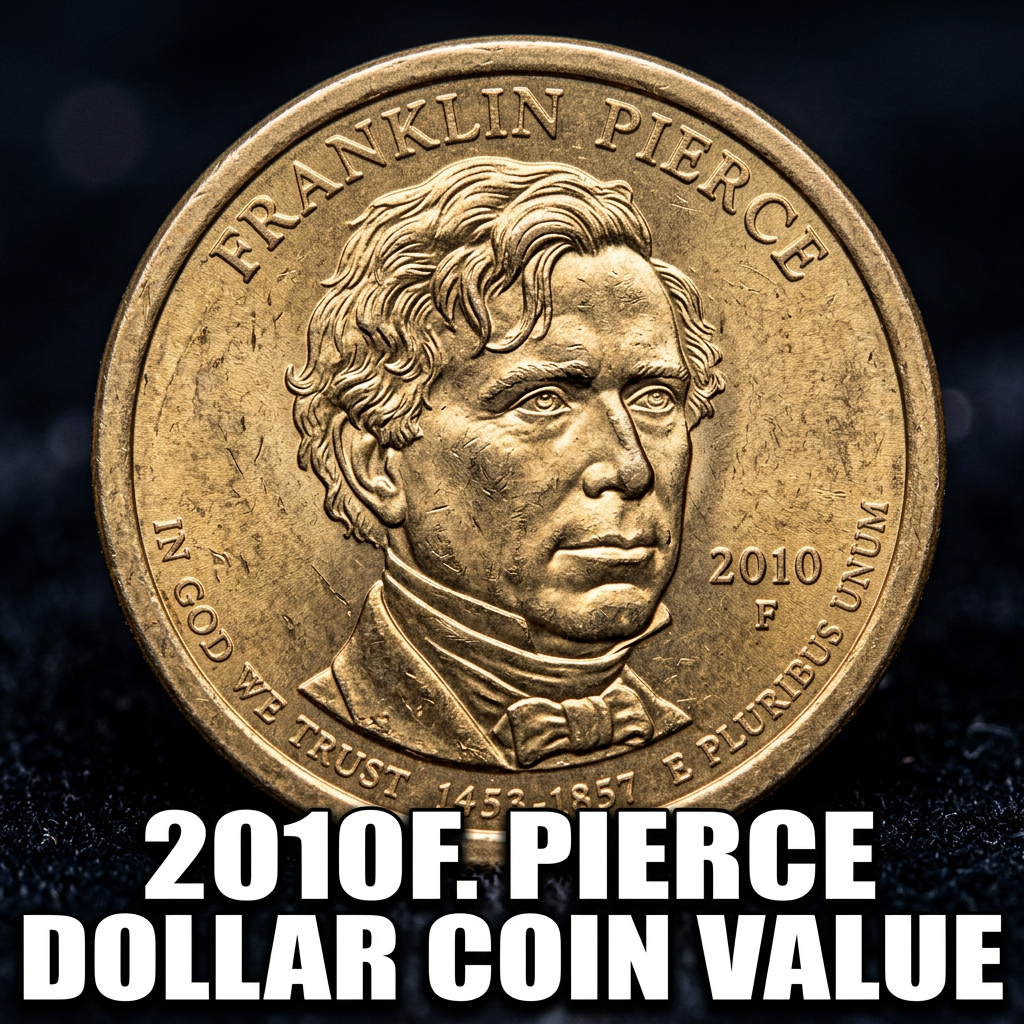
How Much is a 2010 Franklin Pierce Dollar Coin Worth Today
The 2010 Franklin Pierce Dollar Coin is worth anywhere from its $1 face value in circulated condition to over $50 in high-grade certified mint state. While most of these coins found in pocket change are only worth a dollar, certain rare errors and pristine specimens can fetch a surprising premium from collectors.
Understanding the 2010 Franklin Pierce Presidential Dollar
The 2010 Franklin Pierce dollar was the 14th release in the Presidential $1 Coin Program, honoring the nation’s 14th president. These golden-colored coins were minted in large quantities for circulation, but they are often mistaken for rare gold coins by beginners. If you have found one of these in your change, you might be wondering if you’ve struck it rich. Using a free coin identifier app is the quickest way to confirm the variety and mint mark of your specific piece.
These coins feature a portrait of Franklin Pierce on the obverse and the Statue of Liberty on the reverse. Unlike older coins, the date, mint mark, and the motto “E Pluribus Unum” are inscribed on the edge of the coin. If you use the CoinKnow app, you can easily scan the edge lettering to ensure you aren’t missing any valuable details. Because these were meant for everyday spending, millions remain in circulation today, making the “average” coin worth exactly its face value.
Factors Determining the Value of Your Pierce Dollar
When evaluating the worth of your coin, collectors look at three main things: the mint mark, the condition, and the presence of errors. Coins minted in Philadelphia (P) and Denver (D) are common, while the San Francisco (S) mint produced proof versions specifically for collectors. Proof coins usually have a mirror-like finish and are worth more than the standard business strikes found in your wallet.
For those interested in investment-grade pieces, the current market value for uncirculated dollar coins shows that condition is everything. A 2010 Pierce dollar that is “Choice Uncirculated” (MS65 or higher) can sell for $5 to $15. If the coin has been professionally graded as MS67 or higher by the PCGS or NGC, the price can skyrocket into the hundreds of dollars, though such coins are rarely found in general circulation.
| Condition / Mint Mark | Estimated Value |
|---|---|
| Circulated (P or D) | $1.00 |
| Uncirculated (MS63) | $2.25 – $3.50 |
| Proof (S Mint) | $4.00 – $7.00 |
| MS67 Rare Grade | $45.00+ |
| Missing Edge Lettering Error | $50.00 – $100.00 |
Identifying Rare Error Coins and Missing Edge Lettering
The real excitement for “everyday” treasure hunters lies in error coins. Since the Presidential Dollar series used edge-incused lettering, some coins skipped the second minting process. These are known as “Satin Finish” errors or “Missing Edge Lettering” coins. If you find a 2010 Franklin Pierce dollar with a completely smooth edge, you have found a valuable mistake that could be worth $50 or more.
Comparing your find to a comprehensive guide on rare dollar coin values can help you see how these modern errors stack up against historic rarities. Many collectors use the CoinKnow app to cross-reference recent auction sales for these specific errors. Remember that heavy wear on a coin can sometimes rub the lettering off, so if the coin looks very old and scratched, it might just be damaged rather than a mint error.
Is It Worth Keeping Your 2010 Franklin Pierce Coin
Most Americans who find these coins today wonder if they should spend them or save them. If your coin is shiny, has no scratches, and looks like it just came from the bank, it is worth putting in a protective sleeve. These “uncirculated” specimens will slowly appreciate in value as the supply of perfect coins diminishes over the years. However, if the coin is dull and shows signs of being handled, it is likely only worth one dollar.
Collectors often look for “Position A” or “Position B” edge lettering orientations, referring to whether the text is upside down or right-side up relative to the portrait. While this usually doesn’t add much value to a common coin, it is a fun detail for hobbyists. To get a better sense of what your collection is worth, the CoinKnow app can help you organize your inventory and track the market trends for modern presidential issues.
Q: Is the 2010 Franklin Pierce dollar coin made of real gold?
A: No, these coins are composed of a copper core with a manganese-brass cladding. This gives them their distinct golden color, but they contain no actual gold.
Q: Where can I sell my Franklin Pierce dollar coin?
A: You can sell these at local coin shops, through online marketplaces like eBay, or at coin shows. However, unless the coin is an error or in perfect uncirculated condition, most shops will only offer face value.
Q: How can I tell which mint my coin came from?
A: Look at the edge of the coin. You will see the date (2010) followed by a small letter. “P” stands for Philadelphia, “D” for Denver, and “S” for San Francisco.
