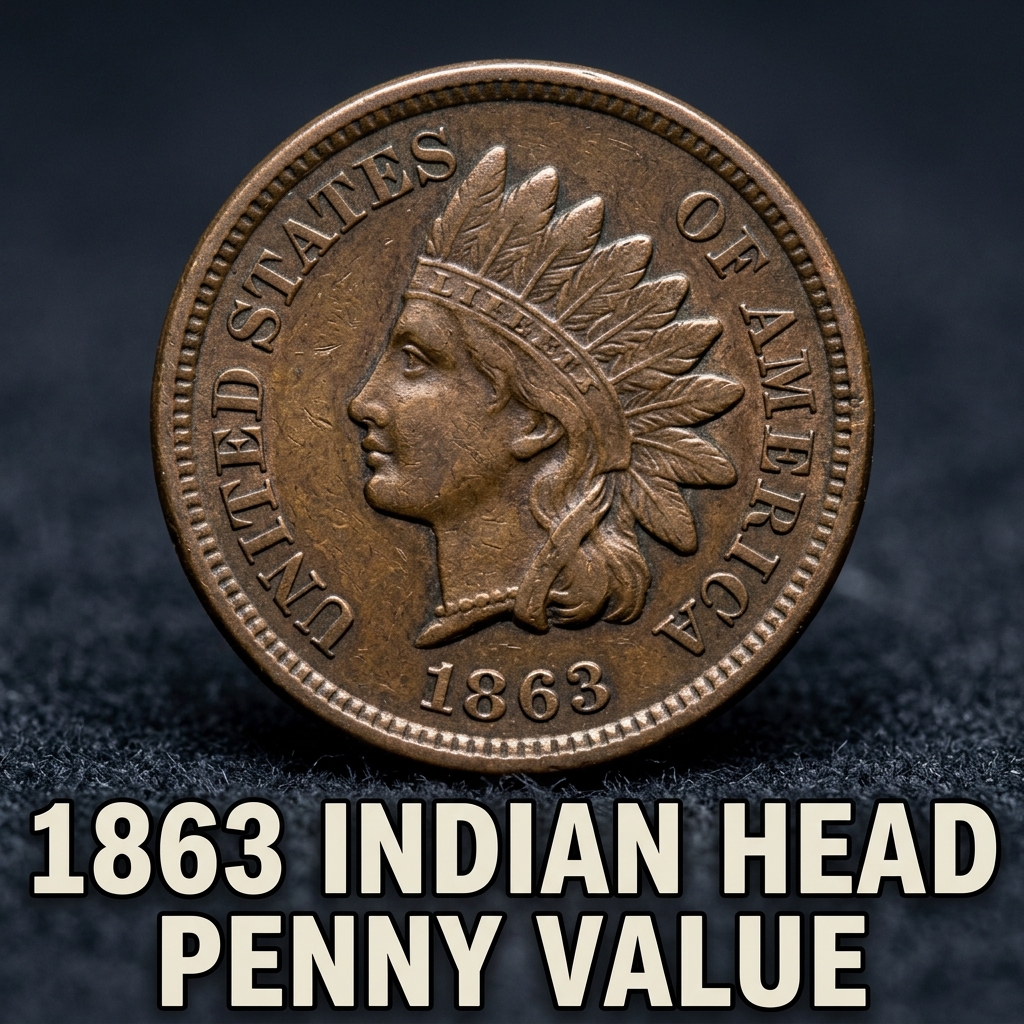
1863 Indian Head Penny Value and Price Guide for Collectors
The 1863 Indian Head Penny is worth anywhere from $10 in worn condition to over $350 in choice mint state. Finding one of these Civil War era coins in your change or an old jar is like holding a piece of American history in your palm.
Understanding the History and Composition of the 1863 Indian Head Penny
The year 1863 was a pivotal moment in American history, as the Civil War raged on and coinage was becoming increasingly scarce. People were hoarding metal, leading the government to produce these pennies in massive quantities to keep the economy moving. Unlike the pennies we use today, the 1863 version is notably thicker and heavier. It was struck on a “Copper-Nickel” planchet, often referred to as “White Cents” because of their pale, almost silvery appearance compared to later bronze versions.
If you are unsure whether the coin you found is authentic or just a common replica, using a free coin identifier app can help you confirm the date and variety instantly. During this era, pennies were 88% copper and 12% nickel. This specific composition makes them very durable, but it also means they tend to develop a dark, mottled patina over time. When you use the CoinKnow app to scan your collection, you can often see how these historical details impact the desirability of your specific coin among serious collectors.
Estimated Market Values Based on Coin Condition
When determining how much your penny is worth, the most important factor is the “grade” or physical condition of the coin. Most 1863 pennies found by everyday people are in “Good” or “Very Good” condition, meaning the details are worn down but the date and major features are still visible. Even in this humble state, the coin carries a premium because of its age. However, if you happen to find one that still has sharp details in the feathers of the headdress or the word “LIBERTY” is clearly legible on the headband, the price jumps significantly.
As the condition improves, so does the investment potential. You can check the current 1863 Indian Head Penny MS price trends to see how “Uncirculated” coins—those that never actually spent time in people’s pockets—can command hundreds or even thousands of dollars at auction. Most casual finders will be looking at the lower end of the spectrum, but it is always worth checking for those crisp details before spending it or tossing it back in a box.
| Condition Grade | Estimated Value (USD) |
|---|---|
| Good (G-4) | $10 – $15 |
| Very Good (VG-8) | $18 – $25 |
| Fine (F-12) | $30 – $45 |
| Extremely Fine (EF-40) | $65 – $90 |
| Uncirculated (MS-60+) | $150 – $400+ |
Key Factors and Varieties That Increase Value
While there are no major “mint marks” to look for on an 1863 penny (they were all struck in Philadelphia), there are certain errors and varieties that can make a single coin worth a fortune. For example, some coins were struck with “rotated dies,” where the reverse side is flipped at an odd angle compared to the front. Others might show “re-punched dates” where the numbers look doubled. If you find a coin from a different year, such as checking the 1898 Indian Head Penny worth, you will notice that the metal and rarity factors change the math for collectors.
The CoinKnow app is an excellent resource for identifying these subtle errors that the naked eye might miss. Collectors are often willing to pay a massive premium for a coin that has a unique manufacturing flaw. Furthermore, the “eye appeal” matters; a coin with an even, chocolate-brown tone is often more valuable than one with ugly black spots or scratches. Never try to clean your coin to make it look “newer,” as cleaning actually destroys the numismatic value and can turn a $100 coin into a $10 coin instantly.
How to Safely Store and Sell Your Old Pennies
If you have confirmed that your 1863 Indian Head Penny is valuable, your next step is preservation. Because these coins contain nickel, they are susceptible to environmental damage if left in humid areas. Large-scale collectors recommend placing the coin in a PVC-free plastic flip or a cardboard “2×2” holder. This prevents oils from your fingers from causing further oxidation. Once protected, you can use the CoinKnow app to track your collection’s value over time as market demands fluctuate.
When you are ready to sell, avoid pawn shops or generic “we buy gold” stores, as they rarely offer fair market value for collectible coins. Instead, look for local reputable coin dealers or specialized online auctions. Knowing the exact grade of your coin will give you the leverage needed to negotiate a fair price. Whether you decide to keep it as a family heirloom or sell it for a profit, the 1863 penny remains one of the most iconic symbols of American resilience during the Civil War.
Frequently Asked Questions about the 1863 Penny
Q: Does the 1863 Indian Head Penny have a mint mark?
A: No, the 1863 Indian Head Penny was only produced at the Philadelphia Mint, which did not use mint marks at that time. All authentic 1863 pennies will have a plain field.
Q: Why is my 1863 penny thicker than a modern penny?
A: Between 1859 and mid-1864, Indian Head Pennies were made of a copper-nickel alloy. These “fatty” cents are 2.33mm thick, whereas modern pennies and later Indian Heads are only 1.52mm thick.
Q: Should I clean my 1863 penny to see the date better?
A: Absolutely not! Cleaning a vintage coin with chemicals or abrasives leaves microscopic scratches that professional graders can easily detect. A cleaned coin is typically worth only a fraction of its original value.
