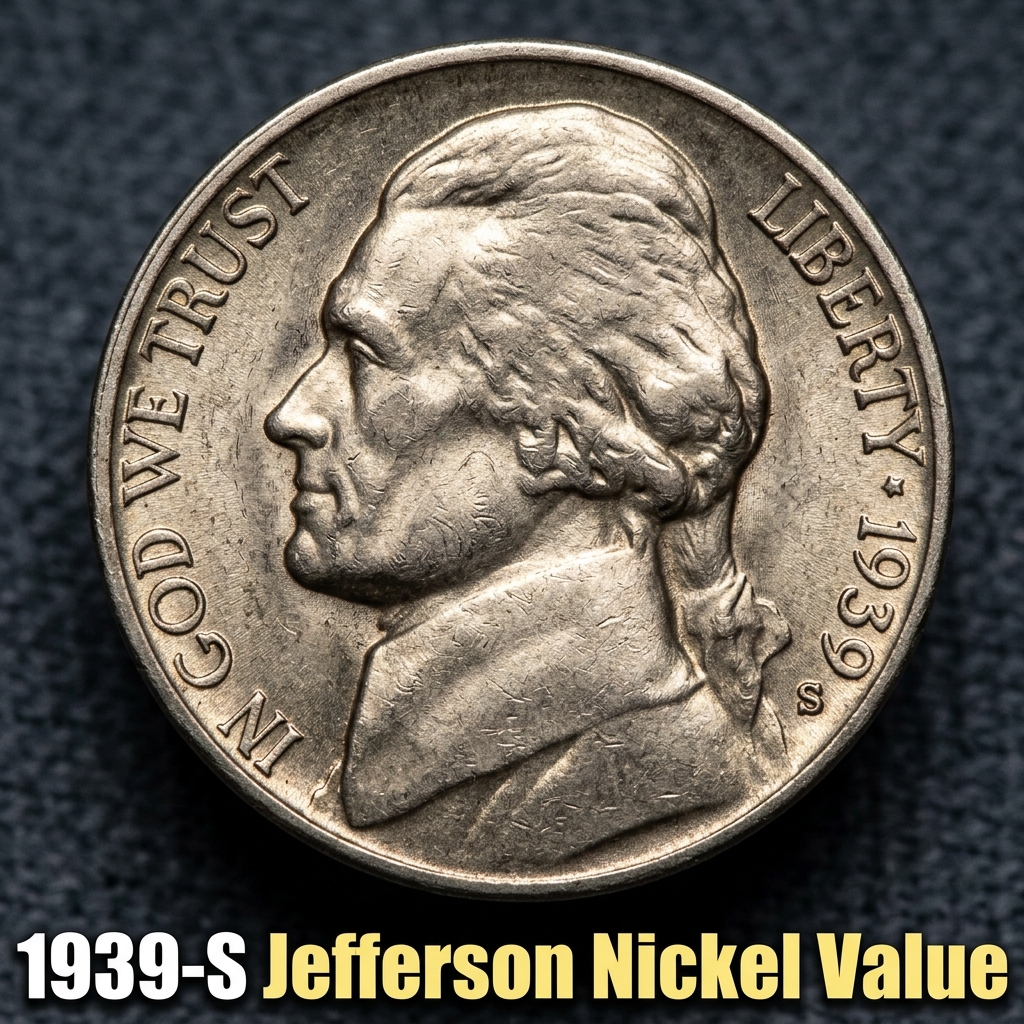
1939 S Jefferson Nickel Value Guide for Collectors and Beginners
The 1939-S Jefferson Nickel is worth anywhere from $1 in circulated condition to over $1,500 in high-grade mint state. Finding one of these in your pocket change or an old jar is an exciting moment for any American, as it represents the second year of the iconic Jefferson series and carries a unique history from the brink of World War II.
Understanding the Special Value of the 1939-S Jefferson Nickel
If you have just discovered a vintage coin in your collection, you might be wondering why some of these nickels are worth a premium. The “S” mint mark indicates it was produced at the San Francisco Mint, which typically had lower production numbers than Philadelphia or Denver. This specific year is particularly interesting because it contains multiple varieties and errors that drive up the price. If you are unsure exactly what you have, using a free coin identifier app can help you distinguish between a common strike and a rare variety.
For many Americans, the CoinKnow app has become a go-to tool for identifying these subtle differences in seconds. Because the 1939 series is early in the Jefferson Nickel run, the dies used to strike the coins were still being refined. This led to variations in the “Monticello” design on the reverse and even some doubling in the letters. Professional collectors often look for the “Full Steps” version, which refers to the crispness of the steps on Jefferson’s home, significantly increasing the potential current market rates for 1939-S Nickels.
How to Identify a 1939-S Nickel and Its Condition
To determine the value of your coin, you first need to locate the mint mark. On the 1939 nickel, the mint mark is located on the reverse side (the back), just to the right of the Monticello building. Look for a small “S” nestled between the building and the rim. If there is no letter there, it was minted in Philadelphia. Once you’ve confirmed it’s an “S” mint, the next step is assessing the condition, or “grade.”
Most coins found in circulation today will be in “Good” to “Very Fine” condition. This means the details of Thomas Jefferson’s hair and the pillars of Monticello will show some smoothing and wear. However, if your coin still has its original luster and looks like it just came from the bank, you may be holding a “Mint State” specimen. Checking the appraisal data for 1939 nickels can give you a better idea of how condition affects the final price tag.
| Condition / Grade | Estimated Value Range |
|---|---|
| Good (G-4) to Fine (F-12) | $1.00 – $3.50 |
| Very Fine (VF-20) to Extremely Fine (EF-40) | $4.50 – $12.00 |
| About Uncirculated (AU-50) | $15.00 – $35.00 |
| Mint State (MS-63) | $60.00 – $150.00 |
| Mint State (MS-65) Red/Luster | $250.00 – $1,500+ |
Rare Varieties and the Search for Full Steps
In the world of coin collecting, the “Full Steps” (FS) designation is the holy grail for Jefferson Nickels. This means that the six steps leading up to Monticello are clearly defined and not merged together by wear or a weak strike. A 1939-S with Full Steps is incredibly rare and can command prices well into the thousands of dollars at auction.
When you start scanning your change with the CoinKnow app, keep an eye out for the “Doubled Monticello” or the “Reverse of 1938” versus the “Reverse of 1940.” During 1939, the U.S. Mint changed the design of the steps on the back of the coin. The “Reverse of 1938” has wavy steps, while the “Reverse of 1940” has straight, clean steps. For the San Francisco mint, the Reverse of 1938 is generally more common, making a high-grade 1939-S with the 1940 design a very desirable find for enthusiasts.
Final Tips for New Coin Collectors
If you think you’ve found a valuable 1939-S Jefferson Nickel, the most important rule is: do not clean it. Many beginners make the mistake of trying to polish an old coin to make it look “new.” In the eyes of professional graders, cleaning a coin destroys its numismatic value and can turn a hundred-dollar coin into a five-dollar coin instantly.
Instead, handle the coin by its edges and store it in a PVC-free plastic holder or a simple cardboard flip. Use the CoinKnow app to catalog your find and track its value over time. As the market for vintage American currency continues to grow, holding onto these historical pieces can be a rewarding hobby that might just pay off in the long run.
Frequently Asked Questions
Q: Where is the mint mark on a 1939-S Jefferson Nickel?
A: The mint mark is a small “S” located on the back (reverse) of the coin, to the right of the Monticello building, near the rim.
Q: Is the 1939-S nickel made of silver?
A: No, the 1939-S Jefferson Nickel is made of 75% copper and 25% nickel. Silver “War Nickels” were only produced between 1942 and 1945.
Q: What makes the 1939-S nickel rare compared to other years?
A: The 1939-S is sought after because it is an early date in the series with a relatively low mintage from the San Francisco Mint, and it features several collectible design varieties and “Full Steps” strikes.
