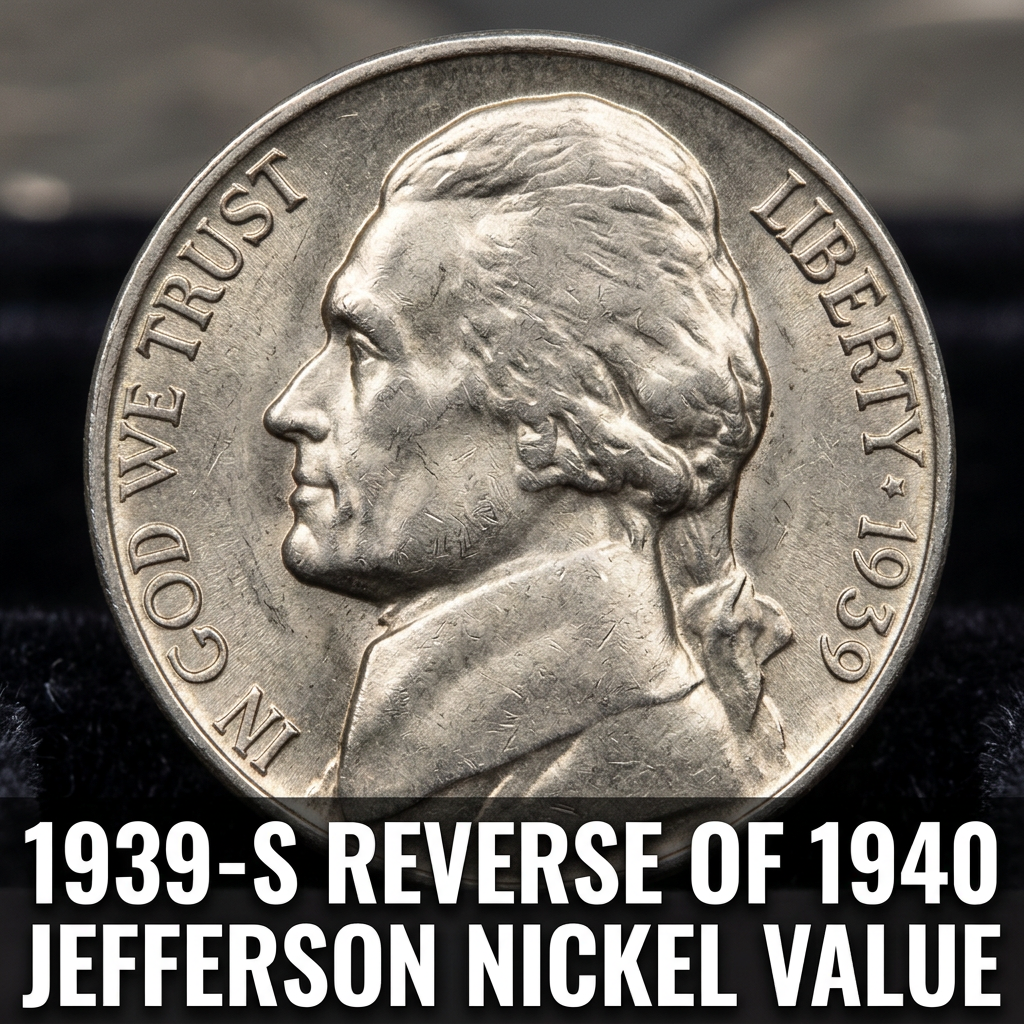
1939 S Reverse of 1940 Jefferson Nickel Value and Complete Grade Pricing Guide
The 1939-S Reverse of 1940 Jefferson Nickel is worth anywhere from $5 in worn condition to over $1,500 in high-grade mint state. Finding one of these coins in your pocket change is an exciting discovery because it represents a distinct “variety” that many casual collectors overlook until they look closely at the steps on Monticello.
Understanding the 1939-S Reverse of 1940 Variety
In 1939, the United States Mint changed the design of the Jefferson Nickel. The original 1938 design (Reverse of 1938) had wavy steps on Monticello, which often appeared blurry or weak. To fix this, they created the “Reverse of 1940,” which featured much sharper, straight steps. However, during the transition, the San Francisco Mint produced some coins using the new 1940 hubs while it was still 1939. This created the 1939-S Reverse of 1940 variety.
If you aren’t sure which version you have, you can use a free coin identifier app to get a quick visual confirmation. Collectors highly prize this specific San Francisco minting because it is significantly rarer than the standard 1939 nickel. Most everyday Americans who find an old nickel will have the common “Reverse of 1938,” so verifying the step design is the first step to seeing if you have a valuable treasure.
Using the CoinKnow app can also help you identify these subtle design changes by comparing high-resolution photos. This variety is all about the details; while millions of nickels were made that year, only a fraction show the crisp, straight steps of the updated design.
Current Market Value and Pricing for 1939 S Nickels
When determining the price of your coin, condition is the most important factor. A coin that has been jingling in pockets for decades will logically be worth less than one that has been tucked away in a jar or a safe. For those looking for historical sales data, checking the 1939 S Reverse of 1940 nickel price history is a great way to see what collectors are actually paying at auction.
The table below provides a breakdown of what you can expect based on the grade of your nickel:
| Condition / Grade | Estimated Value (USD) |
|---|---|
| Good (G-4) to Fine (F-12) | $5.00 – $15.00 |
| Extremely Fine (EF-40) | $25.00 – $45.00 |
| About Uncirculated (AU-50) | $60.00 – $100.00 |
| Mint State (MS-63) | $250.00 – $400.00 |
| Choice Mint State (MS-65+) | $800.00 – $1,500.00+ |
As you can see, the jump from “circulated” to “mint state” is massive. If your coin still has its original shiny luster and no visible scratches on Jefferson’s face, you might be holding several hundred dollars. For more details on these fluctuations, you can explore this 1939 Jefferson nickel comprehensive value guide to see how other mint marks compare.
Identifying the Reverse of 1940 Variety at Home
To identify the 1939-S Reverse of 1940, you need a magnifying glass or a loupe. Flip the coin over to the back (the “reverse”) and look at the steps leading up to the entrance of Monticello. On the 1938 design, the steps are thin and the lines between them are wavy and shallow. On the “Reverse of 1940” variety, the steps are distinctly straight, parallel, and have deeper carved lines.
Collectors also look for “Full Steps” (FS), which means all six steps are clearly visible without any interruptions from scratches or metal flow. If you find a 1939-S with the 1940 reverse and Full Steps, the value explodes into the thousands. Modern tools like the CoinKnow app allow you to snap a photo and zoom in to verify these tiny details without needing expensive equipment.
Remember to look for the tiny “S” mint mark to the right of Monticello. If the coin has no mint mark, it was made in Philadelphia, and if it has a “D,” it’s from Denver. While those are also collectible, the San Francisco “Reverse of 1940” remains a top prize for nickel hunters.
How to Sell and Protect Your Coin Investment
If you’ve confirmed your coin is the rare variety, your next step is protection. Never clean your coins! Cleaning a vintage 1939-S nickel with chemicals or cloths will actually strip away its value by damaging the surface. Instead, place it in a PVC-free plastic flip or a coin capsule to prevent oils from your skin from causing tarnishing.
When you are ready to sell, consider professional grading services like PCGS or NGC if the coin looks to be in high-end condition. For everyday finds, local coin shops or reputable online auctions are great places to start. The CoinKnow app can even help you track the value of your collection over time as market demands change. Keeping an eye on the 1939-S Reverse of 1940 Jefferson Nickel value ensures you don’t accidentally spend a small fortune at the grocery store.
Frequently Asked Questions
Q: How can I tell if my 1939 nickel has the “S” mint mark?
A: Look on the reverse (back) of the coin. The “S” is located to the right of the building (Monticello), near the rim. If you don’t see a letter there, it was minted in Philadelphia.
Q: Is every 1939-S nickel valuable?
A: All 1939-S nickels are worth more than face value, usually starting at a few dollars. However, the “Reverse of 1940” variety is significantly more valuable than the standard “Reverse of 1938” version.
Q: Can I find these rare nickels in my pocket change today?
A: While rare, it is still possible! Many people spend old coin collections without realizing what they have. Always check any nickel dated 1938-1964, as these are the “pre-modern” years that contain the most varieties and silver (specifically from 1942-1945).
