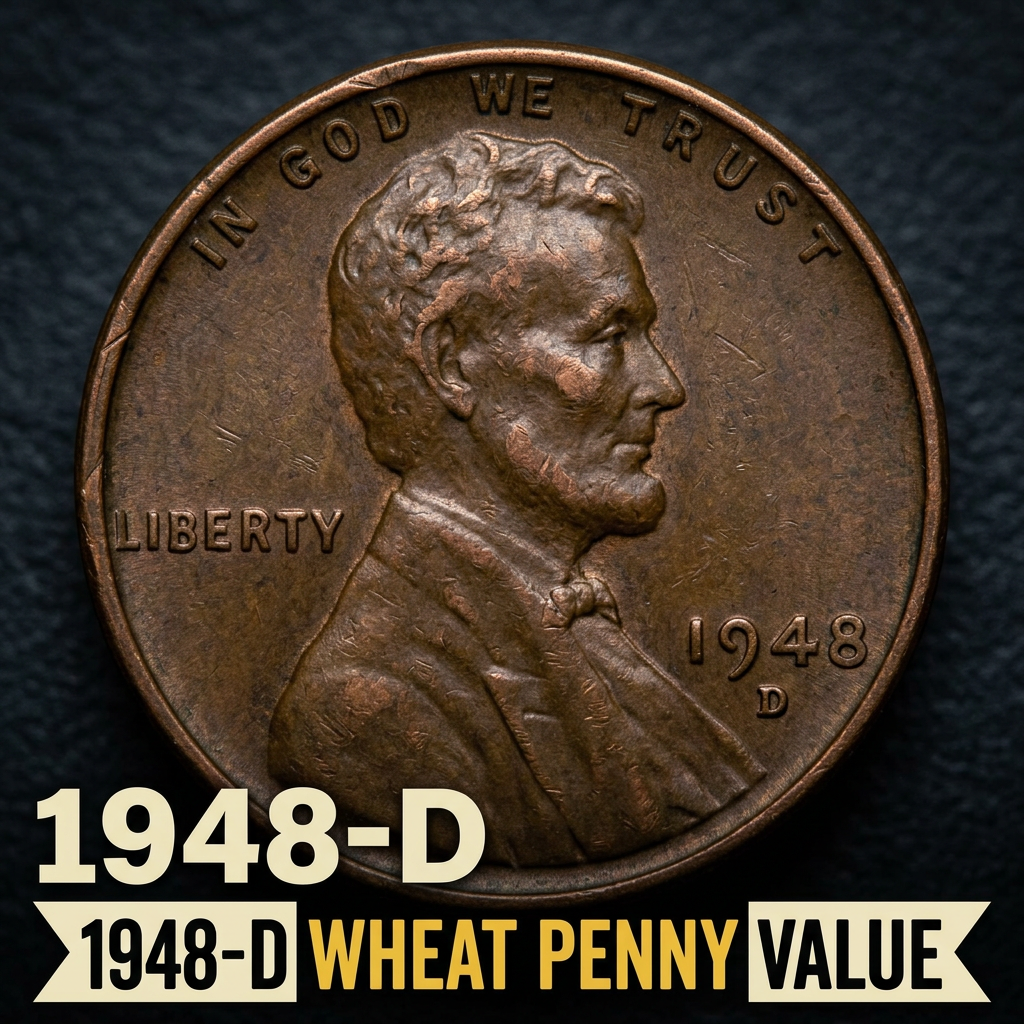
1948 D Wheat Penny Value Guide and Collector Price List
The 1948 D Wheat Penny is worth anywhere from $0.05 in worn condition to over $150 in high-grade uncirculated mint state. While most of these Lincoln cents found in pocket change carry a modest premium, certain rare varieties and exceptionally preserved specimens can fetch significant sums at auction.
Historical Significance and Minting of the 1948 D Lincoln Cent
If you have just discovered a handful of old copper coins in an attic or a jar of change, you are holding a piece of American post-war history. The 1948 D Wheat Penny was struck at the Denver Mint during a time when the United States was transitioning into a prosperous era following World War II. Because billions of Wheat pennies were minted throughout the series, many people wonder if their specific “D” mint mark coin is a hidden treasure.
To quickly determine what you have, you can use a free coin identifier app to scan your penny and get an instant ID. Identifying the coin is the first step, but understanding the nuances of its condition is where the real value lies. Collectors often look for the sharp details of Lincoln’s hair and the distinct lines on the wheat stalks on the reverse side.
When evaluating your collection, using the CoinKnow app can help you track your finds and compare them against market trends. The 1948 D issue is a favorite for beginner collectors because it is relatively easy to find, yet it still belongs to the classic era of American coinage that ended in 1958.
Determining the Market Value of Your 1948 D Penny
The value of a 1948 D penny depends almost entirely on its “grade” or state of preservation. Most coins found in circulation are considered “Good” or “Fine” and are generally valued for their copper content and historical interest rather than extreme rarity. However, collectors pay a premium for “Red” (RD) coins that still retain their original mint luster.
According to recent market data, the 1948 D Wheat Penny price for high-grade specimens shows that coins graded MS-67 or higher are quite scarce. For the average person, a coin that looks “brand new” after 75 years is the one that deserves a professional appraisal.
If you are unsure whether your coin is just “shiny” or truly “Uncirculated,” the CoinKnow app can provide a visual reference to help you distinguish between different stages of wear. Professional grading services like PCGS or NGC can certify these values, but for most hobbyists, a general estimate based on current sales is sufficient.
| Condition / Grade | Estimated Value (USD) |
|---|---|
| Circulated (Average Wear) | $0.05 – $0.25 |
| About Uncirculated (AU-58) | $1.00 – $3.00 |
| Mint State (MS-63 Brown) | $5.00 – $12.00 |
| Mint State (MS-65 Red) | $25.00 – $45.00 |
| Superior Grade (MS-67 Red) | $150.00+ |
What to Look For: Mint Marks and Potential Errors
The most important feature of this specific year is the small “D” located right under the date “1948.” This indicates it was produced in Denver. If there is no letter at all, it was minted in Philadelphia. While Denver struck over 172 million of these pennies, finding one without scratches, stains, or “greening” is the real challenge.
Collectors also hunt for mint errors. While the 1948-D isn’t known for a “major” famous error like the 1955 doubled die, you should check for “Re-punched Mint Marks” (RPM) or small die cracks. These minor imperfections can turn a common coin into a unique collectible.
For a comprehensive breakdown of what makes this specific year special, you can read more about the 1948 Lincoln penny worth and its various minting characteristics. Using tools like CoinKnow allows you to stay updated on the latest auction results for these unique errors, ensuring you don’t accidentally spend a coin that could be worth $50 or more.
Caring for Your Vintage Wheat Pennies
If you think you’ve found a valuable 1948 D Wheat Penny, the most important rule is: Do Not Clean It. Many people believe that scrubbing a coin with baking soda or vinegar to make it look “new” will increase its value. In reality, cleaning a coin removes the original surface (patina) and can reduce its collector value by 90% or more.
Instead, handle the coin by its edges and place it in a PVC-free plastic flip or a simple paper envelope. This prevents the oils from your skin from causing further oxidation. Keeping the coin in a dry, cool place is the best way to preserve its current state for future generations of collectors.
Whether you are building a full set of Lincoln cents or just curious about a single find, understanding the 1948 D Wheat Penny value is a great introduction to the world of numismatics. Most of these pennies represent a great piece of history that is more valuable as a keepsake than as cash, but every once in a while, a pristine example emerges as a true payday.
Frequently Asked Questions
Q: How can I tell if my 1948 D Penny is “Red” (RD)?
A: A “Red” penny retains at least 95% of its original bright copper color from the mint. As pennies age and circulate, they turn “Red-Brown” (RB) and eventually “Brown” (BN) due to oxidation.
Q: Is a 1948 D Penny made of real copper?
A: Yes, pennies from 1948 are composed of 95% copper and 5% tin and zinc. These are often referred to as “pre-1982” pennies, which are sought after for their metal content as well as their numismatic value.
Q: Where is the mint mark on a 1948 Wheat Penny?
A: The mint mark is a small letter located directly below the date 1948 on the “obverse” (heads) side of the coin. A “D” stands for Denver, an “S” for San Francisco, and no mark indicates Philadelphia.
