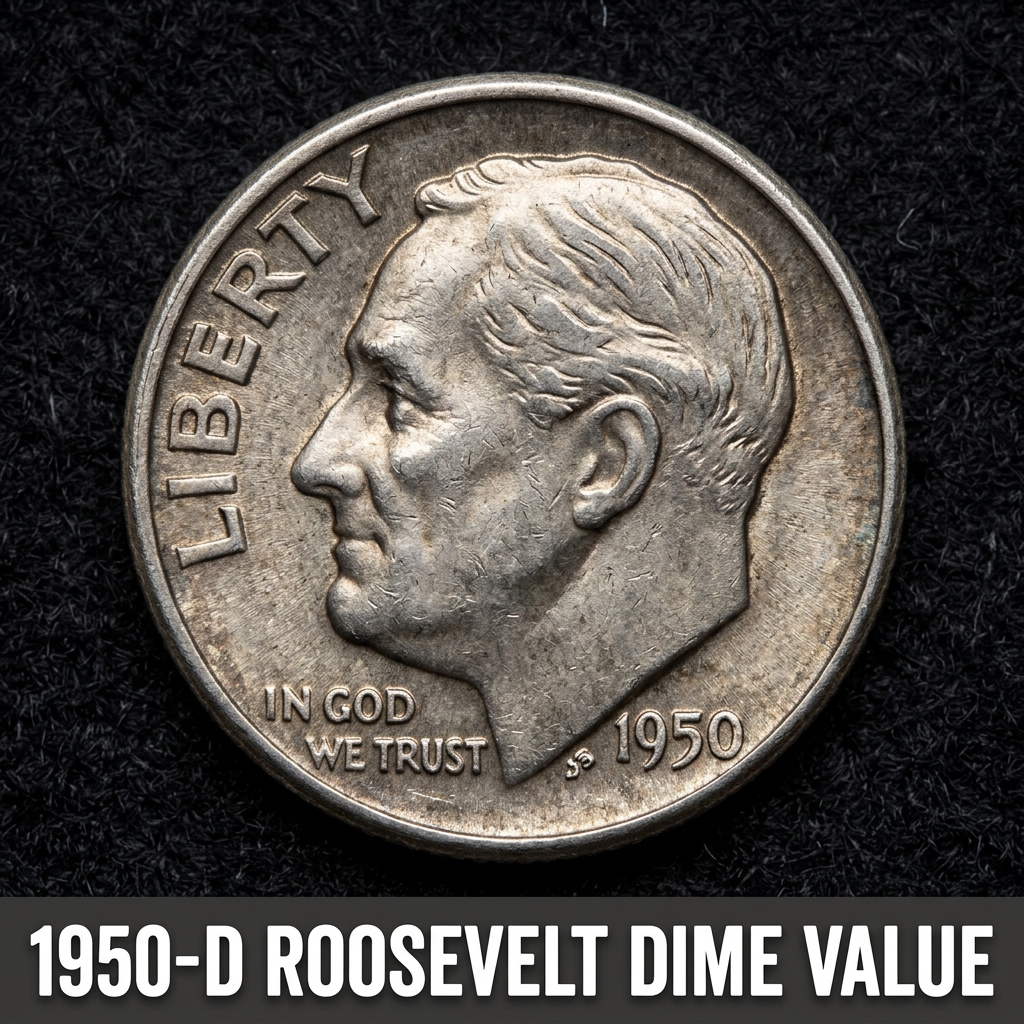
1950 D Roosevelt Dime Value and Rarity Guide for Collectors
The 1950-D Roosevelt Dime is worth anywhere from $3 in worn condition to over $600 in premium mint state. Whether you found one in an old jar or inherited a small collection, these silver coins are highly prized by collectors for their historical significance and precious metal content.
History and Composition of the 1950-D Roosevelt Dime
The Roosevelt Dime was first introduced in 1946 to honor President Franklin D. Roosevelt following his passing. By 1950, the Denver Mint was in full production, striking millions of these coins for everyday commerce. If you have found one of these coins today, the most important thing to know is that it is made of 90% silver and 10% copper. This intrinsic bullion value means that even if the coin is heavily scratched or worn, it is still worth significantly more than its ten-cent face value.
If you are unsure about the authenticity of your find, you can use a free coin identifier app to quickly confirm the date and mint mark. Many beginners like to use the CoinKnow app to keep a digital inventory of their silver stash. During the post-war era, the Denver Mint was known for producing high-quality strikes, but many of these dimes were circulated heavily throughout the 1950s and 60s.
Finding a “D” mint mark on the reverse of the coin, located just to the left of the base of the torch, confirms it was struck in Denver. This specific minting location is a key factor in determining the final market price. While millions were made, the survival rate of coins in “Uncirculated” condition is much lower, which drives up the price for serious numismatists.
How Much Is a 1950-D Silver Dime Worth Today
When valuing a 1950-D dime, the condition is the most critical factor. Most coins found in change are “Circulated,” meaning they show visible wear on Roosevelt’s cheek or the leaves of the torch. These are generally sold for their silver melt value, typically ranging from $2 to $5 depending on the current market price of silver. However, if your coin looks shiny and like it just came from the bank, it could be a “Mint State” specimen.
For those looking for precise market data, checking the 1950-D Roosevelt Dime mint state price guide can reveal how much collectors are currently paying for high-grade examples. Premium coins graded MS67 or higher can fetch hundreds of dollars at auction. CoinKnow users often report that finding “Full Band” (FB) details on the torch can double or even triple the value of the coin.
To help you estimate the value of your pocket change, refer to the price chart below. These prices reflect average retail values for coins that have been professionally graded or are in exceptionally clean condition.
| Condition Grade | Estimated Value (USD) |
|---|---|
| Good to Fine (Circulated) | $2.50 – $4.00 |
| Extremely Fine (EF/XF) | $5.00 – $8.00 |
| Uncirculated (MS60-MS63) | $10.00 – $25.00 |
| Choice Mint State (MS65+) | $40.00 – $150.00 |
| Superb Gem (MS67 FB) | $450.00+ |
Key Varieties and Errors to Look For
While the standard 1950-D dime is common, there are specific varieties that can skyrocket the value. Collectors look for “Full Bands,” which refers to the horizontal lines on the torch on the reverse side. If these lines are fully separated and distinct, the coin is considered “Full Band,” a designation that significantly increases the 1950-D Roosevelt Dime value for rare varieties.
Beyond standard strikes, keep an eye out for mint errors. Common errors for this year include “Die Cracks” or “Clipped Planchets.” A die crack appears as a small, raised line of metal on the surface of the coin where the coin die broke during production. Even small errors can add a $10 to $20 premium to the silver value.
Before you sell your coin to a local pawn shop, it is wise to do your homework. Using tools like CoinKnow allows you to compare your coin against high-resolution images of known errors. This step ensures you don’t accidentally spend or sell a rare variety for a fraction of its true worth.
Tips for Preserving Your 1950 Silver Dimes
If you discover a high-quality 1950-D dime, how you handle it will determine its future worth. Never clean your coins with chemicals or abrasive cloths. Cleaning a silver coin removes the “luster”—the frost-like sheen from the minting process—and can reduce the numismatic value by more than 50%. Instead, hold the coin by its edges to avoid getting fingerprints on the faces.
Store your silver dimes in PVC-free flips or acid-free paper envelopes. Moisture and oils from your skin are the enemies of silver, causing it to tarnish or “tone” over time. While some collectors love rainbow-colored toning, most prefer a bright, white silver appearance. By following these simple steps, you ensure that your 1950-D Roosevelt Dime remains a valuable piece of American history for years to come.
Q: Where is the mint mark on a 1950-D Roosevelt Dime?
A: The “D” mint mark is located on the reverse side of the coin, near the bottom of the torch, just to the left of the torch’s base.
Q: Is every 1950 dime made of silver?
A: Yes, all business-strike Roosevelt Dimes minted from 1946 through 1964 are composed of 90% silver. Dimes minted after 1964 are made of a copper-nickel clad composition.
Q: How can I tell if my 1950-D dime is “Full Band”?
A: Look at the torch on the reverse side. If the horizontal bands at the top and bottom of the torch are clearly separated with a distinct line between them, it qualifies as Full Band (FB).
