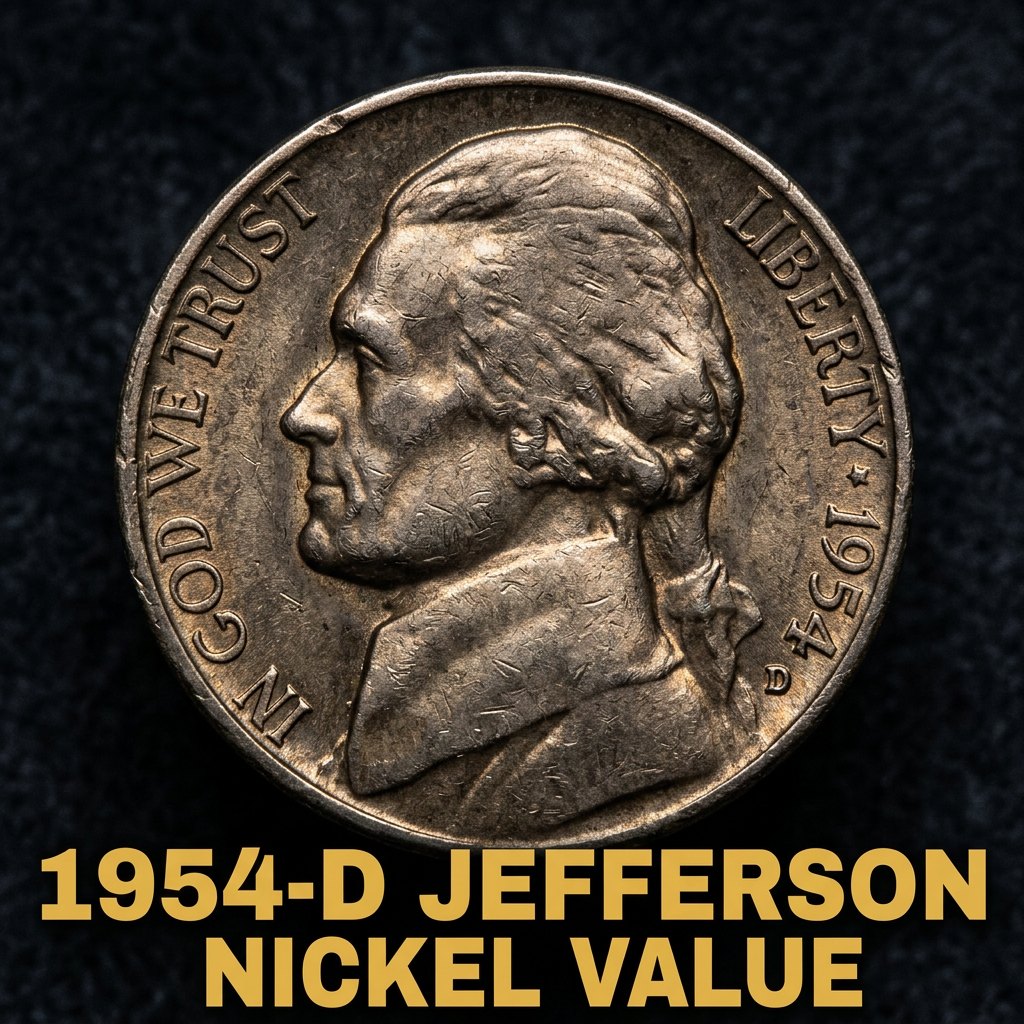
1954 D Jefferson Nickel Value and Price Guide for Collectors
The 1954 D Jefferson Nickel is worth anywhere from $0.05 in heavily circulated condition to over $1,500 for rare specimens in high mint states. If you have just pulled one of these nickels out of your pocket change or found an old jar of coins, you are likely wondering if you have hit the jackpot.
History and Identifying the 1954 D Jefferson Nickel
The 1954 D Jefferson Nickel was struck at the Denver Mint during a time when the United States was experiencing post-war economic growth. This particular year is known among collectors for having a relatively high mintage, with over 114 million coins produced in Denver. You can identify this coin by looking for the small “D” mint mark located on the reverse side, just to the right of Monticello, Thomas Jefferson’s famous home. If you are unsure if your coin is authentic, using a free coin identifier app can help you verify the date and mint mark instantly.
While millions were made, finding one in pristine condition is becoming increasingly difficult. Most coins from this era have spent decades in circulation, meaning They have accumulated scratches, dings, and “wear” that lowers their market value. However, the CoinKnow app can help you distinguish between a common nickel worth face value and a rare variety that collectors crave. Understanding the subtle details on Jefferson’s portrait is the first step in determining if your find is a keeper.
Factors That Influence 1954 D Nickel Value
When assessing your coin, “condition” is the most important factor. In the world of numismatics, coins are graded on a scale from 1 to 70. Most 1954 D nickels found in change are “Circulated,” meaning they show visible wear on Jefferson’s hair and the pillars of Monticello. These are generally worth only five cents or a very small premium. However, 1954 D Jefferson Nickel values spike significantly when the coin is in “Uncirculated” or “Mint State” condition, where the original luster is still present.
Another crucial factor for the 1954 D nickel is the “Full Steps” designation. On the reverse of the coin, there are steps leading up to the entrance of Monticello. In most strikes from the Denver mint in 1954, these steps are blurry or merged together. If you find a coin where five or six steps are clearly visible and sharp, the value can jump from a few dollars to hundreds. Many people use the CoinKnow app to zoom in on these details to see if their coin qualifies for this rare designation.
| Condition / Grade | Estimated Market Value |
|---|---|
| Circulated (Average Wear) | $0.05 – $0.25 |
| About Uncirculated (AU58) | $1.00 – $3.00 |
| Mint State (MS63) | $5.00 – $12.00 |
| Gem Mint State (MS65) | $25.00 – $50.00 |
| MS66 with Full Steps | $500.00 – $1,200.00+ |
Are There Any Rare 1954 D Nickel Errors?
Error hunters often look at 1954 nickels for unique minting mistakes that can increase their worth. While the Denver mint was generally efficient, some coins left the facility with “die cracks” or “lamination errors,” where the metal of the coin appears to be peeling. Another interesting variety is the “Repunched Mint Mark” (RPM). This occurs when the “D” was punched into the die more than once, leaving a slight shadow or doubling effect on the letter.
Because these errors are hard to see with the naked eye, a high-quality photo through the CoinKnow app can help you spot these anomalies. Expert collectors pay a substantial premium for verified errors. You can find more comprehensive 1954 Jefferson nickel worth charts online that detail specific auction records for these rare error varieties. Even if your coin looks normal, a quick check for doubling on the date or mint mark is always worth your time.
Tips for Selling Your Old 1954 Nickels
If you believe you have a valuable 1954 D Jefferson Nickel, the next step is to protect it. Avoid cleaning the coin, as scrubbing or using chemicals can permanently damage the surface and destroy its numismatic value. Instead, place it in a soft coin flip or a plastic holder. When you are ready to sell, you can visit a local coin shop or list it on an auction site.
For high-value coins appearing to be in Mint State, professional grading by a service like PCGS or NGC might be worth the investment. This provides a guaranteed grade and authenticates the coin for buyers. For the average person, comparing your coin to sold listings on eBay or using a valuation tool will give you a realistic idea of what a buyer might pay. Most 1954 D nickels will serve as a great piece of history for a starter collection, while the top 1% remain highly sought-after treasures.
Q: How can I tell if my 1954 D Nickel has Full Steps?
A: Look at the back of the coin at the base of Monticello. If you can see at least five distinct, uninterrupted horizontal lines representing the steps without any scuffs or merging, you likely have a “Full Steps” nickel.
Q: Is a 1954 D Nickel made of silver?
A: No, the 1954 D Jefferson Nickel is made of a cupro-nickel alloy (75% copper and 25% nickel). Silver “War Nickels” were only produced between 1942 and 1945.
Q: Where is the mint mark on a 1954 Jefferson Nickel?
A: The mint mark is located on the reverse side (the back) of the coin, to the right of the building (Monticello). A “D” indicates it was minted in Denver, while no mint mark indicates it was minted in Philadelphia.
