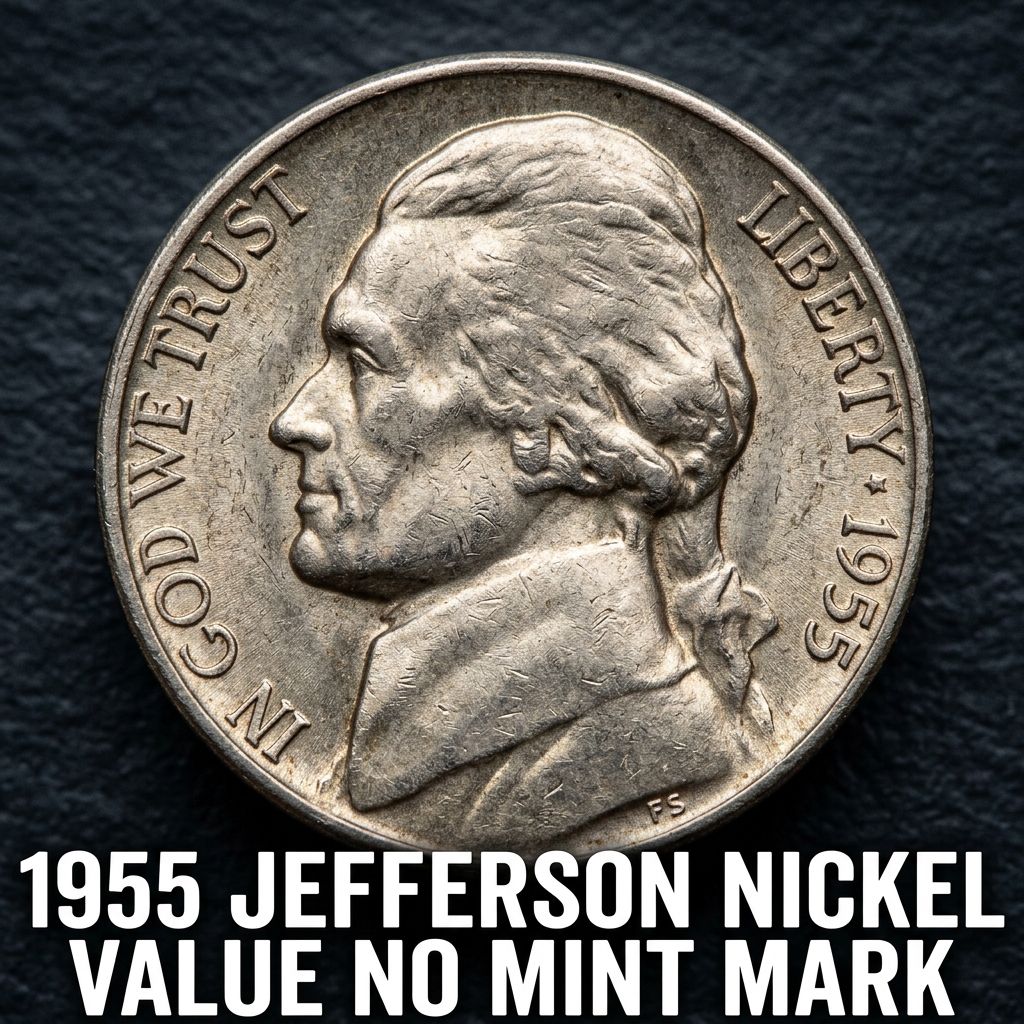
1955 Jefferson Nickel Value and Price Guide for No Mint Mark Coins
The 1955 Jefferson Nickel with no mint mark is worth anywhere from $0.10 in worn condition to over $35 for coins in high-grade uncirculated condition. If you just found one of these vintage silver-colored coins in your pocket change or an old jar, you are likely holding a piece of American history from the post-war era.
Identifying Your 1955 Nickel Without a Mint Mark
When you look at a 1955 nickel, the first thing you might notice is the absence of a small letter next to the building on the back. For this specific year, the lack of a letter means the coin was struck at the Philadelphia Mint. During the mid-1950s, Philadelphia was the primary hub for U.S. coinage, and they produced millions of these nickels for daily commerce. To get an instant identification of your find, many collectors recommend using a free coin identifier app to confirm the variety and strike type before diving deeper into its history.
While finding a coin with no mint mark is common, the 1955 issue is particularly interesting to collectors because of its relatively low mintage compared to years like 1964. Most of the nickels from this era seen in circulation today are heavily worn, showing smoothed-out details on Thomas Jefferson’s hair or the pillars of Monticello. If you are unsure if your coin is a standard strike or something special, the CoinKnow app can help you compare your coin’s luster and detail against high-resolution archive images.
Current Market Value and Pricing for 1955 Nickels
For the average person, a typical 1955 nickel found in a drawer is worth about its face value or perhaps a slight premium if it is in “Extremely Fine” condition. Most coin shops will pay between 10 and 25 cents for circulated examples. However, the value climbs significantly if the coin has never been spent and retains its original mint “frost.” The market for 1955 Jefferson nickel mint state prices shows that collectors are willing to pay a premium for coins that haven’t been scratched or dulled by pocket change.
Condition is everything in the world of numismatics. A coin that looks like it just came out of a fresh roll can be worth $10 to $20. If the coin is exceptionally “clean” with no visible marks under a magnifying glass, the price can climb toward $50. To track how these prices change over time, many hobbyists use CoinKnow to get real-time updates on auction results. For a detailed breakdown of what your specific coin might bring at a local coin show, you can check this 1955 nickel value data guide to see the latest trends.
| Condition / Grade | Estimated Value (USD) |
|---|---|
| Good (G-4) to Fine (F-12) | $0.05 – $0.15 |
| Extremely Fine (EF-40) | $0.25 – $0.50 |
| About Uncirculated (AU-50) | $1.00 – $3.00 |
| Mint State (MS-63) | $8.00 – $15.00 |
| Gem Mint State (MS-65+) | $35.00 – $100.00+ |
The Importance of Full Steps on the Reverse
If you want to find a 1955 nickel that is worth real money, you need to look at the back of the coin. Specifically, look at the base of the Monticello building. There are steps leading up to the entrance. In the coin collecting world, a “Full Steps” (FS) designation is the holy grail for Jefferson Nickels. This means that at least five or six steps are clearly visible and not merged together by a weak strike or wear.
Because the Philadelphia Mint in 1955 often used worn-out dies, finding a coin with sharp, fully defined steps is incredibly rare. A standard uncirculated 1955 nickel might sell for $10, but the same coin with the “Full Steps” designation could sell for several hundred dollars at auction. You can use your smartphone camera and the CoinKnow app to zoom in on these tiny details and see if your coin qualifies for this rare and valuable distinction.
Are There Any Rare 1955 Nickel Errors
While most 1955 nickels are straightforward, there are occasionally “double die” versions or coins struck on wrong planchets that surface. While none are as famous as the 1955 Doubled Die Penny, you should always look for blurring in the letters of “LIBERTY” or the date. Any blurring or doubling could indicate a mint error, which instantly boosts the value beyond standard price guides.
Even if your coin isn’t a rare error, it is still a 70-year-old piece of American currency. Holding a nickel from 1955 is like holding a piece of the era of doo-wop, classic cars, and the early days of television. Whether you keep it for its historical value or sell it to add to your savings, knowing the true worth of your pocket change is the first step in becoming a savvy collector.
Q: Is a 1955 nickel made of silver?
A: No, the 1955 Jefferson nickel is made of 75% copper and 25% nickel. Only nickels minted between 1942 and 1945 (War Nickels) contain silver.
Q: Where is the mint mark on a 1955 nickel?
A: If it has one, it will be located on the reverse side, to the right of the Monticello building. If there is no letter, it was minted in Philadelphia. If there is a “D,” it was minted in Denver.
Q: Why is my 1955 nickel worth more than 5 cents?
A: Its value comes from its age, its condition, and its “mintage” (the number produced). Since fewer 1955 nickels were made compared to modern ones, collectors pay a premium for them.
