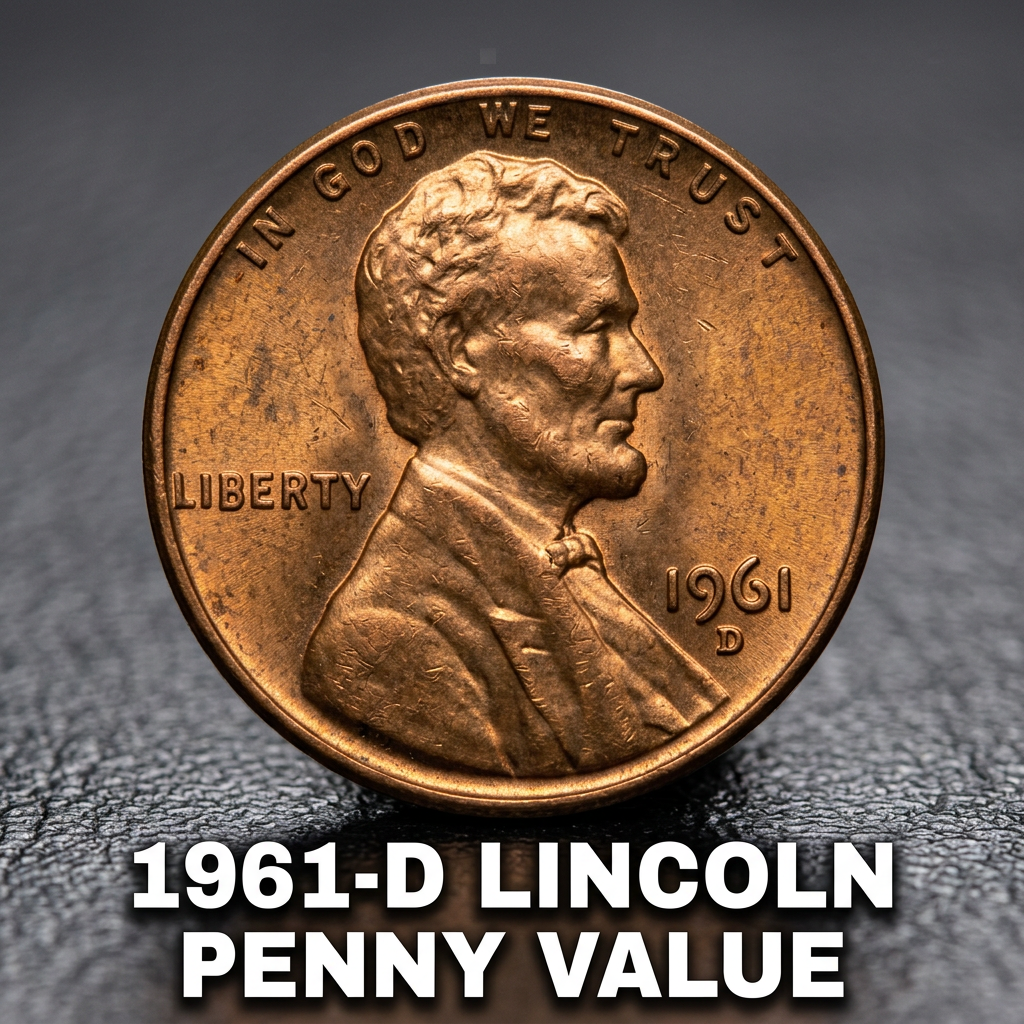
1961 D Lincoln Penny Value and Complete Guide to Rare Varieties
The 1961-D Lincoln Penny is worth anywhere from 2 cents in worn condition to over $1,000 for high-grade specimens. While most of these copper coins found in pocket change are only worth their melt value, specific mint errors and pristine conditions can turn a simple cent into a valuable treasure for collectors.
Understanding the 1961-D Lincoln Memorial Cent Market
If you just stumbled upon a handful of shiny copper coins in an old jar, you might be holding onto a small fortune. Most people start their numismatic journey by looking for a free coin identifier app to quickly sort through the common dates. The “D” mint mark on your 1961 penny indicates it was struck at the Denver Mint, which produced over 2.5 billion of these coins. Because of the massive mintage, circulated versions are incredibly common, but the market for “Mint State” coins—those that look like they just came off the press—is surprisingly active.
When you use the CoinKnow app to check your spare change, you will notice that the color of the copper matters significantly. Coins are graded as Brown (BN), Red-Brown (RB), or Red (RD). Collectors pay a premium for the original “Red” luster. If your coin has a deep, orange-red glow and no visible scratches, you should investigate further as high-grade 1961-D Lincoln Penny auction prices can reach hundreds of dollars depending on the specific grade assigned by professional services.
Key Grading Factors and Price Trends
To determine if your penny is worth more than a few cents, you need to look at its condition. A “circulated” coin has been used to buy goods and shows wear on Lincoln’s hair and coat. These are generally worth about 2 to 5 cents. However, an “uncirculated” coin has no wear and retains its original texture. Serious collectors look for MS-66 or MS-67 grades, which represent the pinnacle of preservation for this year.
The following table outlines the current market expectations for the 1961-D penny across various grades. Keep in mind that professional grading is usually required to reach the highest price points. You can check the current 1961-D penny market value through verified price guides to see how your specific coin stacks up against recent sales.
| Condition / Grade | Estimated Value (USD) |
|---|---|
| Good to Very Fine (Circulated) | $0.02 – $0.10 |
| Extremely Fine (AU) | $0.15 – $0.50 |
| MS-63 Red Brown | $1.00 – $3.00 |
| MS-65 Red | $10.00 – $25.00 |
| MS-67 Red | $250.00 – $600.00+ |
Valuable 1961-D Penny Errors to Look For
For the everyday hunter, errors are where the real excitement lies. While the standard 1961-D is common, minting mistakes from the Denver facility can make a coin unique. The most famous error for this year is the “Horizontal D” or Re-punched Mint Mark (RPM). This occurs when the mint mark punch was struck twice, often in different orientations. Using a magnifying glass or the high-resolution camera feature in the CoinKnow app can help you spot these tiny variations.
Other common errors include “Die Cracks” and “Clipped Planchets.” A die crack looks like a raised line of metal on the surface of the coin, often occurring when the steel stamp begins to break under pressure. A clipped planchet happens when the metal disc was improperly cut, leaving a crescent-shaped chunk missing from the edge. These errors can turn a mundane penny into a $20 to $100 item for niche error collectors.
The Rarity of High Grade 1961 Denver Pennies
Why do some 1961 Denver pennies sell for thousands while others are worth almost nothing? It comes down to the population of surviving coins. Most 1961-D pennies were bags-shipped, leading to “bag marks” or tiny nicks from coins hitting each other. Finding a coin that has survived 60+ years without a single scratch is statistically rare.
When you use CoinKnow to browse recent auction records, you will see that a 1961-D Penny graded MS-67 Red is a prize for any registry set collector. At this level, the coin must have exceptional eye appeal and a sharp strike. Small details, like the definition of the pillars on the Lincoln Memorial on the reverse, must be crisp. If you think you’ve found a “perfect” penny, it is worth the small fee to have it professionally authenticated.
Q: How can I tell if my 1961-D penny is a rare error?
A: Check the “D” mint mark under 10x magnification for signs of doubling or a horizontal punch. Also look for “Die Cracks”—raised lines of copper that shouldn’t be part of the design.
Q: Is a dirty 1961-D penny worth cleaning to increase its value?
A: Never clean your coins! Cleaning creates microscopic scratches that permanently damage the surface, drastically reducing the value in the eyes of professional collectors and grading services.
Q: What is the highest price ever paid for a 1961-D penny?
A: High-grade specimens in MS-67+ Red condition have sold at major auctions for over $4,000, though these are extremely rare and usually possessed by professional numismatists.
