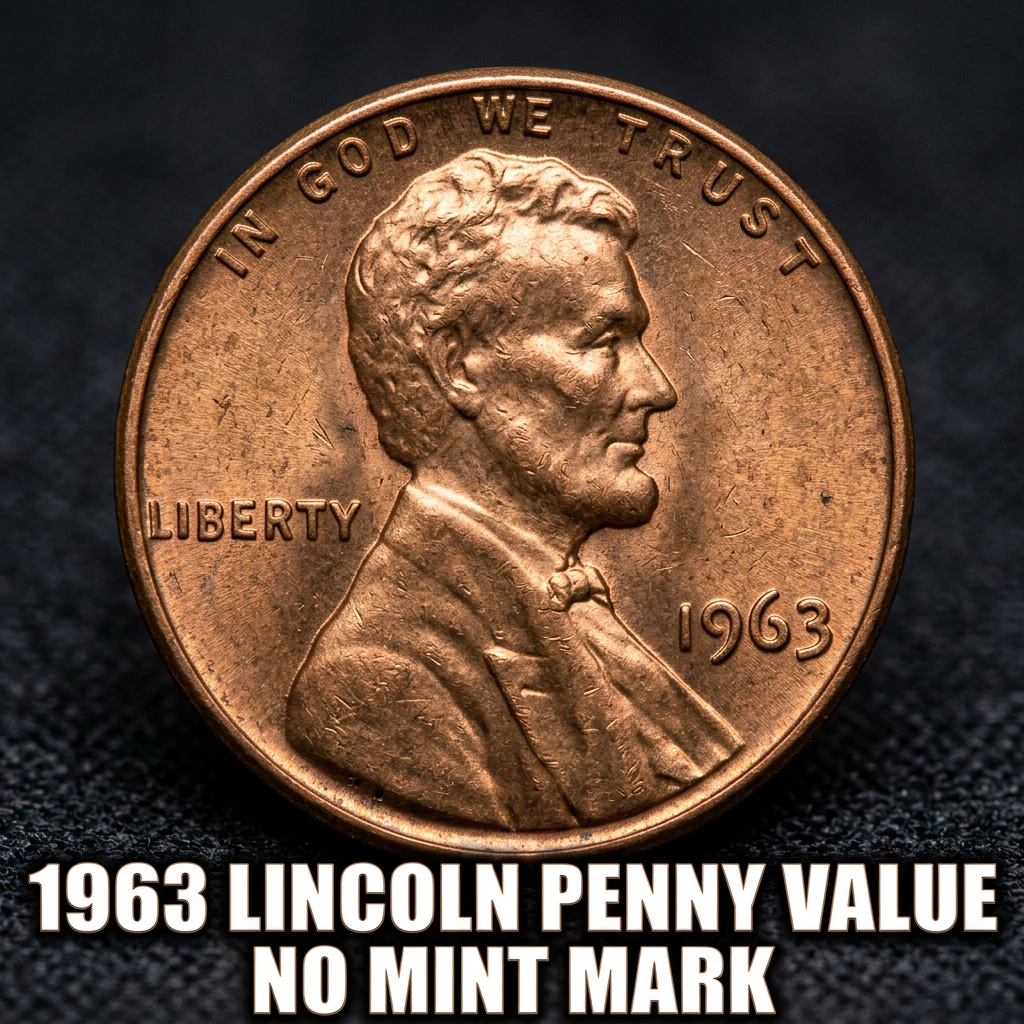
1963 Lincoln Penny Value and Rarity Guide for Collectors
The 1963 Lincoln Penny is worth anywhere from $0.02 in worn condition to over $500 in high-grade mint state. Most people find these coppery treasures in change jars or old boxes, hoping they have stumbled upon a hidden fortune from the early sixties.
Understanding the 1963 Lincoln Penny with No Mint Mark
If you look closely at your 1963 penny and notice there is no small letter under the date, don’t worry—your coin isn’t a mistake. In the world of U.S. coinage, the absence of a mint mark signifies that the coin was struck at the main Philadelphia Mint. During 1963, Philadelphia produced over 605 million of these Lincoln Memorial cents, making them very common in general circulation.
While many of these coins were used to buy candy or newspapers decades ago, identifying their current market standing can be tricky for beginners. If you are unsure about what you have, using a free coin identifier app is a fast way to get a baseline idea of your coin’s condition before diving deeper into numismatic research. Many people use the CoinKnow app to quickly scan their pocket change for hidden gems.
Determining the Grade and Color of Your Penny
When evaluating a 1963 penny, professional collectors look at two main factors: wear and color. Because these coins are made of 95% copper, they oxidize over time. They are categorized as Brown (BN), Red-Brown (RB), or Red (RD). A “Red” penny is one that still looks like it just dropped out of the minting machine, retaining its original lustrous copper glow.
A heavily circulated penny from 1963 is generally only worth its copper melt value, which is currently about 2 to 3 cents. However, uncirculated specimens are a different story. To see how condition affects the market, you can check the 1963 penny price chart for Red specimens. Collectors are often willing to pay a premium for coins that have avoided the scratches and oils of human hands for over sixty years.
Market Value Comparison for 1963 Lincoln Cents
The following table outlines the typical market values for the 1963 Lincoln Penny (No Mint Mark) based on its condition and grading scale. Keep in mind that professional grading by services like PCGS or NGC can significantly increase these valuations.
| Condition / Grade | Estimated Market Value |
|---|---|
| Circulated (Average Wear) | $0.02 – $0.05 |
| About Uncirculated (AU58) | $0.15 – $0.35 |
| Mint State (MS63 Red) | $1.00 – $5.00 |
| Mint State (MS65 Red) | $15.00 – $30.00 |
| Mint State (MS67 Red or Higher) | $350.00+ |
What Makes a 1963 Penny More Valuable
To find a 1963 penny worth serious money, you usually need to find an error or a coin in “Superb Gem” condition. Error coins happen when something goes wrong during the minting process, such as a “double die” where the letters or numbers appear to be doubled. While 1963 isn’t famous for major doubled dies like the 1955 or 1972 pennies, minor doubling can still be found.
Finding these microscopic details is easier with modern technology. The CoinKnow app can help you zoom in on high-resolution images to compare your coin against known error varieties. If you find a rare variation, the full 1963 penny valuation details can provide insights into recent auction records where these coins sold for hundreds of dollars.
How to Start Your Penny Collection Today
Collecting Lincoln Cents is a great hobby because it is accessible to everyone. You don’t need to be a millionaire to find interesting pieces of American history. Start by checking your pocket change every evening. Look for 1963 pennies that still have a bit of shine left on them, as these are the ones most likely to appreciate in value over time.
While most 1963 Philadelphia pennies won’t fund a retirement, they are a window into the past. Using tools like CoinKnow makes the process of identifying, grading, and organizing your coins a fun and educational experience for the whole family. Who knows? You might just be holding a high-grade Red penny that a collector is hunting for right now.
Q: Is a 1963 penny with no mint mark rare?
A: No, it is very common as over 600 million were minted in Philadelphia, though high-grade “Red” versions are harder to find and more valuable.
Q: What error should I look for on a 1963 Lincoln penny?
A: Look for “Die Deterioration Doubling” or small “Clipping Errors” where part of the coin’s edge is missing, as these can increase the value to collectors.
Q: Why is my 1963 penny worth more than one cent?
A: Because it is made of 95% copper, its raw metal content is worth approximately 2.5 cents, and high-quality specimens have additional numismatic value.
