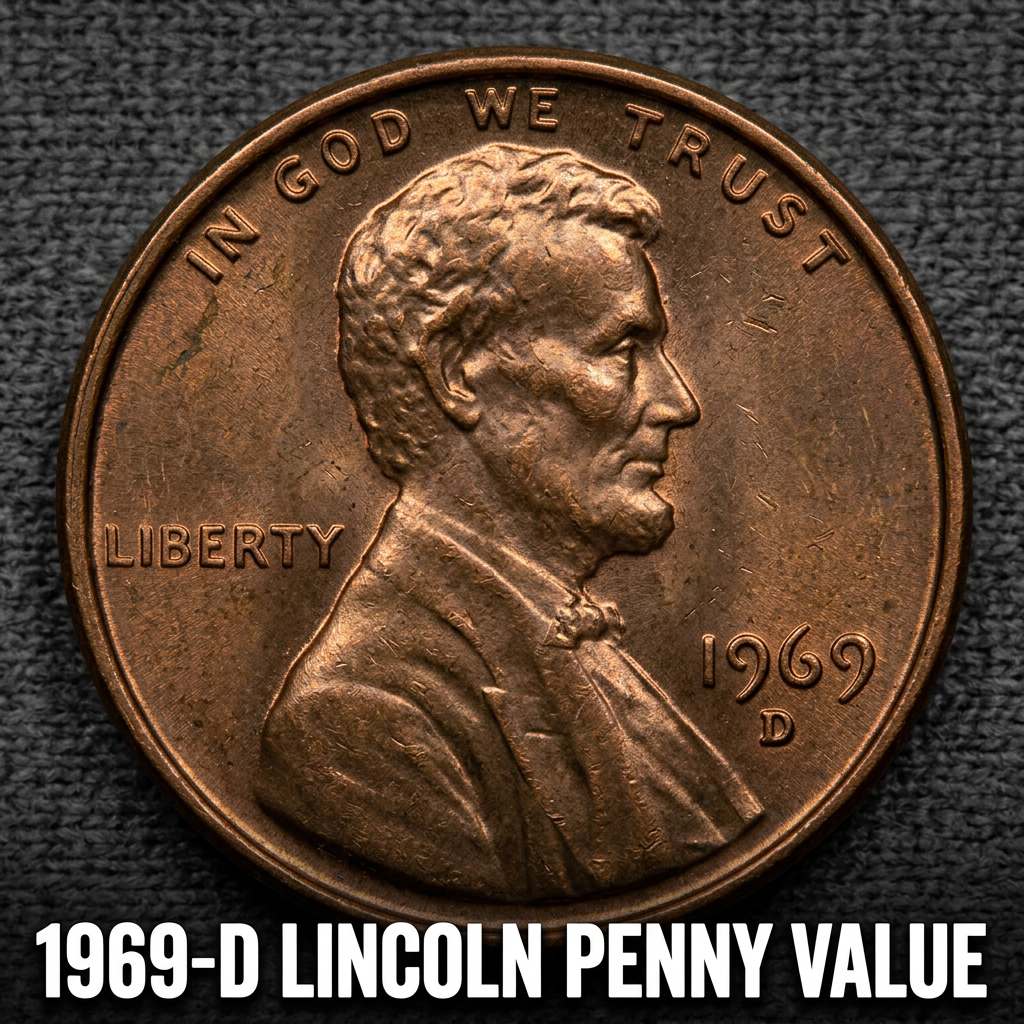
1969 D Lincoln Penny Value and Complete Guide to Rare Varieties
The 1969-D Lincoln Penny is worth anywhere from $0.05 in circulated condition to over $150 in high-grade uncirculated condition. If you find one in your pocket change today, it is a fun piece of American history that usually carries a premium over its face value due to its copper content.
How Much is Your 1969-D Lincoln Penny Worth Today
Most 1969-D pennies you find in daily circulation are considered “common date” coins. Because the Denver Mint produced over 4 billion of these pennies, they are not rare in an absolute sense. For a casual collector, most worn examples are valued primarily for their copper melt value, which is usually about 2 to 3 cents. However, if you have a coin that looks like it just came from the bank, the value increases significantly. Collectors are always looking for “Red” (RD) specimens that retain their original mint luster.
To get an instant valuation, you can use a free coin identifier app to see if yours has the characteristics of a high-value strike. Using an app like CoinKnow helps amateur collectors distinguish between a regular penny and one that might be worth a few dollars to a specialized dealer.
While most sit at the lower end of the price scale, professional grading can change everything. A 1969-D penny in MS67 (Mint State 67) condition can fetch hundreds of dollars at auction because so few survived the last fifty years without scratches or oxidation. If you are curious about how the Denver mint mark affects the price compared to other years, checking the historical 1969 penny value trends can provide a clearer picture of the market.
Key Features and Identifiers of the 1969 Denver Mint Penny
The “D” mint mark located right under the date 1969 indicates that the coin was struck at the Denver Mint. In the late 60s, the United States was transitioning its coinage, but the penny remained a staple of everyday commerce. These coins are composed of 95% copper and 5% zinc, making them heavier and “ringier” than the zinc pennies made after 1982.
When examining your coin with CoinKnow, look closely at the “D” mark. Some collectors look for “RPM” or Repunched Mint Marks. While not as famous as the San Francisco doubled die, a clearly doubled “D” can add a small premium for error coin enthusiasts. The overall strike quality of the 1969-D is often better than the Philadelphia issues of the same year, but finding one with perfectly sharp “wheat” stalks (on older versions) or high-relief Lincoln features is the goal.
1969-D Penny Value Comparison Table
Understanding the market price requires looking at the “Grade” of the coin. Most coins found in jars are “Circulated,” while coins kept in rolls are “Uncirculated” (MS).
| Condition / Grade | Estimated Market Value |
|---|---|
| Circulated (Average Wear) | $0.02 – $0.05 |
| About Uncirculated (AU58) | $0.15 – $0.50 |
| Mint State 63 (Brown) | $1.00 – $3.00 |
| Mint State 65 (Red) | $10.00 – $25.00 |
| Mint State 67 (High Grade) | $150.00+ |
Beware of Confusion with the Rare 1969-S Doubled Die
Many people search for the 1969-D penny hoping it is the “big winner” that worth thousands of dollars. It is important to clarify that the ultra-rare, high-value error from this year is actually the 1969-S (San Francisco) Doubled Die Obverse. While your Denver penny is a great find, the 1969-S doubled die penny value can reach over $100,000 at auction.
The 1969-D does not have a confirmed major doubled die error like its San Francisco cousin. However, “floating roof” errors and “no FG” (missing designer initials) errors are occasionally found on Denver strikes. These minor errors might increase the value to $5 or $10. Using an app like CoinKnow can help you zoom in on these tiny details to ensure you aren’t missing a rare variety.
How to Store and Protect Your 1969-D Pennies
If you find a 1969-D penny that looks exceptionally shiny, stop touching it with your bare fingers immediately. The oils from your skin can cause permanent spots on copper surfaces. Instead, hold the coin by its edges. To preserve its value, place it in a PVC-free plastic flip or a cardboard 2×2 holder.
Keeping your pennies in a cool, dry place prevents “bronze disease” or environmental damage that eats away at the metal. While a 1969-D might not buy you a new car today, numismatic values tend to rise over decades. As more copper pennies are melted down or lost, your well-preserved Denver cent will only become more desirable to future collectors.
Frequently Asked Questions about the 1969-D Penny
Q: Does the 1969-D penny have a doubled die error?
A: No major doubled die error has been officially recognized for the 1969-D. The famous and expensive doubled die error from this year occurred at the San Francisco Mint (1969-S).
Q: What does the “D” stand for on a 1969 penny?
A: The “D” stands for the Denver Mint. If there is no letter, it was minted in Philadelphia. If there is an “S,” it was minted in San Francisco.
Q: Is a 1969-D penny made of pure copper?
A: It is 95% copper and 5% zinc/tin. This is much higher than modern pennies (post-1982), which are primarily zinc with a thin copper plating.
