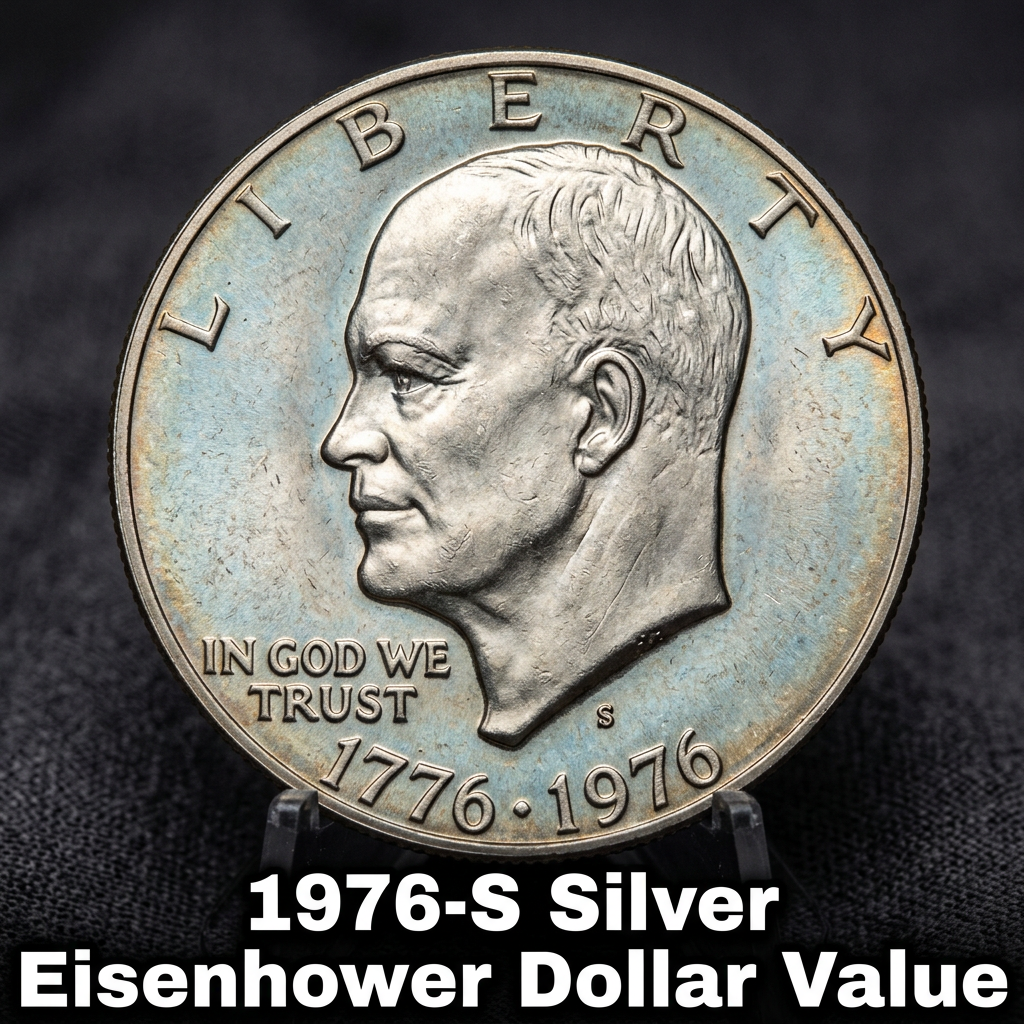
1976 S Silver Eisenhower Dollar Value and Collectibility Guide
The 1976-S Silver Eisenhower Dollar is worth anywhere from $8 in circulated condition to over $5,000 for rare high-grade specimens. Finding one of these heavy “Ike” dollars in a drawer is an exciting moment for many Americans because these oversized coins represent a unique piece of United States Bicentennial history.
Identifying the 1976-S Silver San Francisco Mint Mark
Before checking the price, you must ensure your coin is the silver version minted in San Francisco. While billions of Bicentennial quarters were made, the Eisenhower dollar was struck in two different metal compositions. The copper-nickel versions were meant for circulation, but the “S” mint mark versions found in special sets contain 40% fine silver. To verify your find, you can use a free coin identifier app which helps distinguish between the base metal and silver varieties based on visual cues and the “S” mint mark.
If you are unsure of what you have, the CoinKnow app can provide an instant scan to confirm the minting details. The “S” mint mark is located just above the date, to the right of Eisenhower’s neck. If there is no mint mark, or if it says “D,” your coin is likely the common composition. However, the 40% silver uncirculated and proof versions are the ones collectors actively hunt for today.
Two Distinct Designs the Type 1 and Type 2 Varieties
There are actually two major varieties of the Bicentennial dollar. The Type 1 variety features bold, thick lettering on the reverse (the back of the coin). The Type 2 variety features refined, thinner lettering. Generally, the Type 1 silver coins are slightly more desirable in certain grades because fewer were produced in the initial run. Collectors often check 1976-S Eisenhower Dollar Type 1 values to see how the bold lettering impacts the market price.
Most people who find these coins today possess the Proof version, which has a mirror-like finish. These were sold in sets to the public and were never intended to be spent at the grocery store. Because they were kept in protective plastic, they often remain in excellent condition. If you have a version that looks “shiny” but has some scratches, it is still likely worth significantly more than its one-dollar face value.
Understanding the Current Market Value
The value of your 1976-S Silver Ike is primarily determined by its “grade,” or its state of preservation. A coin that has been handled and has scratches will be worth closer to its silver melt value plus a small premium. However, a coin that looks “Mint State”—meaning it looks like it just came off the press—can be worth hundreds of dollars. The CoinKnow app is a great tool for beginners to compare their coin’s condition against high-resolution images of graded coins.
To help you understand what your coin might be worth, refer to the price guide below which breaks down the values based on the condition (grade) and the specific type of silver strike.
| Condition / Grade | 40% Silver Uncirculated | 40% Silver Proof (S) |
|---|---|---|
| Average Circulated | $8 – $12 | $10 – $15 |
| Mint State 65 (Gem) | $25 – $40 | $30 – $55 |
| Mint State 67+ (Elite) | $150+ | $200+ |
| Record High Prices | $4,500+ | $2,800+ |
Factors That Drive Up the Bicentennial Silver Price
The most important factor in the 1776 to 1976 silver dollar worth is the presence of “eye appeal” and lack of “milk spots.” Silver coins from this era often developed cloudy white spots due to the cleaning process at the Mint. A silver Ike dollar that is free of these spots and has a deep, mirror-like finish (Deep Cameo) will always command a much higher price at auction.
Many people use CoinKnow to track auction results for these specific varieties. While most silver Bicentennial dollars sell for under $20, rare “MS68” or “PR70” specimens—the highest possible grades—are incredibly rare because these large coins were easily nicked during production. If you think your coin is perfect, it might be worth sending to a professional grading service like PCGS or NGC.
Conclusion and Next Steps for Your Coin
If you just found a 1976-S Silver Eisenhower Dollar, you are holding a fascinating piece of Americana. While most are worth a modest amount, they are highly liquid and easy to sell to local coin shops or online collectors. Always handle your silver coins by the edges to avoid leaving fingerprints, which can damage the silver surface and lower the value over time.
Q: How can I tell if my 1976 dollar is silver or clad?
A: Check the edge of the coin. If you see a solid silver-colored stripe with no copper (brown) core, it is likely the 40% silver version. You should also check for the “S” mint mark.
Q: Is the 1776-1976 Eisenhower Dollar rare?
A: Generally, no. Hundreds of millions were minted. However, high-grade 40% silver versions and the Type 1 thick lettering varieties are much harder to find and more valuable to collectors.
Q: Where is the best place to sell my silver Eisenhower Dollar?
A: For common silver Ikes, a local coin shop is the fastest way to get cash. For high-grade or rare varieties, online auctions or specialized coin platforms will often yield a better price.
