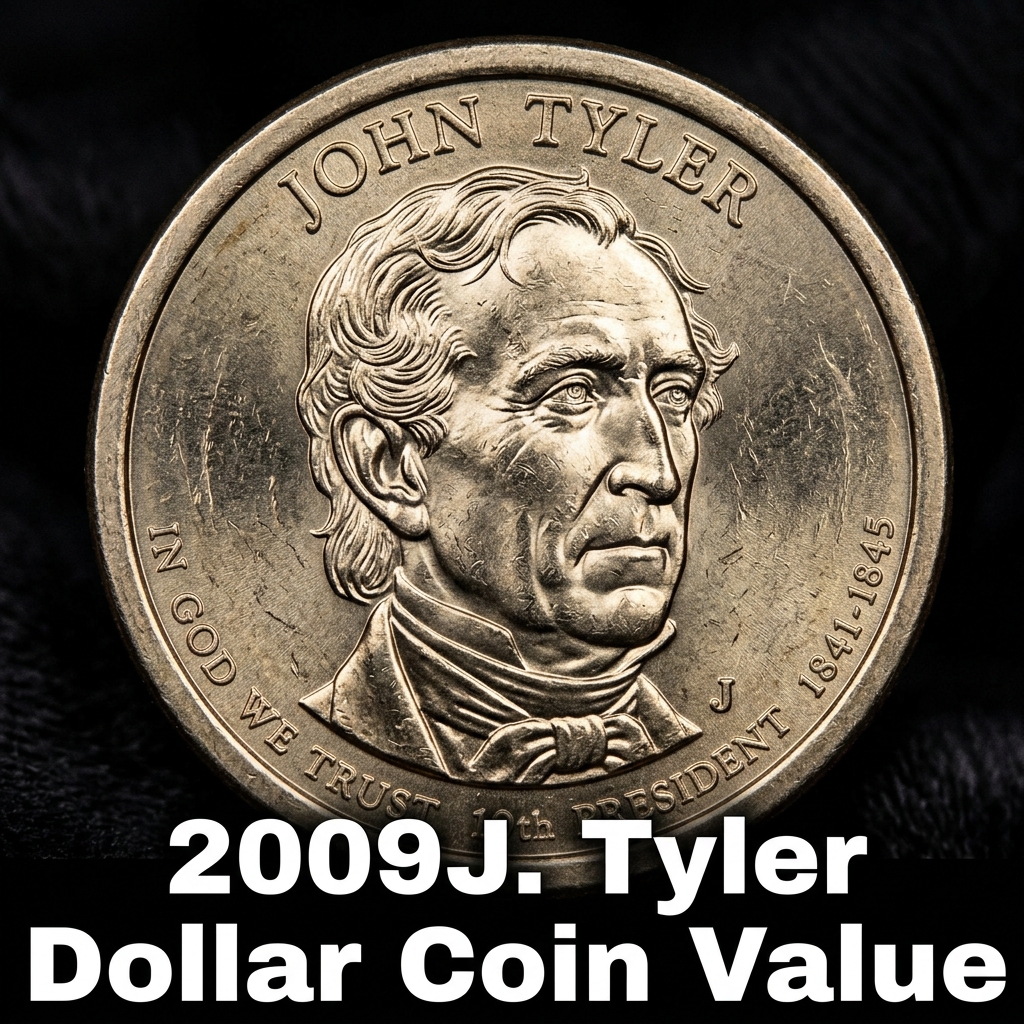
2009 John Tyler Presidential Dollar Coin Value and Identification Guide
The 2009 John Tyler Dollar Coin is worth anywhere from $1.25 in circulated condition to over $50 for high-grade specimen or proof strikes. If you just found one of these golden-colored coins in your pocket change, you are likely holding a piece of history that is worth a small premium over its face value.
Identifying Your 2009 John Tyler Presidential Dollar
The John Tyler dollar was the tenth release in the United States Mint’s Presidential $1 Coin Program. These coins are often mistaken for gold because of their distinct manganese-brass composition, which gives them a shiny, golden appearance. On the obverse, you will see a portrait of John Tyler, the 10th U.S. President, along with the years of his term (1841-1845). If you are unsure if your coin is a genuine strike or a common replica, using a free coin identifier app can help you confirm the variety and mint mark within seconds.
The reverse of the coin features a striking image of the Statue of Liberty. One unique aspect of this series is the “incuse” edge lettering. To find the year of mintage and the mint mark (P, D, or S), you must look at the edge of the rim. This is where “2009,” “E Pluribus Unum,” and “In God We Trust” are engraved. Many collectors use the CoinKnow app to catalog these edge-lettering details, as they are crucial for determining the specific production run of your coin.
Current Market Value and Price Chart
While hundreds of millions of these coins were minted, the value fluctuates based on the mint mark and the state of preservation. Coins from the Philadelphia (P) and Denver (D) mints were intended for circulation and are very common. However, the San Francisco (S) mint produced “Proof” versions specifically for collectors, which typically command higher prices.
Because condition is everything in the world of numismatics, professional grading can make a significant difference. For example, a coin in a “Mint State 67” condition will be worth much more than one that has been scuffed up in a cash register. You can track the latest 2009 Presidential Dollar price trends to see how the market is moving for these modern treasures.
| Condition / Grade | P Mint (Philadelphia) | D Mint (Denver) | S Mint (Proof) |
|---|---|---|---|
| Circulated (AU) | $1.05 – $1.25 | $1.05 – $1.25 | N/A |
| Uncirculated (MS63) | $2.50 – $4.00 | $2.50 – $4.00 | N/A |
| Choice Mint State (MS65+) | $10.00 – $20.00 | $10.00 – $20.00 | N/A |
| Proof-69 to 70 Deep Cameo | N/A | N/A | $15.00 – $45.00 |
Factors That Increase John Tyler Dollar Value
There are a few key things that can make a John Tyler dollar more valuable than a standard dollar. The first is the presence of errors. In the Presidential Dollar series, collectors look for “Missing Edge Lettering” errors. While these were more common in the first year of production (2007 Washington dollars), they can occasionally be found in the 2009 series. If the edge of your coin is completely smooth with no date or lettering, it could be worth hundreds of dollars.
Another factor is the “Satin Finish.” In 2009, the Mint produced special Uncirculated Mint Sets that featured a different finish than the coins meant for circulation. These Satin Finish coins are rarer and are highly sought after by collectors trying to complete a registry set. To get an idea of how these modern coins compare to classic collectibles, you can check out this rare dollar coin value guide. Using tools like the CoinKnow app can help you identify these subtle finish differences that the naked eye might miss.
How to Sell and Store Your Coin
If you believe you have a high-grade 2009 John Tyler coin, it is important to handle it correctly. Never clean your coins, as this removes the original “luster” and significantly lowers the resale value. Instead, place the coin in a PVC-free flip or a plastic capsule to prevent finger oils and scratches from damaging the surface.
When you are ready to sell, the most common platforms are eBay or local coin shops. For circulated coins, you might find that you can sell rolls of them slightly above face value to other enthusiasts. For high-grade specimens verified by the CoinKnow app, hitting a specialized auction house might yield the best return.
Q: Is the 2009 John Tyler dollar made of real gold?
A: No, the coin is made of a core of pure copper with an outer layer of manganese brass (77% copper, 12% zinc, 7% manganese, and 4% nickel). It only looks gold.
Q: Where is the mint mark on a 2009 John Tyler coin?
A: Unlike most US coins, the mint mark (P, D, or S) is located on the edge of the coin along with the date and “E Pluribus Unum.”
Q: Are there any valuable errors for the John Tyler dollar?
A: The most valuable error is the “Missing Edge Lettering” error, where the rim of the coin is smooth. Doubled die errors on the obverse or reverse are also highly collectible but quite rare.
