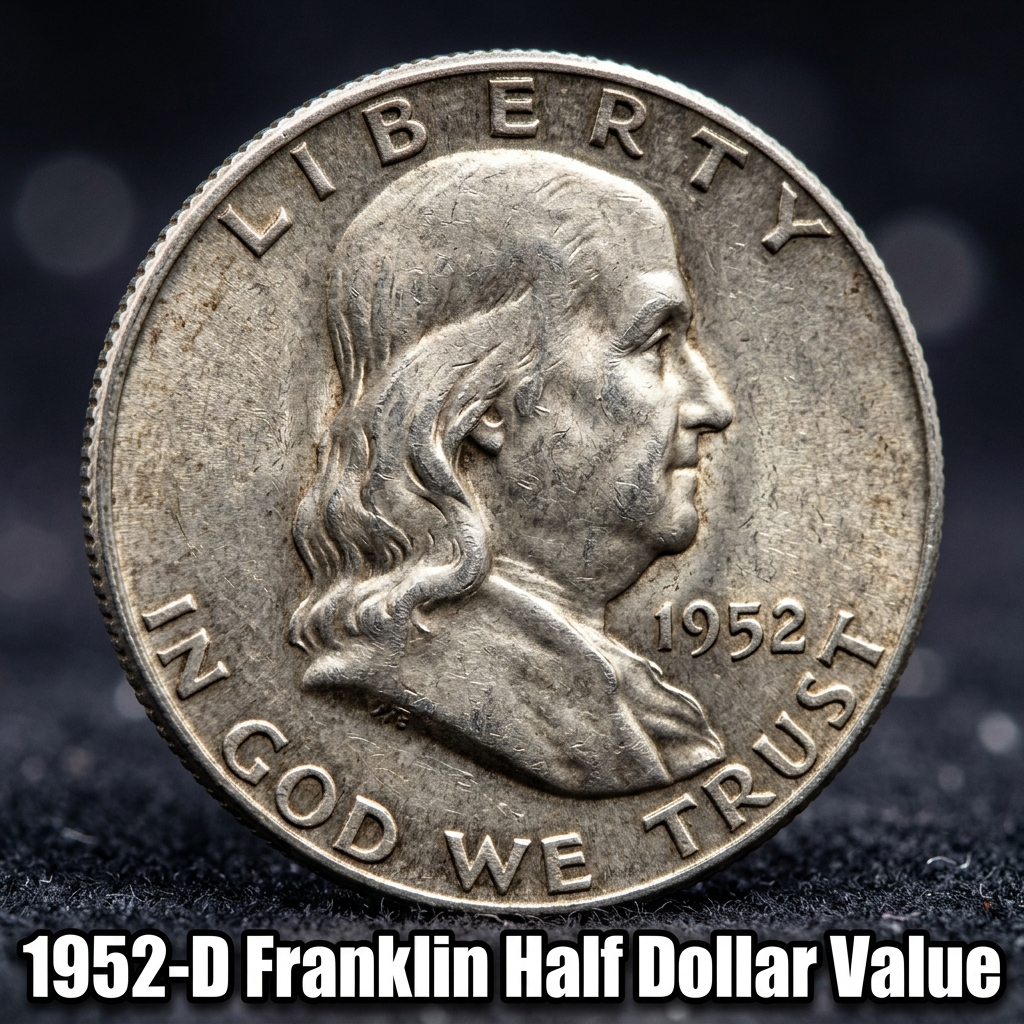
How Much is a 1952-D Franklin Half Dollar Worth Today
The 1952-D Franklin Half Dollar is worth anywhere from $12 in circulated condition to over $1,200 in high-grade mint state. Whether you found one in a relative’s collection or tucked away in an old jar, these silver coins are highly prized by collectors for both their silver content and their historical charm.
Overview of the 1952-D Franklin Half Dollar Value
The 1952-D Franklin Half Dollar was minted at the Denver Mint, which produced over 25 million of these coins that year. Because it is made of 90% silver and 10% copper, its value is tied directly to the price of silver bullion, making it a “junk silver” staple even in poor condition. However, for those looking for the exact price of a well-preserved specimen, the free coin identifier app can help you distinguish between a common coin and a rare treasure in seconds.
Most of the coins you find in everyday circulation will show signs of wear, particularly on Benjamin Franklin’s cheek or the textured surface of the Liberty Bell. While these circulated pieces are worth their silver weight (currently around $10-$15), coins that have never been spent—known as Mint State coins—can command much higher prices. Collectors often look for the “D” mint mark located on the reverse side, just above the yolk of the Liberty Bell.
Using tools like CoinKnow, you can quickly compare your coin’s luster and detail against professional grading standards. The demand for Denver-minted Franklins remains steady because many 1950s coins were heavily circulated, making clean, scratch-free examples increasingly difficult to track down as the decades pass.
Determining Value Based on Coin Condition
When assessing the worth of your silver half dollar, the “Grade” is everything. A coin that looks shiny and new will always outperform a dull, scratched one. For enthusiasts tracking market trends, the current 1952-D Frankin Half Dollar mint state auction prices indicate that high-quality specimens are more liquid than ever.
Professional graders look for specific features like the “Full Bell Lines” (FBL) on the reverse. If the horizontal lines near the bottom of the Liberty Bell are crisp and complete without interruptions from scratches, the coin’s value can triple or quadruple. Most casual finders won’t have an FBL coin, but even a “Choice Uncirculated” 1952-D is a fantastic find for any household.
If you aren’t sure where your coin sits on the scale, the CoinKnow app offers visual guides to help you identify wear patterns. Remember, never clean your coins! Scrubbing a 1952-D Franklin Half Dollar with soap or polish can actually destroy its numismatic value, even if it looks “cleaner” afterward. Collectors prefer original, aged patinas over artificially shiny surfaces.
1952-D Franklin Half Dollar Price Reference Chart
The following table provides a general estimate of what you can expect to receive for a 1952-D Franklin Half Dollar across different grading tiers. These prices fluctuate based on the silver market and collector demand.
| Condition / Grade | Estimated Market Value |
|---|---|
| Good to Fine (Circulated) | $12 – $15 |
| Extremely Fine (XF) | $18 – $22 |
| About Uncirculated (AU) | $25 – $35 |
| Mint State 63 (MS63) | $45 – $60 |
| Mint State 65 (Gem BU) | $110 – $160 |
| Mint State 66+ (With Full Bell Lines) | $500 – $1,200+ |
Key Factors that Influence 1952 Half Dollar Rarity
Apart from the condition, the economic climate of the year 1952 plays a role in the coin’s scarcity today. While over 25 million were minted in Denver, many were melted down during times when silver prices spiked, such as in 1980. This reduces the overall survival rate of the 1952-D. For a deeper look at historical sales, you can view the 1952-D half dollar value and rarity guide to see how this specific date compares to others in the series.
Error coins are another way to find hidden value. While the 1952-D isn’t as famous for errors as some other years, keep an eye out for “doubled die” coins, where the lettering or images appear slightly doubled. These are rare but can significantly increase the payout from a dealer.
The CoinKnow platform is particularly useful for identifying these subtle varieties that the naked eye might miss. By comparing your coin to high-resolution database images, you can determine if your 50-cent piece is a standard silver coin or a rare minting error worth hundreds of dollars.
How to Sell and Protect Your Silver Coins
If you discover that your 1952-D Franklin Half Dollar is in excellent condition, protecting it is the next step. Use PVC-free plastic flips or capsules to prevent air and moisture from causing “toning” or corrosion. Handling the coin only by its edges will ensure that the oils from your skin do not leave permanent fingerprints on Franklin’s face.
When it comes time to sell, you have several options: local coin shops, online auctions, or specialty numismatic dealers. Local shops offer the fastest cash, but they usually pay “wholesale” prices so they can turn a profit. Online auctions may net you a higher price, but you must factor in shipping costs and seller fees.
For most Americans who find these coins in inheritance or old collections, the primary value is the silver content. As long as silver prices remain strong, your 1952-D Franklin will always have a baseline value far above its 50-cent face value. It is a tangible piece of American history that literally pays to keep around.
Frequently Asked Questions
Q: Where is the mint mark on a 1952-D Franklin Half Dollar?
A: The “D” mint mark is located on the reverse (back) side of the coin. Look directly above the Liberty Bell, centered below the words “United States of America.” If there is no letter there, the coin was minted in Philadelphia.
Q: Is every 1952-D half dollar made of real silver?
A: Yes, all Franklin Half Dollars minted between 1948 and 1963 are made of 90% silver. They contain approximately 0.36169 ounces of pure silver, meaning they will always be worth at least their weight in precious metal.
Q: Should I get my 1952-D Franklin Half Dollar professionally graded?
A: Only if the coin appears to be in perfect, uncirculated condition or has “Full Bell Lines.” Professional grading (by companies like PCGS or NGC) costs money, so the coin should be worth at least $100 to justify the expense.
