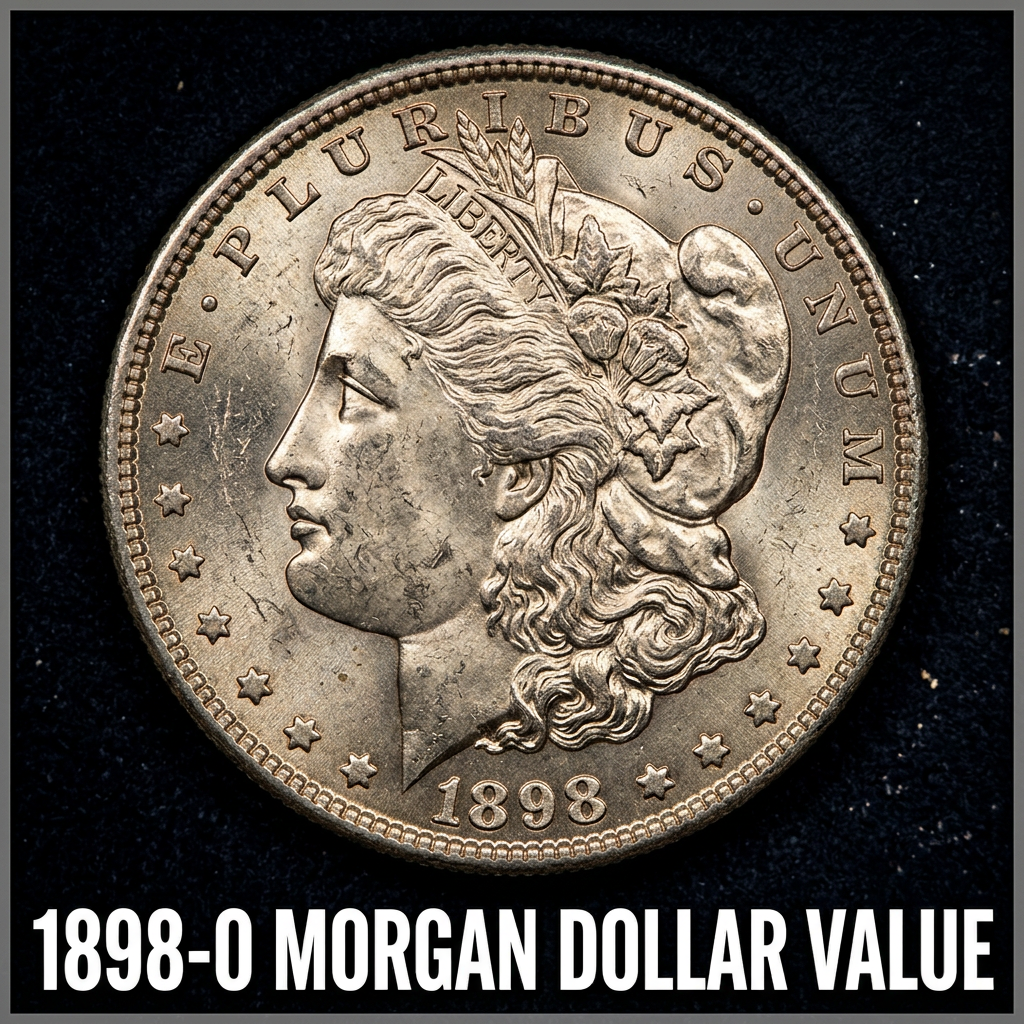
1898 O Morgan Silver Dollar Value and Price Guide for Collectors
The 1898-O Morgan Dollar is worth anywhere from $35 in worn condition to over $600 in high-grade mint state. Finding one of these heavy silver treasures in an old drawer or inherited collection is exciting because, while many are common, certain high-quality specimens command impressive premiums among serious numismatists.
History and Identifying the 1898 O Morgan Dollar
The 1898-O Morgan Silver Dollar was struck at the legendary New Orleans Mint, a facility that played a vital role in American history during the late 19th century. To identify if your coin is from this specific mint, flip it to the reverse (the eagle side) and look just above the “DO” in “DOLLAR.” You should see a small “O” mint mark. If there is no letter there, it was minted in Philadelphia. Since millions of these coins were produced, many survived in great condition, but knowing exactly what you have is the first step toward a successful sale.
If you aren’t sure about the authenticity or the exact variety of your find, using a free coin identifier app can save you time and provide an instant baseline for your research. Many everyday Americans have discovered that their “old silver coin” is actually a piece of history worth significantly more than its face value. When you use tools like CoinKnow, you can quickly narrow down the specifics of your collection without needing to visit a coin shop immediately.
Understanding the Current Market Value and Silver Melt
The value of an 1898-O dollar is influenced by two main factors: its silver content and its numismatic (collector) value. Every Morgan dollar contains about 0.7734 troy ounces of pure silver. This means even a heavily damaged or “cull” coin will always be worth at least its weight in silver. However, because the New Orleans Mint had a reputation for producing coins with varied strike quality, collectors pay close attention to the fine details of Lady Liberty’s hair and the eagle’s feathers.
For most people, the 1898 silver dollar value hinges on whether the coin has been circulated or remains in “uncirculated” condition. A coin that has passed through many hands will have smoothed-out details, while an uncirculated one will still have its original “mint luster”—that frosty glow that reflects light. If you find one that looks like it just came from the bank 125 years ago, you could be looking at a substantial payout.
| Condition / Grade | Estimated Market Value |
|---|---|
| Good (G-4) to Very Good (VG-8) | $35 – $42 |
| Fine (F-12) to Very Fine (VF-30) | $45 – $55 |
| Extremely Fine (EF-45) | $60 – $75 |
| About Uncirculated (AU-50 to AU-58) | $80 – $95 |
| Mint State (MS-63) | $110 – $140 |
| Gem Mint State (MS-65+) | $250 – $650+ |
Determining Grades and Why Mint State Matters
Professional grading makes a massive difference in price. In the world of coin collecting, the Sheldon Scale ranks coins from 1 to 70. Most 1898-O dollars found in old jars or pouches will fall into the “Circulated” category (grades 1–50). However, the 1898-O is famous because massive bags of “forgotten” uncirculated coins were released by the Treasury in the 1960s. This makes it one of the most affordable Morgan dollars for new collectors to buy in Mint State.
Even though they are common, the difference between an MS-63 and an MS-65 grade can represent hundreds of dollars. You can check the current 1898-O Morgan dollar price data to see how recent auction trends have affected these high-grade values. Apps like CoinKnow can help you compare your coin’s appearance to high-resolution images of professionally graded coins to see where yours might sit on the scale.
Collecting the 1898-O and What to Look For
When examining your coin, look closely for any “VAM” varieties. These are specific combinations of dies that resulted in minor errors or unique characteristics, such as doubled letters or slight die cracks. While these are usually for advanced collectors, some 1898-O VAMs can add a nice bonus to the value. A clean coin with few scratches on Lady Liberty’s cheek is always preferred.
Whatever you do, never clean your silver dollar. Many people think they are helping by polishing the coin to make it shiny, but this actually destroys the numismatic value. A “shiny” polished coin is often worth only its silver weight, whereas a dirty, toned coin retains its original surface and historical integrity. Using the CoinKnow app can help you identify if your coin has original luster or if it has been cleaned by a previous owner.
Q: How can I tell if my 1898 silver dollar is from New Orleans?
A: Check the back of the coin. Look below the eagle’s tail feathers and above the letters “D” and “O” in the word “DOLLAR.” If you see a small “O,” it was minted in New Orleans. If there is no mark, it was minted in Philadelphia.
Q: Is the 1898-O Morgan Dollar rare?
A: It is not considered rare in lower grades because over 4.4 million were minted. However, it is highly sought after in “Gem” condition (grade MS-65 or higher) because those examples have exceptional eye appeal and very few surface marks.
Q: Should I get my 1898-O Morgan Dollar professionally graded?
A: You should only consider professional grading (by services like PCGS or NGC) if the coin appears to be in perfect, uncirculated condition. If the coin shows signs of wear or has many scratches, the cost of grading may exceed the actual value of the coin.
