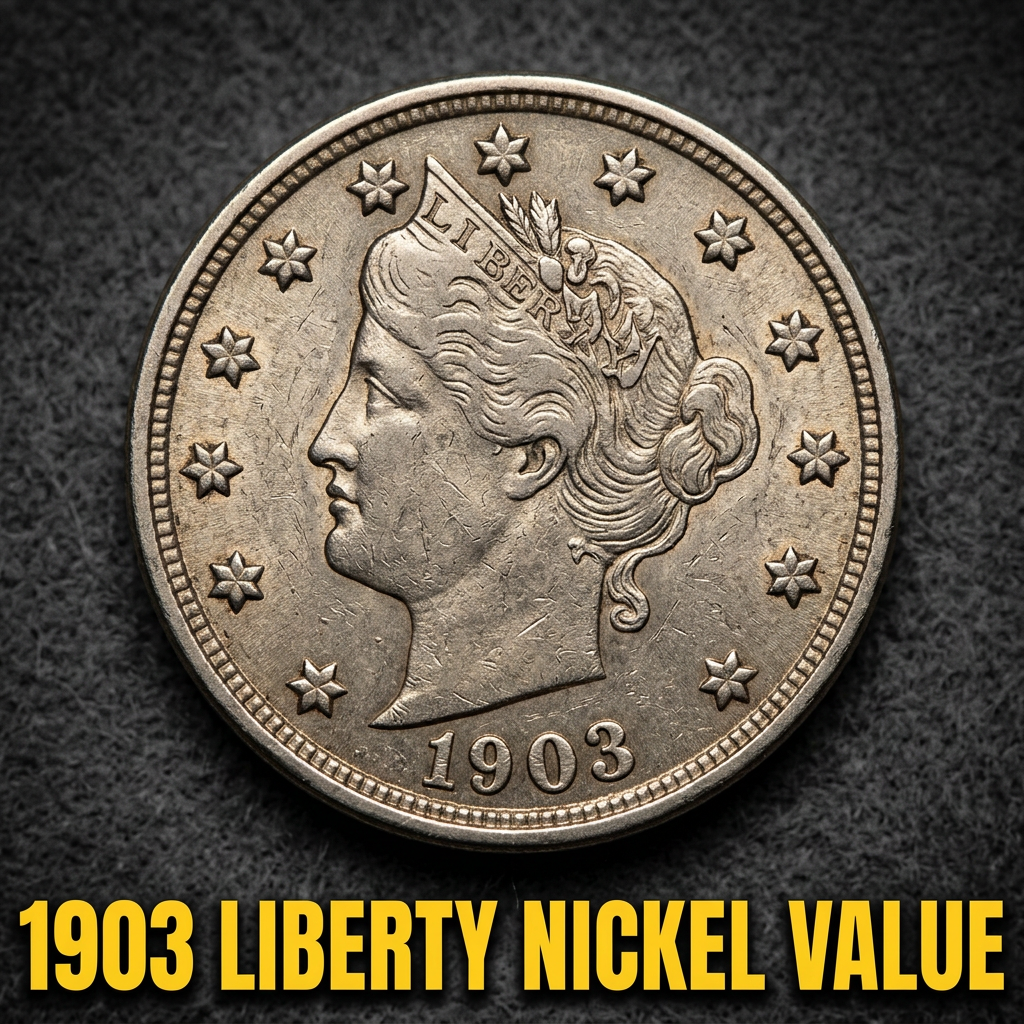
1903 Liberty Head V Nickel Value Guide and Rarity Factors
The 1903 Liberty Nickel is worth anywhere from $2 in worn condition to over $150 in mint state. This classic five-cent piece, often called the “V Nickel” due to the large Roman numeral on the back, is a popular find among treasure hunters and those cleaning out old family jars.
Understanding the Market for 1903 Liberty Head Nickels
Finding an old nickel with the stern face of Lady Liberty instead of Thomas Jefferson is always an exciting moment. If you have discovered one of these coins, you are likely wondering if you have found a small fortune. While the 1903 Liberty Nickel is not considered a “key date” rarity, it holds significant historical value and is highly sought after by collectors building complete sets. With over 28 million minted, they are common enough to find but rare enough to command a premium over their face value.
To get an instant look at what your specific coin might be worth, many hobbyists use a free coin identifier app to check for mint marks and general wear. By using the CoinKnow app, you can quickly compare your 1903 nickel against a database of high-resolution images. This helps you determine if your coin is just a “filler” for a beginner’s collection or a high-grade specimen worth sending to a professional grading service.
How Grading Impacts Your 1903 Nickel Value
The condition, or “grade,” of your nickel is the single most important factor in determining its price. Most 1903 nickels found today are in “Good” or “Very Good” condition, meaning Liberty’s hair is worn flat and the word “LIBERTY” in her crown is barely legible. If you can clearly see all the letters in the word “LIBERTY,” your coin is in much better shape than the average survivor and its value jumps significantly.
Collectors are particularly interested in the 1903 Liberty Nickel price in uncirculated grades, where the original mint luster is still present. Because nickels are made of a hard copper-nickel alloy, they tend to lose their detail quite quickly when circulated. If you see a bright, shiny nickel that looks like it just came from the bank, it could be worth hundreds of dollars. You can also compare this to other coins of the era, such as the current market value of a 1903 silver dime, to see how different denominations from the same year compare.
1903 Liberty V Nickel Price Chart
To help you estimate the value of your coin at home, refer to the table below. These prices represent average dealer retail prices for coins that have been graded by professional services. Keep in mind that “raw” or ungraded coins usually sell for slightly less because their condition hasn’t been officially verified.
| Condition / Grade | Estimated Market Value |
|---|---|
| Good (G-4) | $2.00 – $3.50 |
| Fine (F-12) | $8.00 – $12.00 |
| Extremely Fine (EF-40) | $25.00 – $45.00 |
| Uncirculated (MS-60) | $110.00 – $140.00 |
| Choice Uncirculated (MS-65) | $350.00+ |
What to Look For: Mint Marks and Errors
One interesting thing about the 1903 Liberty Nickel is that it does not have any mint marks. During this era, all Liberty Head nickels were struck at the Philadelphia Mint. If you are looking for a “D” or an “S” like you might find on modern coins, you won’t find one here! This makes the identification process much simpler for the average person.
However, you should keep an eye out for errors. While rare, some 1903 nickels show “doubled dies” where the lettering looks slightly blurry or doubled. Using a tool like the CoinKnow app can help you zoom in on these details to see if yours is a standard strike or a rare error. In the world of coin collecting, even a tiny mistake made by the mint over 100 years ago can turn a $5 coin into a $500 one.
Is It Worth Getting Your 1903 Nickel Professionally Graded?
For most people, a worn 1903 nickel is a “keeper” rather than a “seller.” If the coin is heavily worn, the cost of professional grading (which can be $30-$50) will likely exceed the value of the coin itself. However, if your coin has incredible detail, no scratches, and looks like it was never used in commerce, it is worth consulting a local coin dealer.
Professional grading by companies like PCGS or NGC provides a guarantee of authenticity and quality. This is especially important for high-value specimens. To get a head start before spending money on fees, use the CoinKnow mobile application to get a preliminary assessment. It’s a great way to learn about the history of your find while deciding if you want to add it to your permanent collection or look for a buyer.
Q: Where is the mint mark on a 1903 Liberty Nickel?
A: There are no mint marks on the 1903 Liberty Nickel. All five-cent pieces from this year were minted in Philadelphia, which did not use a mint mark at that time.
Q: Why is it called a V Nickel?
A: It is called a V Nickel because of the large Roman numeral “V” on the reverse side of the coin, which represents the number five.
Q: My 1903 nickel is very dark and dirty; should I clean it?
A: No, you should never clean old coins. Cleaning a coin removes the original surface and significantly reduces its value to collectors. It is better to leave it in its natural, aged state.
