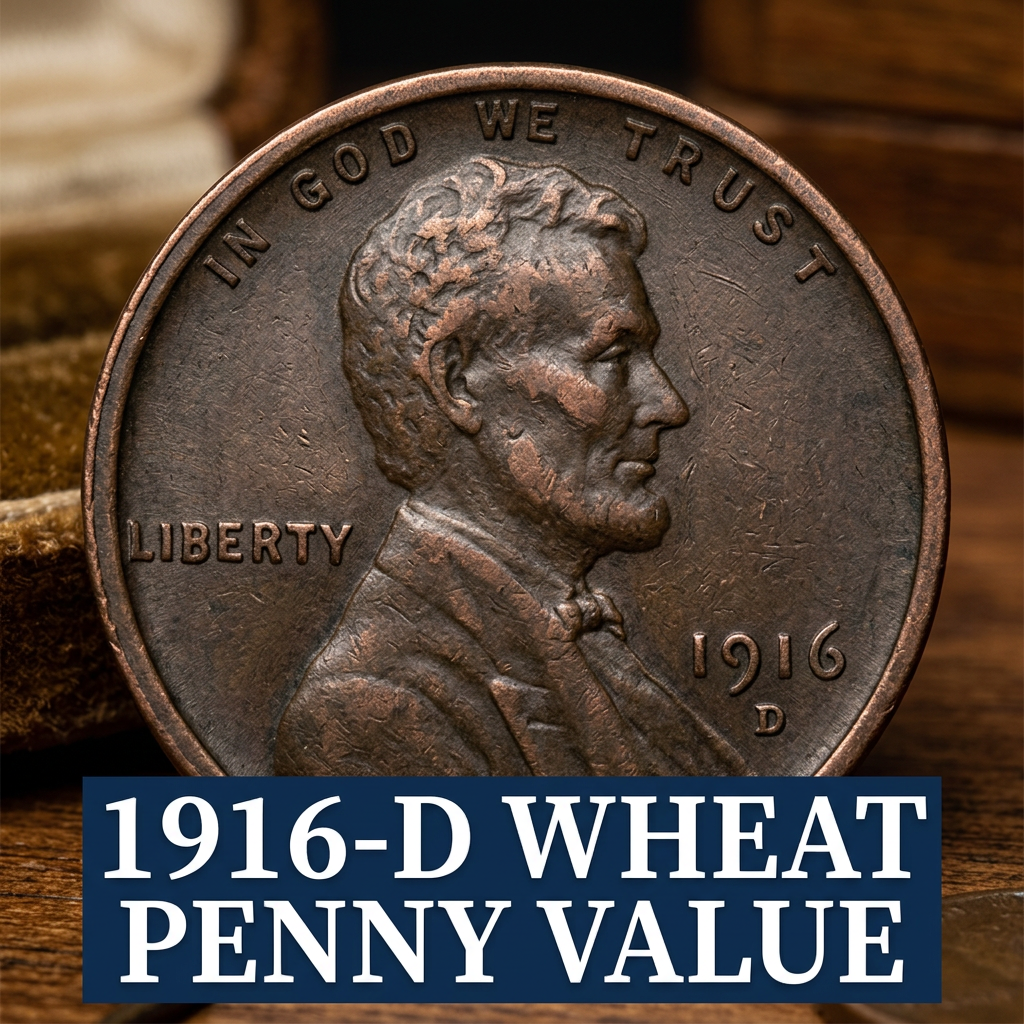
1916 D Wheat Penny Value and Identification Guide for Collectors
The 1916 D Wheat Penny is worth anywhere from $1 in heavily worn condition to over $1,000 for high-grade specimens. Finding one of these century-old copper coins in your pocket change or an old jar is an exciting discovery that connects you directly to American history and the Denver Mint’s early production.
Identifying Your 1916 D Lincoln Cent
If you have discovered an old copper cent dated 1916, the first thing you need to do is look for the mint mark. Unlike the pennies struck in Philadelphia, the Denver issue features a small “D” located right underneath the date on the obverse side. Determining the exact state of your coin is vital because the market for early Lincoln cents is highly specialized. Using a free coin identifier app can help you quickly spot the difference between a common 1916 penny and the more valuable Denver variety.
Many beginners often mistake dirt or damage for a mint mark, so it is helpful to use a magnifying glass. If you find yourself struggling to see the details, the CoinKnow app provides high-resolution scanning features that can clarify the mint mark and date for you. Once you confirm that “D,” you are holding a coin that saw a relatively low mintage compared to modern standards, making it a favorite for those starting a Whitman folder or a professional collection.
Estimated Price Guide by Coin Condition
Pricing for the 1916-D varies significantly based on how much “leaf detail” remains on the reverse and how sharp Lincoln’s portrait is on the front. Generally, most coins found today are in “Good” or “Very Good” condition, meaning they have seen years of circulation. However, if you are lucky enough to find one with original red luster, the price jumps into the hundreds or even thousands.
| Condition Grade | Estimated Market Value |
|---|---|
| Good (G-4) | $1.25 – $2.50 |
| Fine (F-12) | $5.00 – $8.00 |
| Extremely Fine (XF-40) | $25.00 – $35.00 |
| About Uncirculated (AU-50) | $55.00 – $75.00 |
| Mint State (MS-63 RB) | $150.00 – $220.00 |
| Mint State (MS-65 Red) | $900.00 – $1,450.00 |
Factors That Influence 1916 Denver Penny Value
The most important factor influencing price is the color and surface preservation. Numismatists categorize copper coins as Red (RD), Red-Brown (RB), or Brown (BN). A “Red” coin looks exactly as it did when it left the Denver Mint in 1916. You can check the latest 1916-D Red Wheat Penny price data to see how much of a premium collectors pay for that original copper glow. Most coins found in jars will be the Brown variety, which is still collectible but sits at a lower price point.
Another factor is the presence of errors. While the 1916-D is not as famous for errors as the 1955 doubled die, collectors still look for “re-punched mint marks” or “die cracks.” If your coin has a strange lump of metal or a blurred “D,” it might be worth more than the standard list price. To get a better sense of these nuances, many users turn to the CoinKnow app to compare their coin against a database of known mint errors.
What Makes the 1916 Penny Special
The year 1916 was a period of transition and growth for the United States Mint. While the Lincoln Penny had only been in circulation for seven years, it was already becoming a staple of American commerce. The Denver Mint produced about 35.9 million pennies that year. While that sounds like a lot, it is very low compared to the billions of pennies minted today. For comprehensive details on the historical significance, you can review this 1916 Wheat Cent value information guide.
Owning a piece of 1916 history is about more than just the dollar amount. It represents the era of World War I and the industrial boom of the early 20th century. Because so many of these coins were used in daily transactions, finding one in “uncirculated” condition is a rarity. If you are trying to build a collection, the CoinKnow app is an excellent tool for tracking your finds and organizing your inventory by year and mint mark.
Frequently Asked Questions
Q: Where is the mint mark on a 1916-D Wheat Penny?
A: The mint mark is located on the “heads” side (obverse) of the coin, directly below the date 1916. If there is no letter, it was minted in Philadelphia.
Q: Is a 1916 penny rare?
A: While not as rare as the 1909-S VDB, the 1916-D is considered a “semi-key” date in higher grades. In average circulated condition, it is common, but in mint state, it is quite scarce and valuable.
Q: How should I clean my 1916-D penny to make it worth more?
A: Never clean your coins! Cleaning a vintage penny with chemicals or abrasive cloths will damage the surface and significantly reduce its numismatic value. Collectors prefer “original” patina, even if the coin looks dark.
