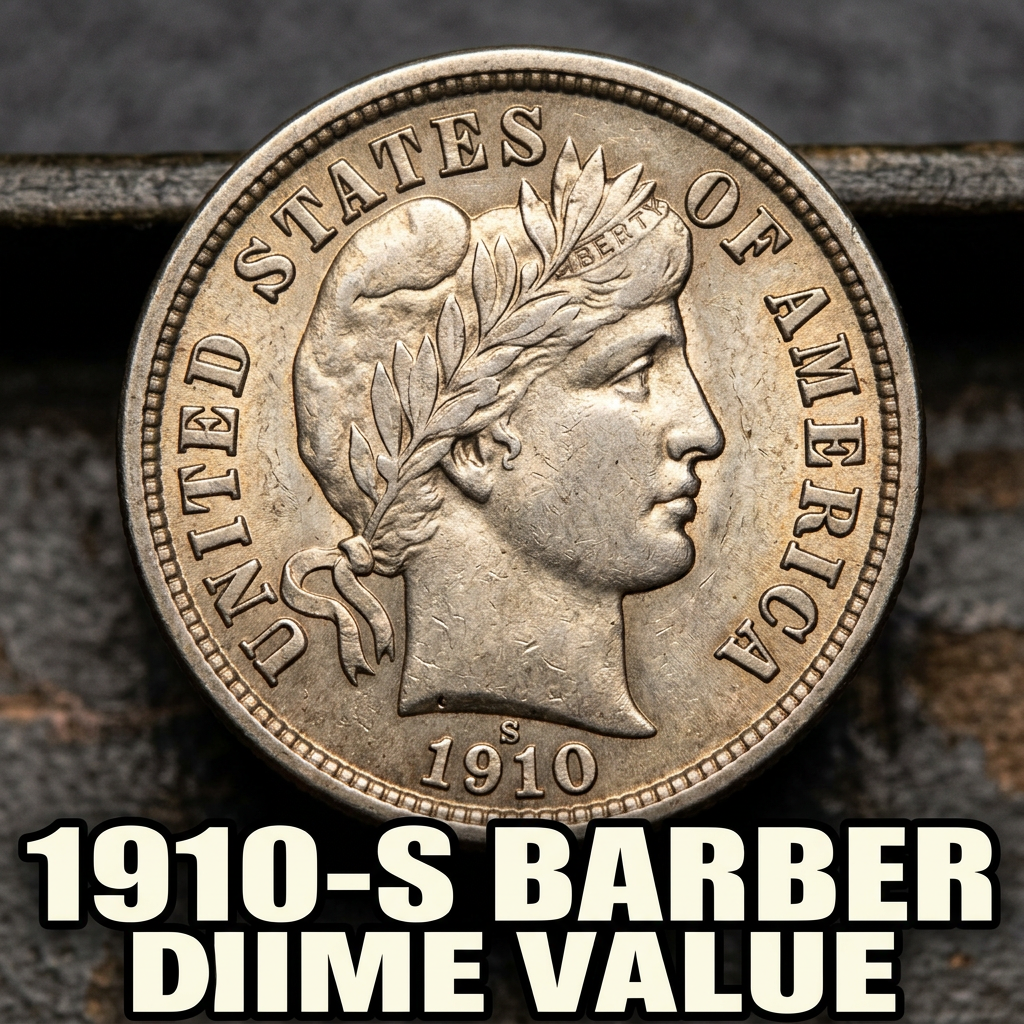
How Much is a 1910-S Barber Dime Worth Today
The 1910-S Barber Dime is worth anywhere from $5 in heavily worn condition to over $600 in high-grade uncirculated mint state. Whether you found one in an old family jar or inherited a small collection, identifying the “S” mint mark is the first step toward discovering its true market value.
Identifying the 1910-S Barber Dime Mint Mark
Before you get excited about the potential windfall, you need to verify that your coin was actually struck in San Francisco. The Barber Dime, designed by Charles E. Barber, features a classic portrait of Liberty on the obverse. However, the value driver is located on the reverse side. Look at the bottom of the coin, just above the word “DIME” and below the wreath. If you see a small “S,” you have the San Francisco mint variety.
Because 1910 saw relatively low production numbers at the San Francisco facility compared to Philadelphia, these coins are naturally more sought after by collectors. If you are struggling to see the mark due to wear or dirt, using a free coin identifier app can help you get a clearer look and provide an instant scan of your treasure. Many beginners find the CoinKnow app particularly useful for this initial identification step because it accounts for the subtle differences in mint mark placements.
The Rarity and Historical Context of the 1910-S Issue
In 1910, the San Francisco Mint struck only 1,240,000 dimes. While a million might sound like a lot, it is quite low in the world of numismatics, especially when you consider that millions more were lost to circulation or melted down over the last century. Most 1910-S dimes found today are in “Good” or “Very Good” condition, meaning they are quite flat and lack the fine details in Liberty’s hair and the headband.
If you happen to find a specimen that still has the “LIBERTY” letters clearly visible on the headband, you are looking at a much higher price bracket. Collectors are always on the hunt for “Problem-Free” coins—meaning those that haven’t been cleaned, scratched, or bent. When researching 1910 San Francisco dime market prices, you will notice that the jump from “Fine” to “Extremely Fine” condition is where the value truly starts to skyrocket for average households.
Determining Value Based on Coin Condition
Pricing a 100-year-old silver coin is all about the “Grade.” Coin grading is a scale from 1 to 70 used by professionals to determine how much wear a coin has sustained. For the average American, you can categorize your 1910-S Barber Dime into four main buckets: Good, Fine, About Uncirculated, and Mint State. A “Good” coin is heavily worn but has a full rim. A “Fine” coin shows some detail in the wheat and oak leaves on the back.
If you don’t want to spend money on professional grading services just yet, the CoinKnow app offers a great way to estimate the grade of your silver dime from home. This can give you the confidence to decide whether your coin is worth $10 or $200 before you walk into a local coin shop. Remember, the silver content itself is valuable, but the collectible premium is what makes the 1910-S special.
| Condition / Grade | Estimated Value (USD) |
|---|---|
| Good (G-4) | $5 – $8 |
| Very Good (VG-8) | $12 – $18 |
| Fine (F-12) | $25 – $35 |
| Very Fine (VF-20) | $55 – $75 |
| Extremely Fine (EF-40) | $110 – $140 |
| About Uncirculated (AU-50) | $180 – $250 |
| Uncirculated (MS-60+) | $375 – $600+ |
Why the San Francisco Mint Matters for 1910 Dimes
In the early 1900s, the San Francisco Mint often produced fewer coins than the main mint in Philadelphia. This makes “S” marked coins, like the 1910-S Barber Dime, significantly more valuable than their Philadelphia counterparts (which have no mint mark). For example, a 1910 dime without a mint mark in Good condition might only be worth its silver melt value plus a tiny premium, whereas the 1910-S holds a solid collector’s premium even in poor shape.
Keep in mind that all Barber Dimes are made of 90% silver and 10% copper. This means that even if the coin is so worn that the date is barely visible, it still has intrinsic “melt value” based on the current price of silver. However, you should never clean your coin! Scrubbing a 1910-S Barber Dime with polish or soap can actually destroy its numismatic value, turning a $100 coin into a $2 silver scrap overnight. If you’re unsure about the residue on your coin, check with CoinKnow for tips on preservation.
Q: Is a 1910-S Barber Dime rare?
A: It is considered a “semi-key” date in the series. While not as rare as the famous 1894-S, it is much harder to find than the Philadelphia or Denver issues from the same era.
Q: Where is the mint mark on a 1910-S dime?
A: The mint mark is located on the reverse (back) of the coin, near the bottom, centered right above the “D” in the word “DIME.”
Q: How can I tell if my 1910-S dime is real?
A: Real 1910-S dimes should weigh approximately 2.5 grams and have a diameter of 17.9mm. Using a digital scale and a magnifying glass to check for the correct “S” style is recommended for verification.
