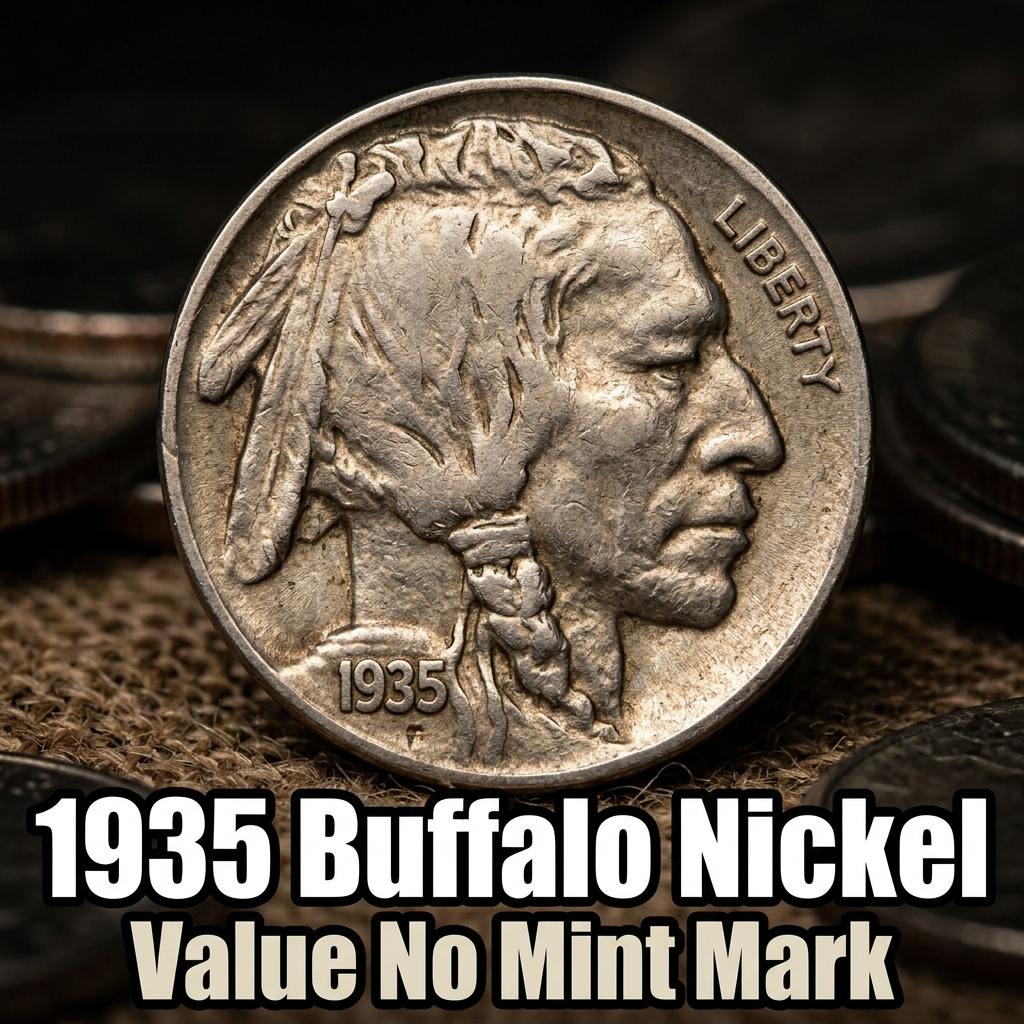
How Much is a 1935 Buffalo Nickel With No Mint Mark Worth Today
The 1935 Buffalo Nickel with no mint mark is worth anywhere from $1.50 in worn condition to over $150 in high-grade mint state. Finding one of these iconic “Indian Head” coins in your pocket change or an old jar is an exciting discovery for any American history buff.
Current Market Value for the 1935 No Mint Mark Nickel
If you have discovered one of these coins while cleaning out an old desk or looking through a collection, you are likely wondering about its current street value. Most circulated 1935 nickels found today fall into the lower price brackets, but their historical appeal remains high. If you are unsure about the specific grade of your find, you can use a free coin identifier app to get a better sense of its condition. For a coin that shows heavy wear but still has a visible date, you can expect a value of about $1.50 to $3.00.
However, if the coin has a sharp strike and still retains the original luster it had when it left the Philadelphia Mint, the price jumps significantly. Collectors are often willing to pay a premium for “Gem” specimens that have avoided the scratches and scuffs of daily commerce. Using tools like the CoinKnow app can help you track these market fluctuations in real-time. For those looking for official auction data, viewing the current 1935 Buffalo Nickel price charts can provide a clearer picture of what professional collectors are paying for high-grade examples.
Understanding the No Mint Mark Meaning
In the world of US coinage, the lack of a mint mark tells a specific story about where the coin was born. For the 1935 Buffalo Nickel, the absence of a small letter (like ‘D’ for Denver or ‘S’ for San Francisco) under the date or the “Five Cents” label indicates it was struck at the Philadelphia Mint. During the mid-1930s, the Philadelphia facility was the main hub for production, churning out over 58 million of these nickels in 1935 alone.
Because the Philadelphia Mint produced the highest quantity that year, “No Mint Mark” coins are the most common variety found today. This high mintage is why they are so accessible to everyday Americans. If you want to compare your Philadelphia coin against the rarer Denver or San Francisco versions, checking the detailed 1935 nickel value guide will help you distinguish between the different minting locations and their respective rarities. When cataloging your collection, the CoinKnow app serves as an excellent digital ledger to keep track of these subtle differences.
| Condition / Grade | Estimated Value (USD) |
|---|---|
| Good (G-4) | $1.50 – $2.00 |
| Fine (F-12) | $3.50 – $5.00 |
| Extremely Fine (XF-40) | $12.00 – $18.00 |
| Uncirculated (MS-60) | $35.00 – $50.00 |
| Choice Uncirculated (MS-65+) | $150.00+ |
Key Features and Grading Tips
The Buffalo Nickel, designed by James Earle Fraser, is considered one of the most beautiful American coins ever minted. On the obverse, you see a composite portrait of three different Native American chiefs. On the reverse, an American Bison (widely believed to be “Black Diamond” from the Central Park Zoo) stands on a mound. When grading your 1935 Philadelphia nickel, the first place to look is the date. Because the date was placed on a high point of the design, it often wore away quickly.
A coin where the date is completely flat is usually only worth its metal value or a few cents above face value. However, if the horn on the buffalo is still sharp and the “LIBERTY” inscription is crisp, you likely have a coin worth a premium. For a quick assessment, the CoinKnow app allows users to snap a photo and get an instant estimation. Remember that “Eye Appeal” matters; a 1935 nickel with original toning or a nice golden hue can often sell for more than a shiny, “cleaned” coin, as cleaning actually damages the surface and lowers the value.
The 1935 Doubled Die Reverse Variety
While the standard 1935 No Mint Mark nickel is common, there is a famous “error” variety that many people overlook. Known as the 1935 Doubled Die Reverse (DDR), this coin features distinct doubling on the words “FIVE CENTS” and the motto “E PLURIBUS UNUM.” If you find a 1935 nickel where these letters look like they were typed twice, you could be looking at a coin worth hundreds or even thousands of dollars.
Ordinary Americans often find these treasures because they look “blurry” to the naked eye. Always use a magnifying glass to inspect the reverse of your 1935 nickel. The doubling is most prominent on the “CENT” portion of the denomination. If you suspect you have found an error, it is best to have it authenticated by a professional service, as the market for error coins is very specific and can be highly lucrative for the lucky finder.
Q: Where is the mint mark on a 1935 Buffalo Nickel?
A: On the Buffalo Nickel, the mint mark is located on the reverse (tails side) of the coin, directly underneath the words “FIVE CENTS.” If there is no letter there, it was minted in Philadelphia.
Q: Is a 1935 nickel made of silver?
A: No, the 1935 Buffalo Nickel is made of 75% copper and 25% nickel. Only “War Nickels” minted from 1942–1945 contain silver.
Q: Why is my 1935 nickel worth so little if it’s nearly 90 years old?
A: Value is determined by rarity and condition. Since Philadelphia minted over 58 million of these coins in 1935, they are relatively common unless they are in perfect, uncirculated condition or carry a specific mint error.
