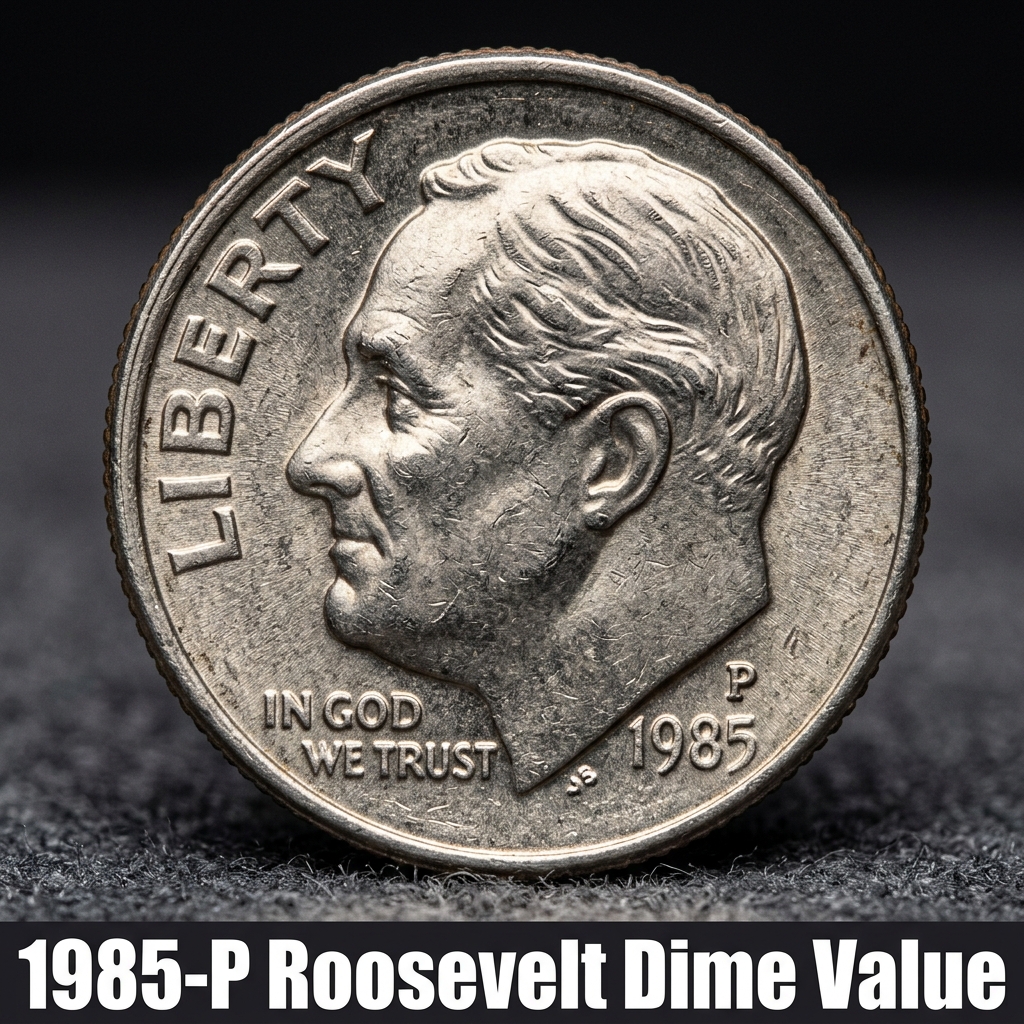
1985 P Roosevelt Dime Value Guide and Mint Error Worth
The 1985 P Roosevelt Dime is worth anywhere from its 10-cent face value in circulated condition to over $600 in high-grade mint state. While most of these coins in your pocket change aren’t hidden fortunes, finding one with a specific mint error or an exceptionally clean surface can make it a prize for collectors.
What Determines the Value of a 1985 P Roosevelt Dime
If you’ve just found a shiny dime from 1985 featuring the “P” mint mark, you’re likely wondering if it’s a common coin or a collector’s treasure. The “P” signifies that the coin was struck at the Philadelphia Mint. During this era, billions of dimes were produced for daily commerce, which means the vast majority of 1985 dimes are only worth their face value of ten cents.
However, the value shifts significantly when we talk about “Mint State” (MS) coins. These are dimes that never entered circulation and still retain their original luster. To get an accurate assessment of your pocket change, using a free coin identifier app is the quickest way for beginners to distinguish between a common spender and a potential gem.
Serious collectors also look at “Full Bands” (FB) or “Full Torch” details on the reverse side. If the horizontal lines on the torch are crisp and separated, the coin’s value can skyrocket. For those trying to track market trends, the CoinKnow app offers real-time updates on what similar specimens are selling for at auction.
Market Price Chart for 1985 P Roosevelt Dimes
When evaluating your collection, it helps to see the price progression across different grades. Most coins found in change are “Circulated,” while those tucked away in rolls or mint sets are “Uncirculated.”
| Condition / Grade | Estimated Value (USD) |
|---|---|
| Circulated (Good to About Uncirculated) | $0.10 – $0.25 |
| Mint State 63 (MS63) | $1.00 – $3.00 |
| Mint State 65 (MS65 Gem) | $10.00 – $15.00 |
| Mint State 67 (MS67 High Grade) | $50.00 – $85.00 |
| Mint State 68 (Rare Survival) | $450.00+ |
Identifying Rare 1985 Dime Errors and Varieties
One of the most exciting ways a 1985-P dime becomes valuable is through minting errors. These occur when something goes wrong during the production process at the Philadelphia Mint. While rare, these “mistakes” are exactly what professional numismatists search for when scanning through rolls of coins.
Common errors for this year include “Off-Center Strikes,” where the design is shifted to one side, and “Broadstrikes,” where the coin appears flatter and wider because it wasn’t contained properly by the collar during striking. You might also find “Die Cracks,” which appear as raised lines of metal on the surface.
Checking the latest 1985-P Roosevelt Dime MS price points can help you see if an error recently fetched a high premium. If you notice something odd about your dime, try using the CoinKnow photo recognition feature to diagnose the error type. A significant error on an otherwise high-grade coin can turn a ten-cent piece into a hundred-dollar sale.
Condition and the “Full Bands” Designation
To reach the highest tier of the 1985 Roosevelt Dime price guide, the coin must exhibit “Full Bands.” If you look at the torch on the reverse of the dime, you will see two sets of horizontal bands at the top and bottom. On most strikes, these bands are mushy or blended together.
When the bands are perfectly defined with a clear space between them, the coin receives the “FB” (Full Bands) designation from grading services like PCGS or NGC. Because the 1985-P strike quality was often mediocre, a 1985-P Dime with Full Bands is incredibly rare.
For example, an MS67 FB version of this coin is a major rarity that can command prices exceeding $600 at major auctions. If you think you’ve found one, use CoinKnow to compare your coin against high-resolution images of certified FB specimens before spending money on professional grading fees.
How to Start Your Roosevelt Dime Collection
Collecting 1985 dimes is an accessible way for everyday Americans to get into the hobby of numismatics. Because these coins are still in circulation, you can technically start a collection for the cost of face value. Many people enjoy “roll hunting,” where they buy $250 boxes of dimes from the bank and search for high-grade examples or errors.
Keep an eye out for coins that have a “Proof-like” appearance, though 1985-P coins weren’t intended to be proofs. Sometimes the first few coins struck with a new set of dies have a reflective field that appeals to collectors. Store your finds in PVC-free flips or tubes to ensure their condition doesn’t degrade over time, as scratches can instantly drop a coin’s value.
Whether you are looking for a retirement windfall or just a fun weekend hobby, understanding the nuances of the 1985 Philadelphia dime is a great place to begin. Even if it’s just worth ten cents today, the knowledge you gain from researching its history is priceless.
Q: Is a 1985-P Roosevelt Dime made of silver?
A: No, 1985-P dimes are composed of a copper-nickel clad “sandwich” (91.67% copper and 8.33% nickel). The U.S. Mint stopped making circulating silver dimes after 1964.
Q: Where is the mint mark on a 1985 dime?
A: The mint mark is located on the obverse (heads) side, just above the date. The “P” stands for the Philadelphia Mint.
Q: What is the highest price ever paid for a 1985-P dime?
A: Higher-grade specimens (MS68 FB) have sold for over $650 at auction, though most 1985-P dimes are only worth face value if they show signs of wear.
