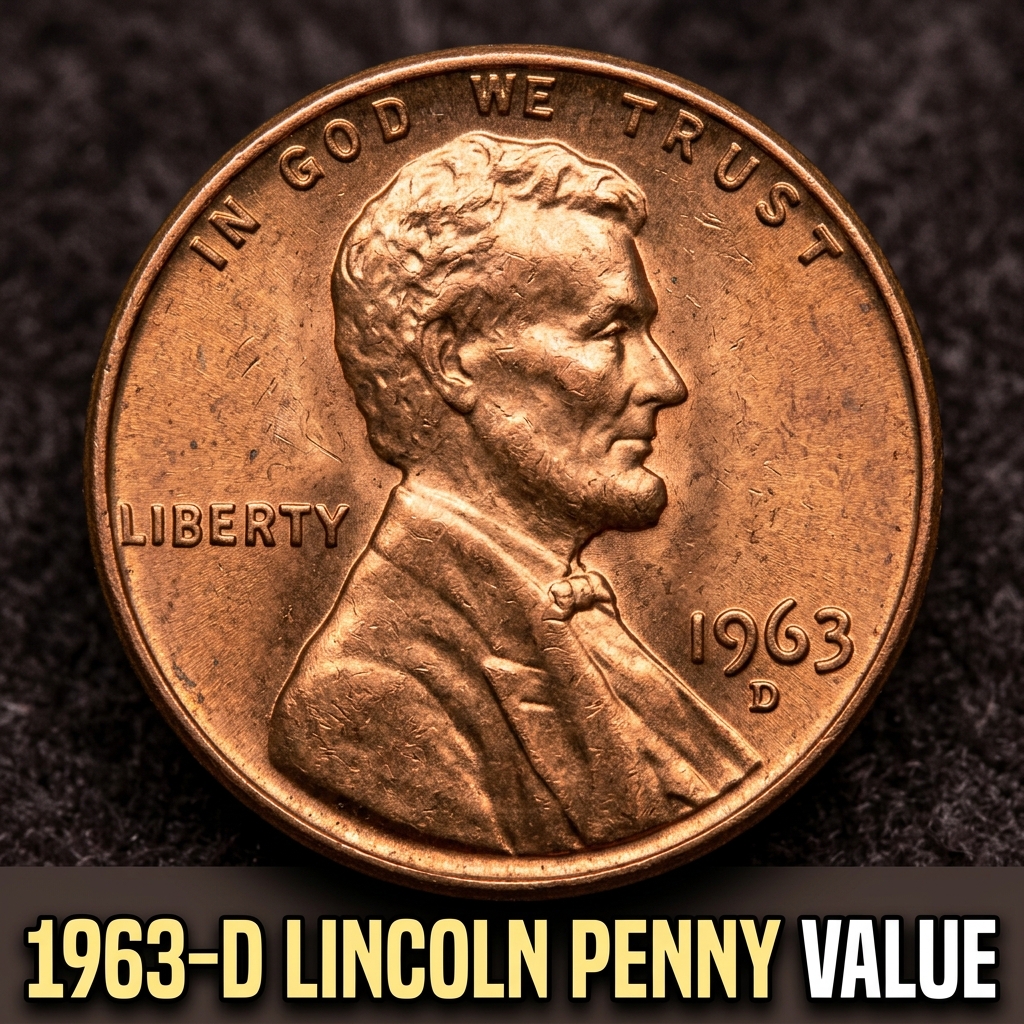
How Much is a 1963 D Lincoln Penny Worth Today and Which Ones are Rare
The 1963-D Lincoln Penny is worth anywhere from its face value of $0.01 in heavily circulated condition to over $1,000 for rare high-grade specimens. If you have recently stumbled upon a handful of these copper coins in your pocket change or an old jar, you might be holding a small treasure.
Identifying Your 1963-D Lincoln Memorial Cent
The 1963-D penny is a staple of the Lincoln Memorial series, which replaced the Wheat penny design in 1959. On the obverse, you will find the familiar profile of Abraham Lincoln. To determine if your coin was minted in Denver, look for a small “D” mark just below the date. This “D” signifies the Denver Mint, which produced over 2.5 billion of these coins that year.
Because production numbers were so high, most 1963-D pennies you find in daily life are considered common. However, the value shifts dramatically based on the coin’s “color” and “grade.” Collectors look for “Red” (RD) coins that still look like they just came off the press. If you aren’t sure what you have, using a free coin identifier app can help you distinguish between a common spender and a collector’s item.
For those serious about their collection, the CoinKnow app provides real-time updates on market trends. It helps you understand if your copper cent is worth grading or if it’s better off staying in your spare change jar.
Understanding the 1963-D Penny Value and Grading Standards
When evaluating the price of your coin, collectors use a 70-point scale. Most 1963-D pennies found today are in “Circulated” condition, meaning they have wear from being handled. These are typically worth only their weight in copper—about 2 to 3 cents. However, if the coin has never been used, it enters “Mint State” (MS).
A Mint State 63 is attractive but may have some marks, while a Mint State 66 or 67 is nearly flawless. You can check the latest market data for a 1963-D penny price in MS RD condition to see how much collectors are currently paying for these high-quality pieces. Even a small difference in luster can mean a jump of hundreds of dollars.
To stay organized, many hobbyists use CoinKnow to track their inventory. The app makes it easy to log your finds and see how your collection’s value grows over time as market demand fluctuates.
| Condition / Grade | Estimated Value Range |
|---|---|
| Circulated (Average Wear) | $0.02 – $0.05 |
| Uncirculated (MS-63 Red) | $1.00 – $5.00 |
| Choice Uncirculated (MS-65 Red) | $10.00 – $25.00 |
| Superb Gem (MS-67 Red) | $350.00 – $1,500.00+ |
Rare 1963-D Penny Errors and Varieties to Look For
While the standard 1963-D is common, error coins are the “black swans” of the numismatic world. Errors happen during the minting process and can turn a penny into a paycheck. One common thing to look for is the “repunched mint mark” (RPM). This occurs when the “D” was punched into the die more than once, leaving a shadowed or doubled look.
Other valuable errors include “off-center strikes,” where the coin’s design is not centered, or “die cracks,” which appear as raised lines of metal on the surface. These unique mistakes are highly sought after by specialists. For a detailed breakdown of what to look for, you can find detailed 1963-D penny value information regarding specific error types and historical auction records.
If you think you’ve spotted a weird double-letter or a strange mark on Lincoln’s head, don’t spend it yet! Use the CoinKnow app’s high-resolution database to compare your coin with known error varieties. It’s the easiest way to ensure you aren’t accidentally spending a coin worth $50 or more.
Is Your 1963 Copper Cent Worth Keeping?
For most everyday Americans, a 1963-D penny is a piece of history that is fun to hold onto but won’t fund a retirement. Since these coins were minted before 1982, they are made of 95% copper, which gives them a “melt value” slightly higher than one cent. While it is currently illegal to melt pennies for their metal, many people hoard them as a hedge against inflation.
If your coin is exceptionally shiny, looks “like new,” or has a strange physical defect, it is definitely worth a closer look. Most pennies from the 60s have turned a brown color over the decades; finding one that is still original orange-red is quite rare. These “Red” gems are the ones that fetch the high prices at professional auctions.
The journey of coin collecting often starts with a single find. Whether you’re a seasoned pro or just someone who found a shiny penny in an old jacket, understanding the market is key. Keep your eyes peeled for those Denver mint marks and always check your change before you pass it on!
Q: How can I tell if my 1963 penny is from Denver?
A: Look on the front of the coin, just below the date. If you see a small letter ‘D’, it was made in Denver. If there is no letter, it was made in Philadelphia.
Q: Why is the red color so important for the 1963-D penny value?
A: Copper oxidizes over time, turning brown. A penny that has retained its original “Red” luster is much rarer than “Brown” or “Red-Brown” coins, making it significantly more valuable to collectors.
Q: Should I clean my 1963-D penny to make it look better?
A: No! Never clean your coins. Cleaning results in tiny scratches that professional graders can easily spot, and it can reduce the collector value of the coin by 90% or more.
